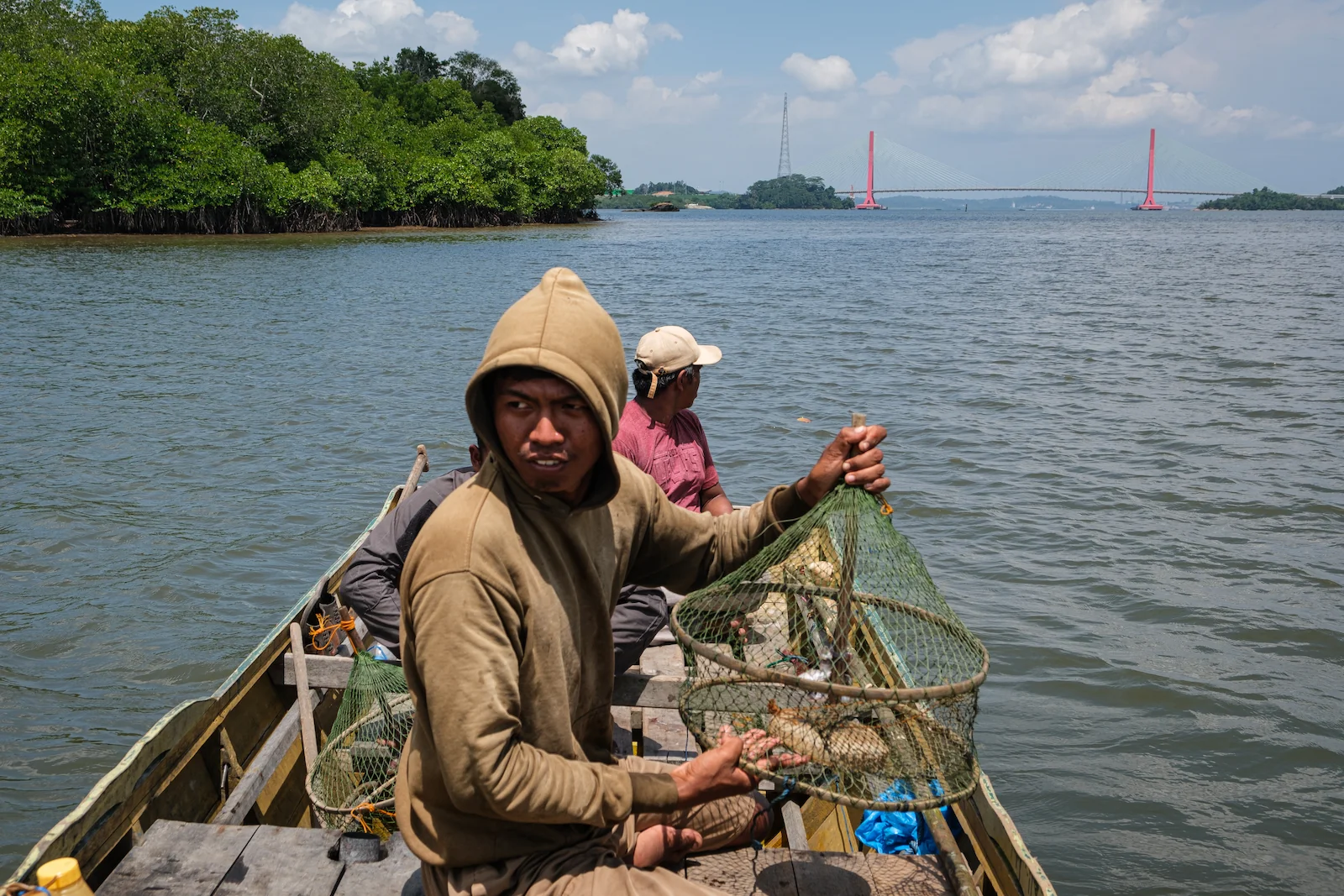
Marketed as the hallmark of Joko Widodo’s 2014-2024 presidency, the proposed relocation of Indonesia’s capital to the province of East Kalimantan on Borneo island serves as a Trojan horse. Though framed by state officials as a “forest city”, the Nusantara project aims to fast-track industrial expansion. “Kalimantan has very much economic potential, so having our capital city there should strengthen and fasten it. That is one of the ideas they pitched to us,” disclosed a Jakarta-based investor, who requested anonymity to discuss non-public negotiations with the Nusantara Capital Authority (OIKN), the government entity overseeing the project.
The move threatens to deal another blow to the Southeast Asian country’s ecosystems, which are already reeling after the area of primary forest dwindled by more than two-thirdsRoughly 145 million hectares in 1950: WRI Indonesia – The state of the forestAbout 48 million hectares in 2020: PNAS – Land in limbo: Nearly one third of Indonesia’s cleared old-growth forests left idle between 1950 and 2020. “Deforestation breaks my heart, but what officials only care about is the money generated by extractive industries,” said Hairudin Rudi, illustrator at the botanical garden in Balikpapan, a city on the doorstep of Nusantara. “Our goal here is to collect the seeds of every species of plants to save them before the forest is gone,” he added, sighing.
Indonesian president Prabowo Subianto rejected accusationsSecretariat of the Republic of Indonesia (Setkab) – National Development Planning Conference for the 2025-2029 RPJMN, 2024 that the country’s palm oil industry – the world’s biggest – is a major deforestation culprit. He simply argued: “Oil palms are trees, right? They have leaves, right?”. Ecologically, however, razing primary forests to plant oil palms causes a substantial dropResearchGate – Biodiversity loss associated with oil palm plantations in Malaysia, 2024 in biodiversity as multi-layered habitats vanish, as well as a reduction of the area’s ability to sequesterMongabay – Oil palm does not store more carbon than forests, 2007 Earth-warming carbon dioxide (CO2).
“Perfect storm”
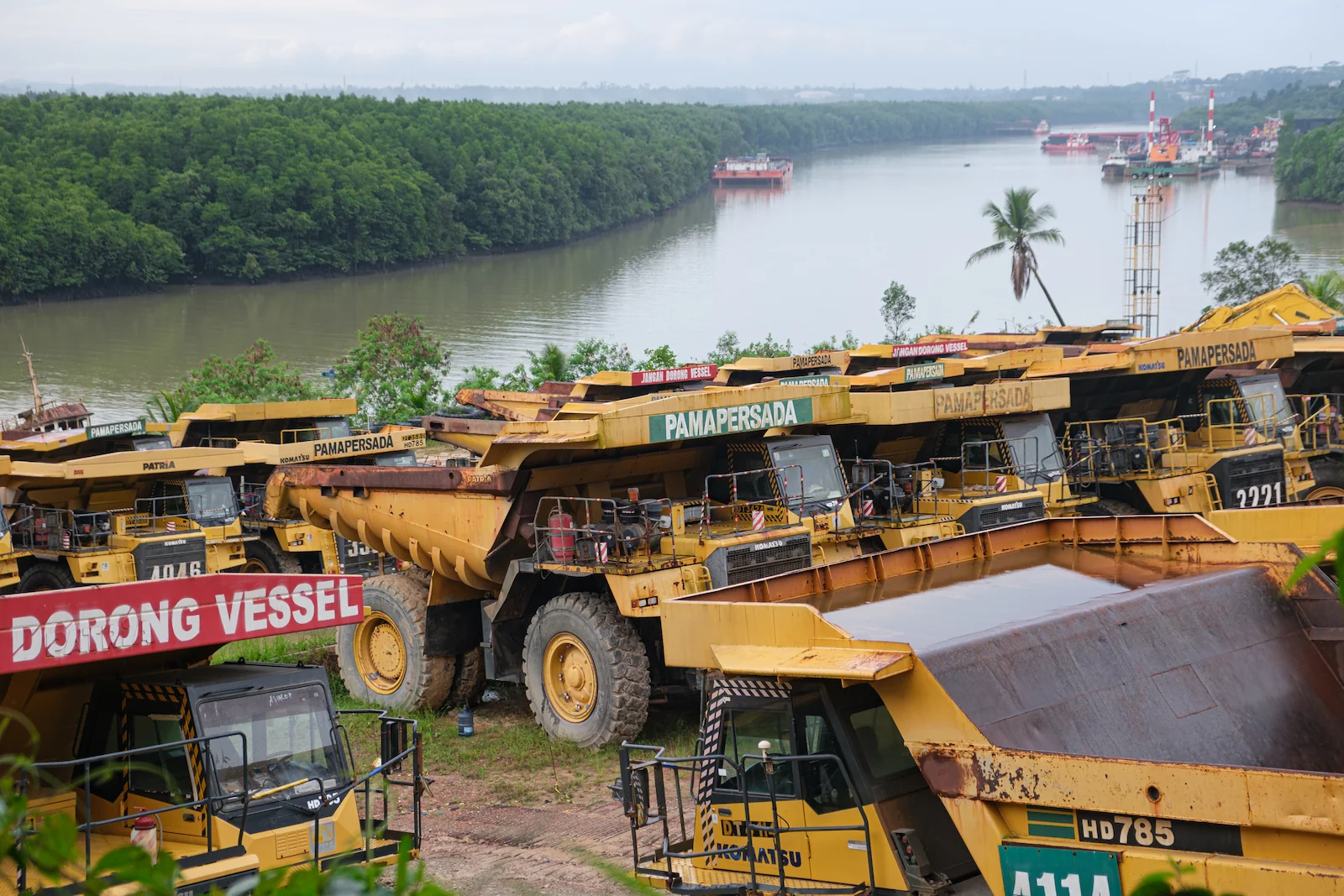
Corporate ambitions that lay behind Nusantara are colliding with traditional fishing communities. The bay extending from Balikpapan city to the Nusantara construction sites is a 40-kilometres-long estuary that has become dotted with industrial facilitiesFor example, the Kariangau industrial park, located in the northwestern part of Balikpapan, has been built since 2012 on razed coastal forests and mangroves. and port terminals in recent decades to export tree trunks, palm oil and coal produced on the deforested lands of East Kalimantan. Such human activities, alongside “monumental” loss of natural habitats and population growth in recent decades have formed a “perfect storm” of conditions fueling the resurgence in attacks, said Brandon Sideleau, founder of CrocAttack, a database of crocodile attacks known since the 18th centuryCrocAttack.
“My ancestors were all fishermen for at least three generations,, but this inheritance might not survive me.” said Rahman, a fisherman, who, like many Indonesians, does not haveVice News – The uniquely Indonesian pains of having only one name, 2017 a family name. “I wish for my five children to work at companies, I do not want them to be attacked,” he added, looking at a refinery operated by Singaporean palm oil company ApicalApical on the other side of the Balikpapan Bay.
Rahman, 46, got attacked by a saltwater crocodile (Crocodylus porosus) in July 2025 as he lifted his fishing nets at night near Pantai Lango, his village. “The crocodile’s jaw slipped off my paddle and part of my arm, which somehow worked as a shield. The crocodile missed me, but if its body position had been slightly different, I would have been dead,” he recalled.
Rahman survived, but many did not. Indonesia recorded 179 crocodile attacksAssociated Press – Crocodile attacks in Indonesia are on the rise, 2025 in 2024 – the highest number in the world – over half of which were fatal. “Every day, when men go to fish, I cry, hoping they will come back without injuries. Sometimes in the middle of the night I pray to protect them,” said Sariah, a 51-year-old housewife. Indeed, industrial development has squeezed the reptiles and small-scale fishers into the same shrinking habitats. “We know the risks, but now the fear is even more intense because of the sharp increase in the number of accidents,” said Rahman.
“Crocodiles have entered my fishing cages three times already. This is a new phenomenon, it did not happen before. Their original habitat has probably been destroyed, so they look for food in my cages,” said Beli, 80 years old. Each time, the fisherman has to cut the net to free the reptile and buy a new one at a cost of two million Indonesian rupiah (about $118).
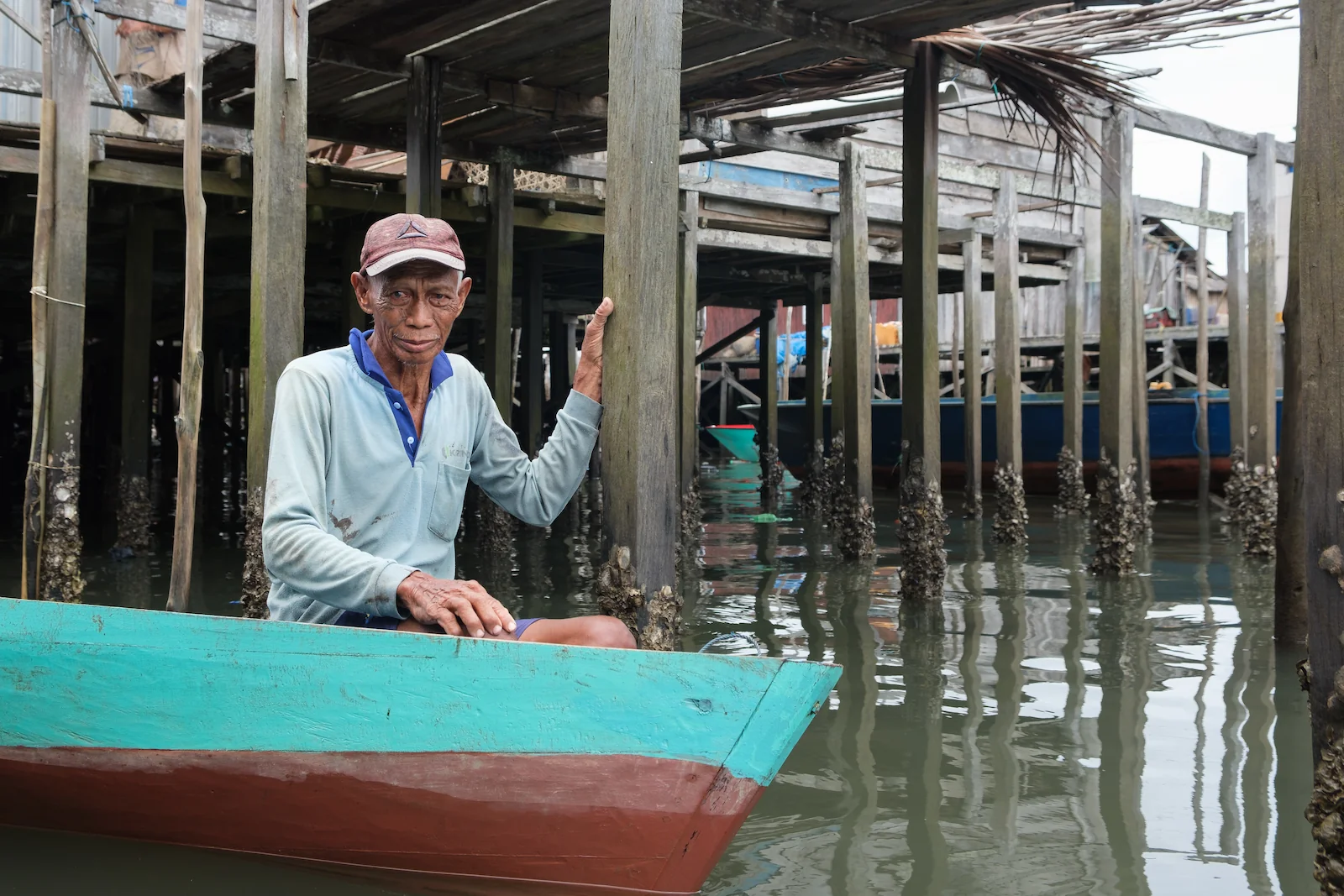
Some throw in the towel. “The number of fishermen has descreased a lot, from about 300 a few years ago to 200 nowadays as many already started to work for companies. And I expect the number to drop further,” said Sadar, head of the fishers association in Pantai Lango. The decline is not isolated. Across Penajam Paser Utara Regency, the district where coastal villages most affected by the Nusantanra project are located, the number of people engaged in fishing nearly halvedBPS – Penajam Paser Utara regency in figures, 2025 between 2020 and 2024, falling from 5,566 to 2,902.
Preventive measures can help humans to coexist rather than collide with crocodiles, explained Sideleau. “For example, never use the same spot twice if they are going to collect water or bath, because crocodiles memorize patterns to maximize their predation success rate. Also, always go fishing with someone because there is nothing you can do about an attack by a five meter crocodile, but three meters long crocodiles can be fought off,” he noted.
In historical perspective, however, the shock provoked by each crocodile attack reflects a fading familiarity with what used to be seen as a risk of life in tropical ecosystems. “Hundreds of people were killed every year by crocodiles in Indonesia in the 19th century,” said Brandon Sideleau.
A contempt for history
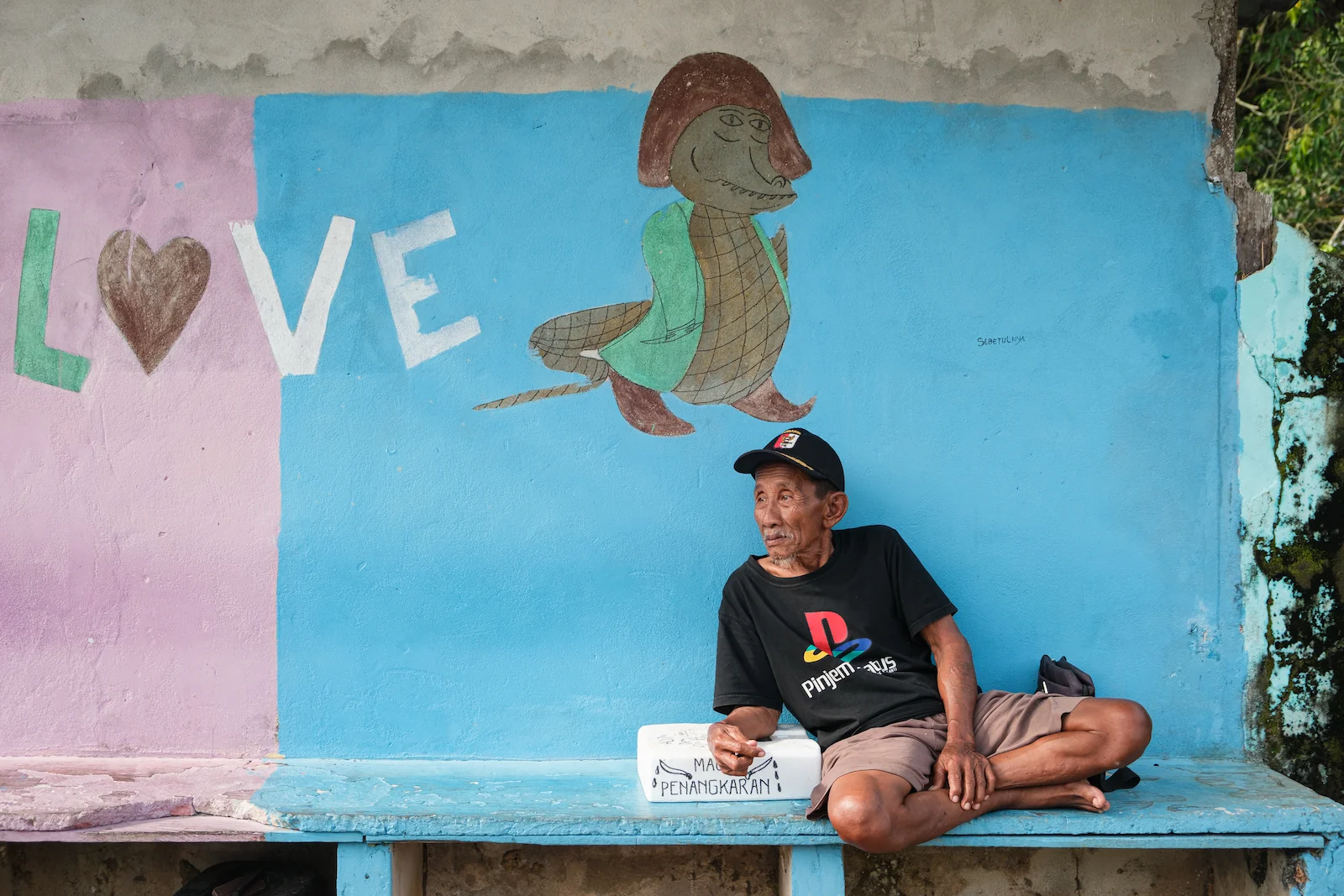
In essence, the Nusantara project insidiously undermines a fragile, centuries-old love-hate relationship between humans and crocodiles. “We believe that crocodiles had a relationship with our ancestors, so we perform an annual ritual. We prepare an offering and bring it to the sea, as a gift to nature and crocodiles to seek safety,” described Saparuddin, a 55-year-old fisherman who lives in the village of Jenebora.
Indonesia has a long tradition of crocodile handlers. Known as Pawang Buaya, they seek to maintain human–wildlife coexistence. Among them is East Kalimantan fisherman Pak Ambo, who forged a half a century-long relationship with a crocodile named Riska. He gained global popularity on social media, before local authorities captured and caged the reptile in 2023Utusan Malaysia – Ambo dan Riska akhirnya berpisah, 2023.
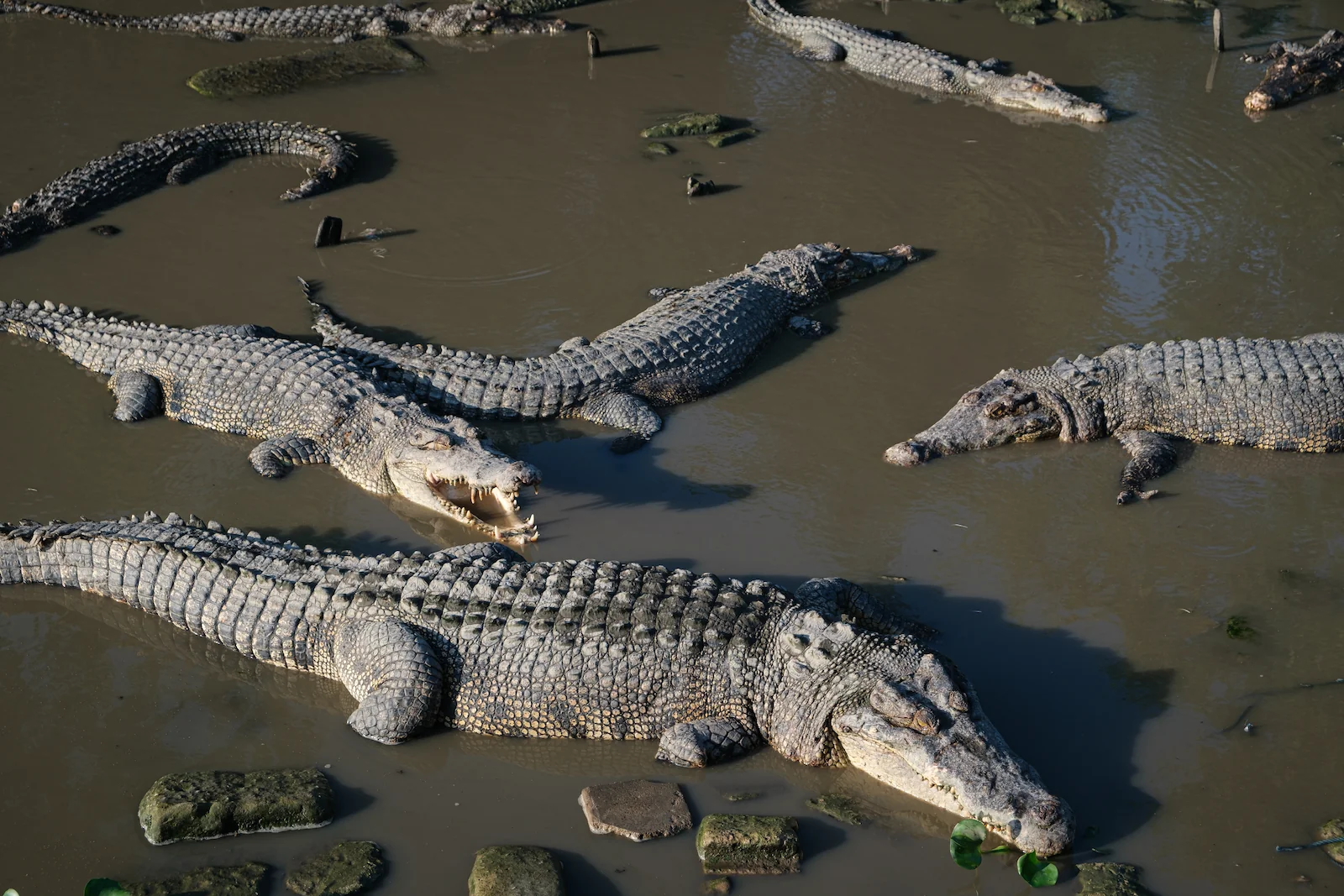
Faced with rising risks, the ancestral reverence for crocodiles is giving way to the temptation to exterminate crocodiles. “Sometimes we feel crocodiles are pests, and that we should get rid of them,” acknowledged Rahman. That logic echoes politics in force during the colonial era when Dutch East Indies authorities classified crocodilesNational Archives of Indonesia -Inventaris Arsip, Departement van Binnenlandsch Bestuur, Serie Toegangen 1849-1950 – alongside tigers – as pests to be eradicated to facilitate the expansion of plantation agriculture. Eight decades after Indonesia gained independence from the Netherlands, crocodiles are once again at the collision of opposing ecological mentalities.
“Crocodiles are better caged,” claimed Hayati Nur Idris, a resident of East Kalimantan on a visit to a zoological museum in Jakarta. Her wish has already come true on the outskirts of Balikpapan. Local authorities have confined dozens of crocodiles in the enclosures of Penangkaran Buaya Teritip, a crocodile farm, after removing them from the wild to protect residents of new housing developments. “It would be better to let them in the wild, but it is dangerous,” said Edy Petri, 78, who has worked at the crocodile farm for several decades.
This fear-driven perspective is a slap in the face of history. Humans belong to a genus dating back 2.8 million yearsNature – New discoveries of Australopithecus and Homo from Ledi-Geraru, 2025, while the ancestors of modern day crocodiles appeared around 240 million yearsNational Geographic – When crocs ruled, 2009 ago, at the same time as the dinosaurs. “Younger people have completely forgotten how to live alongside crocodiles. I do definitely think that something has been lost when it comes to coexisting with crocodiles,” lamented Sideleau.
A set of guidelinesIKN – Nusantara Biodiversity Management Master Plan, 2024 issued in 2024 by OIKN proposed “community engagement” actions to prevent human-wildlife conflict in the perimeter of Nusantara. The East Kalimantan branch of the Indonesian government agency responsible for natural resources conservation, BKSDA, did not respond to a request for an interview.
Indonesia’s crocodile populations were decimated in the 20th century by the urbanisation of the island of Java, and hunting to feed the global fashion industry’s demand for wild skins. At its peak in the early 1960s, the trade of crocodile skins reached an estimated 6–8 million unitsCITES – Crocodilians and the Convention on International Trade in Endangered Species of Wild Fauna and Flora, 2014 a year, mostly illegal or unregulated, with Indonesia among the major supplier countries.
At present, crocodiles are still legally protected from being killed under the Indonesian government Regulation No. 7 of 1999United Nations Office on Drugs and Crime – Database of Legislation; their habitat, however, is not. “In the coming decades, I think there may be no crocodile in the Balikpapan Bay anymore,” predicted Rustam Fahmy, head of the Faculty of Forestry at Mulawarman University in East Kalimantan.
Propaganda campaign
Crocodiles are not the only remnants of the past being sacrificed to economic interests. As Nusantara paves the way for industrial expansion, “More and more people are mourning the loss of their traditional way of life,” said Mapaselle, director of Pokja Pesisir, a local NGO dedicated to the Balikpapan Bay’s communities. In the vicinity of Pantai Lango coastal areas now under corporate control are guarded and off-limits to fishermen. “Security agents ask us to go away, even though we try to explain that we do not steal anything and have been here since ancestral times,” Sadar regretted.
The ‘euphoria’ that surrounded the capital relocation announcement in 2019Tempo – Jokowi proposes to relocate capital to Kalimantan island, 2019, buoyed by the sudden national spotlight, has given way to regret. “People fell for a false advertisement spread by mainstream media and influencers who broadcasted powerful people’s promotional statements about Nusantara. This propaganda campaign has spreaded fast, and beaten down environmental knowledge, which is already so little,” described Mapaselle.
Pokja Pesisir has conducted environmental education classes in several local nursery and primary schools since 2020 in the hope of “nurturing a generation that understands the local ecosystem”. The effort confronts entrenched disbelief. Seven out of ten Indonesians surveyed in 2020YouGov – Cambridge Globalism, 2020 still disputed that climate change is “mainly caused by human activities”.

Indonesian influencer Shiska Aulia, who lives in the Nusantara perimeter and has often featured the project to her 22,000 Instagram followers, rejects accusations of a propaganda campaign. Officials from Joko Widodo’s team encouraged her to promote the “forest city” narrative, she acknowledged, but her posts are rooted in a genuine attachment to her native region, she insisted. “People from Kalimantan itself often express skepticism in the comments of my posts. It is very painful for me, because I think positively about Nusantara, the economics for our people and all the new places that have opened.” she said.
Yet, the construction of Nusantara has already come at a steep cost for ecosystems and ancestral social dynamics. “Threats are coming from everywhere, land seizureAliansi Masyarakat Adat Nusantara – Masyarakat Adat Balik Sepaku Semakin Terdesak Akibat Pembangunan IKN, 2025 on the left, crocodile attacks on the right,” said Sariah, the housewife in Pantai Lango. She belongs to the Bajau ethnic group, a Southeast Asian seafaring tribe that established a presence in the Balikpapan Bay centuries ago. Elders in the community believe that relocating inland would bring a curse upon the community as it would violate an ancient agreement between the Bajau and one of the area’s original ethnic groups, the Balik people.
“We keep the coast, and the forest is theirs. But the government does not care about this, our traditions mean nothing to them. If the government tries to relocate us inland, I will fight to defend the heritage of my ancestors,” added Saparuddin, a fisherman. In fact, the regional 2021-2041 coastal zoning planPeraturan BPK – Rencana Zonasi Wilayah Pesisir dan Pulau-Pulau Kecil Provinsi Kalimantan Timur Tahun 2021-2041, 2021 categorised the Balikpapan Bay as a port zone, with no legal provision to protect fishing activities. Sariah angrily added: “What the government has done is to colonize its own people. It was better when other nations colonised us, at least we knew those were real enemies.”
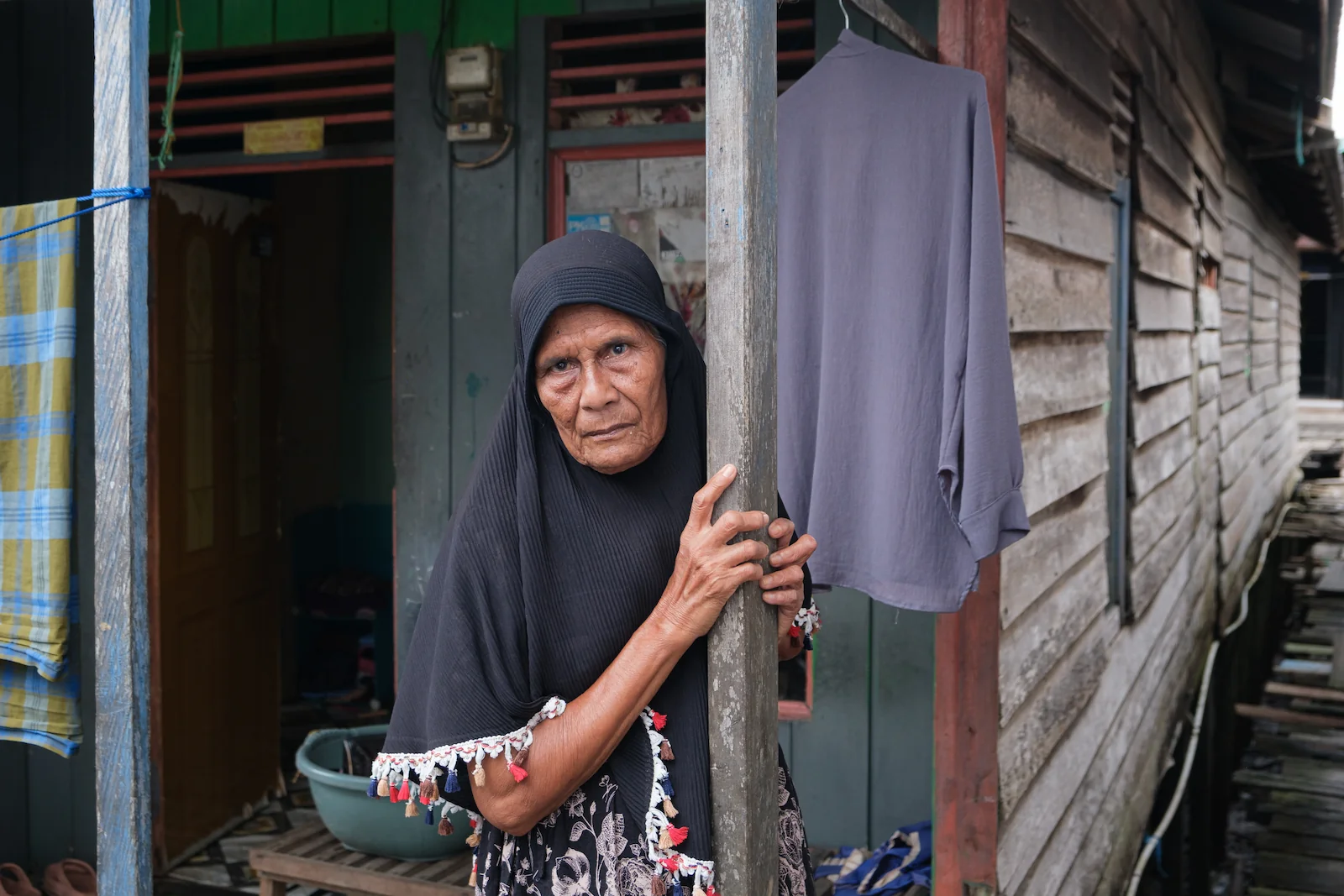
As discontent mounted in affected communities, officials have “harassed and threatened” those who voiced opposition, revealed Mapaselle. “The taking over of lands through forced evictions could become a time bomb for the government,” he added. The seizure of land for government projects deemed of strategic importance is a national matter; it affected 103,000 familiesMongabay – Indigenous communities in Indonesia demand halt to land-grabbing government projects, 2025 across Indonesia between 2020 and 2024. OIKN did not respond to a request for comment.
The priority given to state and corporate interests over local communities is intentional, according to researchers at a government instutiton with knowledge of the project. “Key decision makers were fully aware that Nusantara would cost many fishermen their livelihood, yet, they chose to ignore it,” they revealed on condition of anonymity over fear of reprisal.
“As government employees, we are vulnerable if we criticize state projects,” they explained. Indonesia dropped 16 places to the 127th rankReporters Without Borders – RSF urges President Prabowo to protect journalists amid nationwide protests, 2025 out of 180 countries in the World Press Freedom Index issued in 2025 by media watchdog Reporters Without Borders (RSF).
Choking Siamese crocodiles
As Prabowo Subianto took office, Widodo-era ambition for the city to become the Indonesian capital and to house 1,9 million peopleIKN – Nusantara Net Zero Strategy 2045, 2023 by 2045 have faded away. In 2025, President Subianto officially designated Nusantara as the country’s “political capital” with implementation set for 2028Tempo – Prabowo makes IKN political capital by 2028, 2025, signalling that Jakarta will remain the national capital.
Still, the political will to allow the monetisation of an ever increasing share of Indonesia’s land remains unchanged. Further north, along one of the tributaries of the Mahakam River, which flows through East Kalimantan, oil palm plantations have encroached upon the Mesangat wetland. The freshwater swamp forest is one of the last remaining habitats for the endangered Siamese crocodiles (Crocodylus siamensisIUCN – Siamese Crocodile, 2012) and False Gharials (Tomistoma schlegeliiIUCN – Siamese Crocodile, 2022). The number of individuals living in the wetland is yet to be precisely surveyed.
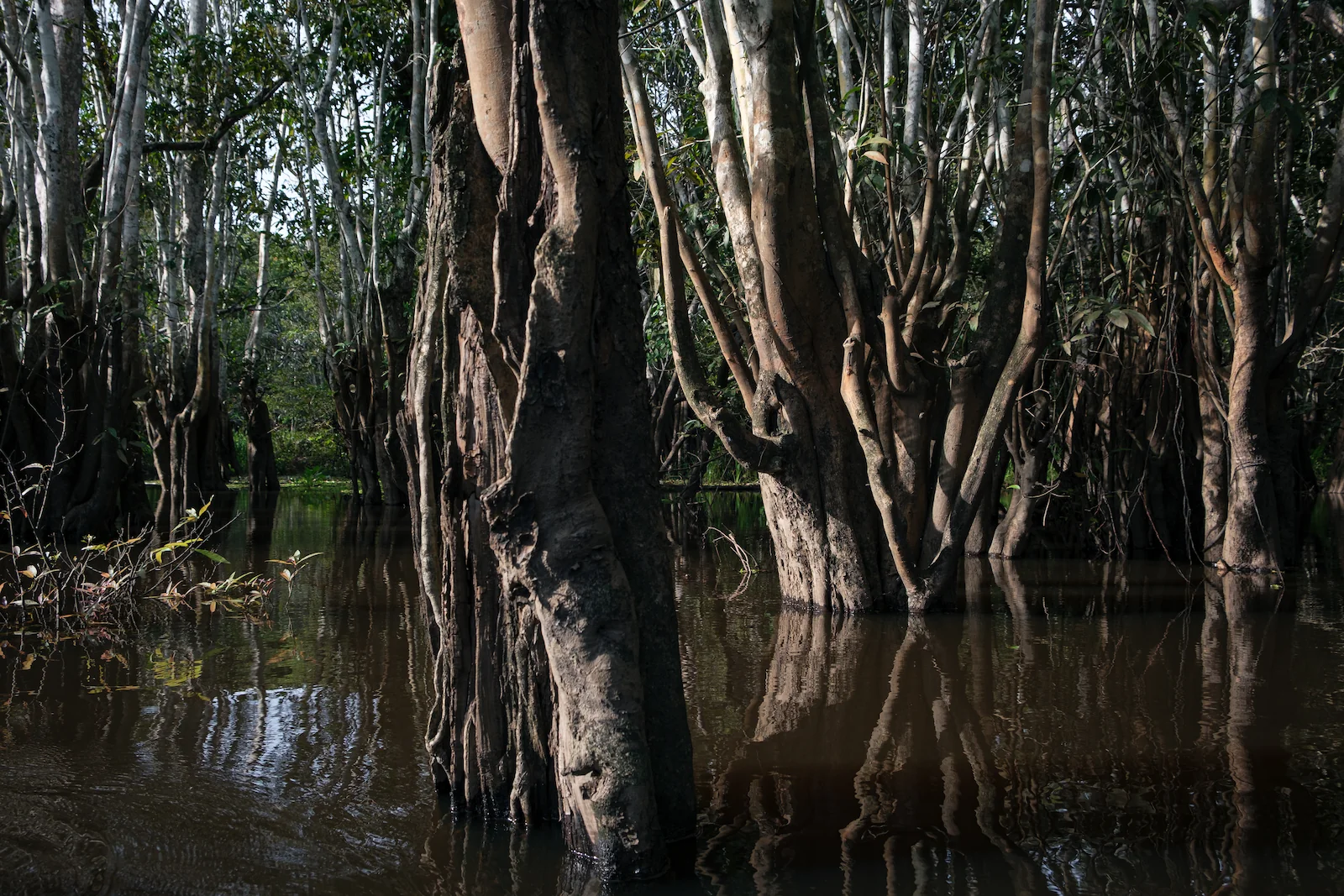
The Mesangat wetland was sold in its entiretyRoundtable on Sustainable Palm Oil – Notification of Proposed New Planting, 2014 to a palm oil company in 2010, who razed part of the fragile ecosystem to plant oil palm trees. The company has pledged to suspend further deforestation, yet, the use of fertilisers reportedly asphyxiates the wetland. Floating vegetation, which reduces light penetration and water oxygenation, has spread “everywhere” since the plantation has started operations, according to Iwan, one of the representatives of local fishers.
This proliferation now blanketing large parts of the wetland is caused by fertiliser residues in the runoff water from the oil palm plantation, according to Yayasan Ulin, an Indonesian NGO protecting the area. “It is concerning because if local people no longer fish, they might be tempted to think Mesangat is useless,” noted Brian Martin, director of Yayasan Ulin.
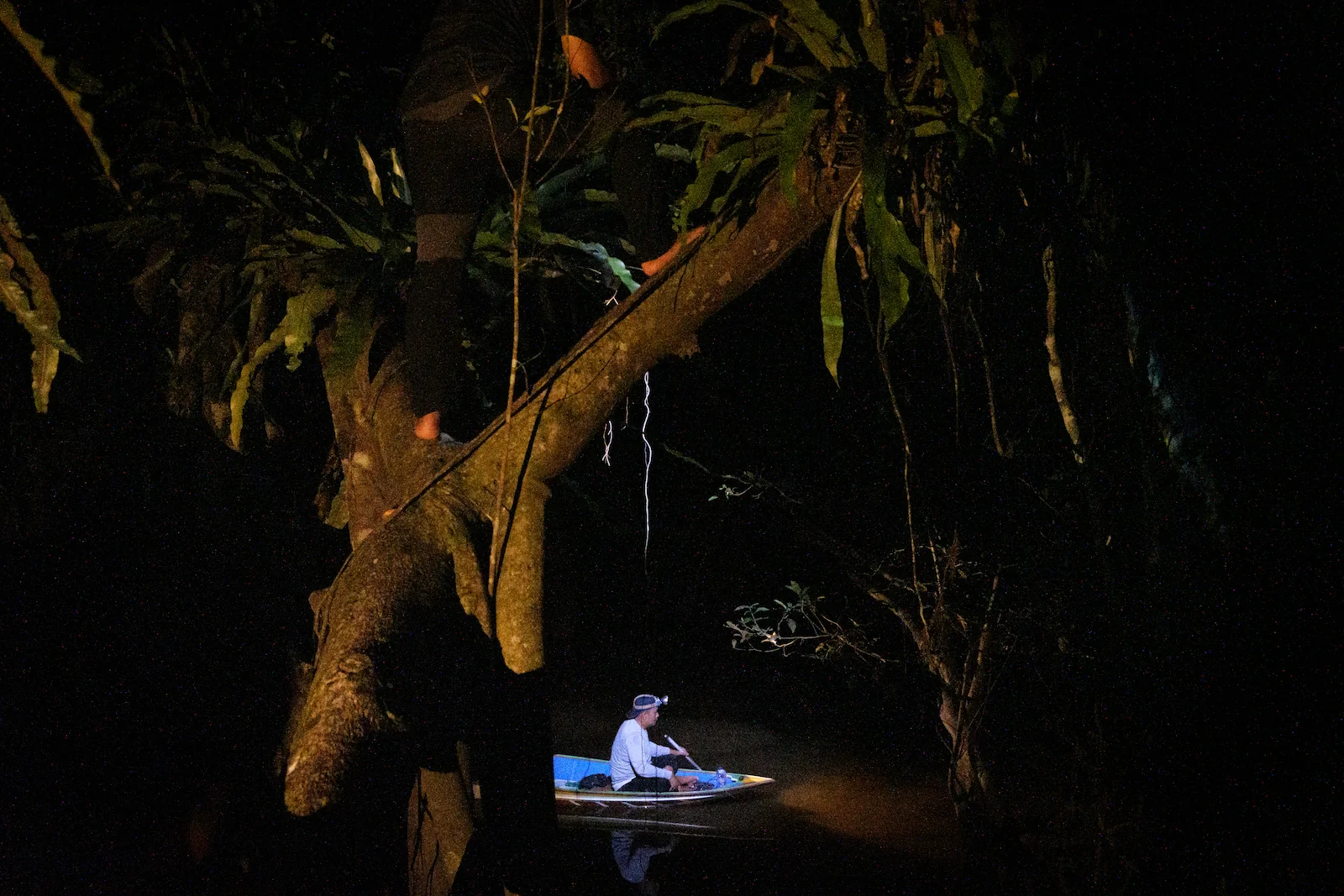
In fact, local interest for the wetland and its fish ressources has already dwindled. “There has been so much change in just a generation, which serves corporate interests. If the young generation cares less about nature, more people will work with destructive industries,” he said. The task is even harder for crocodiles. Getting “people’s hearts to love” the predator is particularly difficult given the trauma left by crocodile attacks in many villages, he added.
Iwan revealed that in 2013 and 2014, the company operating the plantation, PT Cipta Davia MandiriThe company, owned since 2008 by United Kingdom-based palm oil operator REA Holdings plc, was acquired by an Indonesian company in June 2025, supplied herbicides to local fishermen to clear the floating vegetation. However, it stopped doing so after finding out it polluted the wetland. Since then, floating vegetation has spread unchecked. This occurred despite a High Conservation Value surveyRoundtable on Sustainable Palm Oil – Summary Report of SEIAand HCV assessments, 2010 conducted in 2014, which assessed the Mesangat wetland’s biological, ecological, social, and cultural importance, and concluded that habitats supporting crocodile populations were “essential to protect”. PT Cipta Davia Mandiri did not respond to a request for comment.
Fahmy concluded: “Dutch colonialism is over, but we are now in the concession era.” In both eras, natural ecosystems, wildlife, and traditional ways of life, have borne the brunt of a push by political and business elites to monetise Indonesia’s lands.