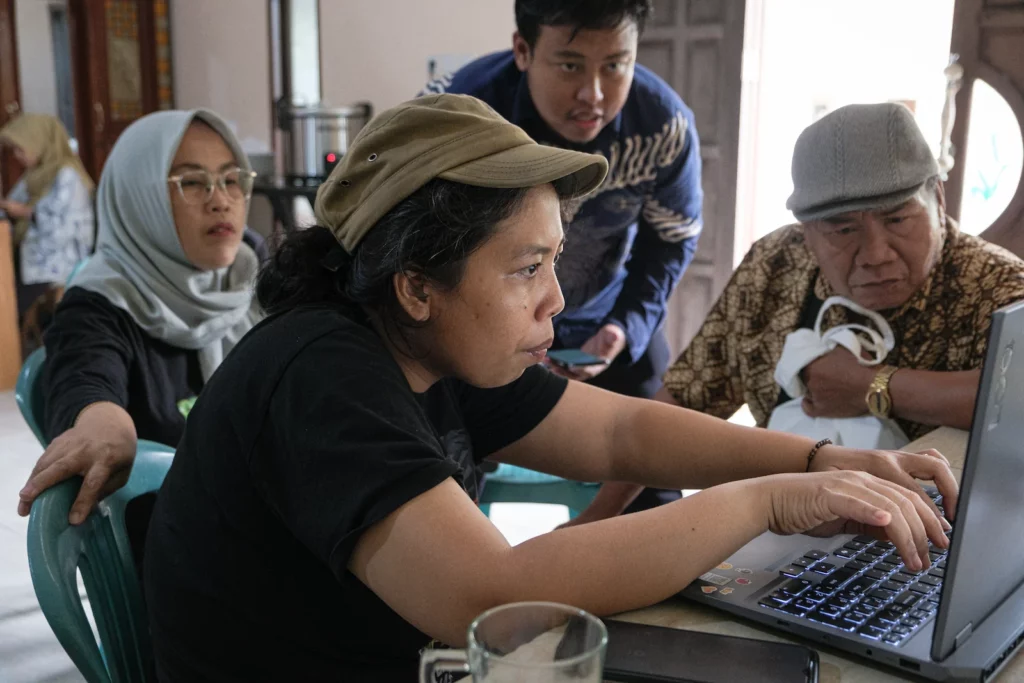
A small group composed of native Balik speakersMini ensiklopedi masyarakat adat Suku Balik, 2024 gathered in August 2025 in Sepaku, a district in East Kalimantan. The language is spoken by the Balik people, an ethnic group on Borneo island that has an estimated population of roughly 1,500 peopleMongabay – Upaya Para Pemuda Cegah Kepunahan Bahasa Suku Balik, 2025. They are not alone. Across the province, the first language of about 1,2 million peopleBadan Pusat Statistik – Indonesia Population Census 2020 was a local language as of 2020.
The event was part of a projectWikimedia – Reaching out to Indonesia’s indigenous voices, 2025 aimed at documenting several Indonesian languages in the online dictionary platform run by the nonprofit organisation behind Wikipedia. Emphasizing the project’s significance, Wikimedia Foundation staffer Rafif Aufa Nanda said: “Losing someone’s language means losing someone’s identity.” Alongside its cultural function, the Balik language encodes environmental knowledge as its vocabulary is “highly related to the local natural ecosystem, including its flora and fauna species,” Wikimedia Foundation wrote.
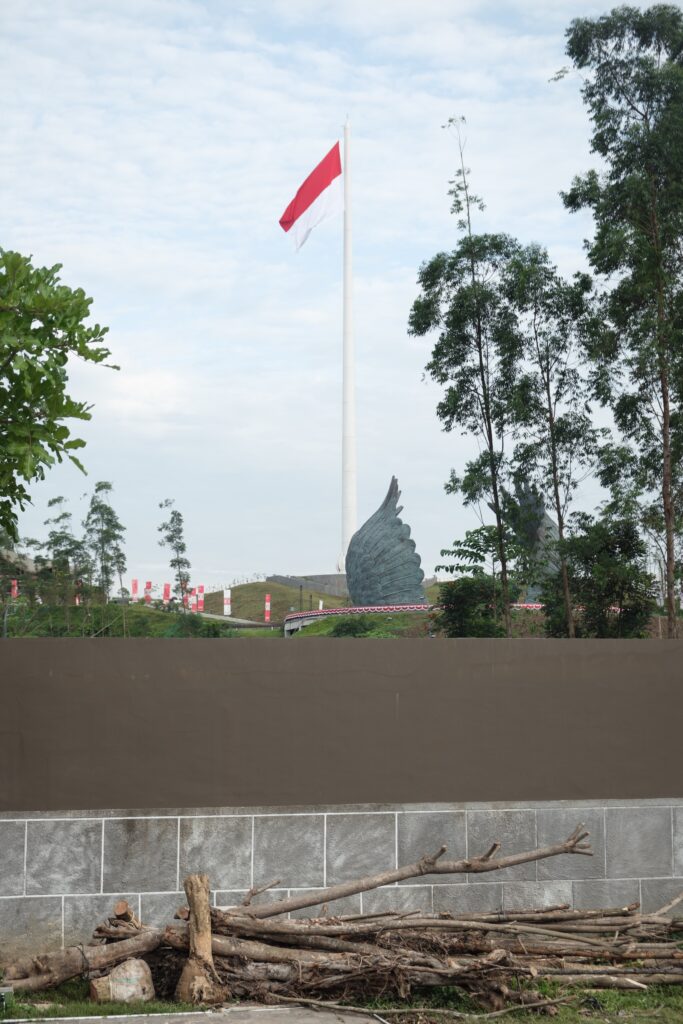
Less than 10 kilometers away from the workshop, Nusantara has been under construction since 2022IKN – Achievement report, 2023. The hallmark of the 2014–2024 term of former Indonesia president Joko Widodo, the new city is planned to becomeTempo – Prabowo Makes IKN Political Capital by 2028, 2025 the country’s political capital in 2028, and features a presidential palace modeled after Indonesia’s national emblem, a legendary eagle-like creature called Garuda.
Nusantara is the “final blow”
But the construction has raised fear that it would come at the expense of local communities. Nusantara’s presidential palace area has been built over a pulpwood plantationOwned by PT International Timber Corporation Indonesia Hutani Manunggal (ITCI HM), a subsidiary of Indonesian billionaire Among Tanoto's Asia Pacific Resources International Holdings (APRIL)Mongabay – Report identifies tycoons controlling site of new Indonesian capital, 2020, but the planned city also encompasses the land inhabited by Balik speakers, including in Sepaku. The community said it is at risk of being evictedAliansi Masyarakat Adat Nusantara – Letter of Statement Indigenous Peoples Suku Balik regarding the Development of Indonesia’s New Capital City, 2023 to make space for the governmental project. “Indigenous people who have lived in the province must be recognized as an inseparable part of the socio-ecological system of the Kalimantan forests,” a bookNational Research and Innovation Agency – The road to Nusantara, 2023 published by the Indonesian government National Research and Innovation Agency (BRIN) recommended.
“If the government takes over the land the Balik history disappears as the language becomes unrooted and disconnected from its original context,” stressed Haerudin Alexander, from the Indonesian indigenous advocacy organisation Aliansi Masyarakat Adat Nusantara (AMAN). “Taking over the land and pushing us away is like diluting our identity,” commented Sekion, a 72-years-old Balik speaker, who, like many Indonesians, does not have a family name.
According to him, Nusantara is the “final blow” imposed on the Balik people. From the 1950s, the Indonesian government funded the relocation of hundreds of thousands of families from densely populated central Indonesia to Sumatra, Kalimantan and Sulawesi. The Indonesian government described the islands in 1981World Bank – Transmigration Programme, 1981 as “sparsely inhabited areas”. Among the objectives pursued by the program, which consumed about 6% of the national budget in the early 1980s and was supported by multiple international organisations and foreign countries, was “national unity” and the exploitation of natural resources.
The regular Balik-settler interactions that ensued have contributed to dilute the local identity and use of the language over time. The change in demographics was followed by the large-scale appropriation of landsWorld Rainforest Movement – The Coercion of the Indonesia’s New Capital City Mega-Project and the Neglect of the Balik People’s Voices, 2022 by industrial interests for tree and oil palm plantations and mining. “Maybe there are now more people in here originally from other parts of Indonesia than locals,” said Alimuddin, Deputy for Social and Cultural Empowerment at OIKN, the government entity overseeing the Nusantara project.
OIKN revealed in 2024 a plan to convert local villagesTempo – IKN Area to Be Transformed into Living Museum Inspired by Bali, 2024 into a “living museum” where “local wisdom” will be on display for tourists. The announcement infuriated Alexander, who said, “They want to recognize local wisdom, dances and beautiful things that they can market like an exotic product, but they do not want to give you rights over ancestral territories.” The seizure of land for government projects deemed of strategic importance is a national matter; it affected 103,000 familiesMongabay – Indigenous communities in Indonesia demand halt to land-grabbing government projects, 2025 across Indonesia between 2020 and 2024.
Three quarters of indigenous languages endangered
Yet, the primary driver of the weakening of linguistic diversity across Indonesia is the construction of a national identity in recent decades. “Young people tend to prefer Bahasa Indonesia because it is viewed as more prestigious. Regional languages are deemed very ancient things, and people speaking them are sometimes stereotyped as ‘rural’, or ‘primitive’,” Rafif Aufa Nanda said. In fact, there is reportedly only a handful of Balik speakers leftEthnologue – Indonesia, 2025, mainly elderly like Sekion, and three quarters of Indonesia’s 700 indigenous languagesEthnologue – Indonesia are endangered, according to Ethnologue, a catalog of known living languages.
The Southeast Asian country is home to an estimated 50 to 70 millionInternational Fund for Agricultural Development – Country Technical Note on Indigenous Peoples’ Issues, 2023 indigenous people, who, according to a government report released in 2023, “believe the earth is a common property that has to be protected for its sustainability.” The report acknowledges that Indonesia has been “unbelievably slow” to recognise indigenous sovereignty over the lands which they inhabited for generations but have been dispossessed of by industrial interests. Nowadays, less than 10% of areas categorised as ancestral indigenous forest are legally recognised as such.
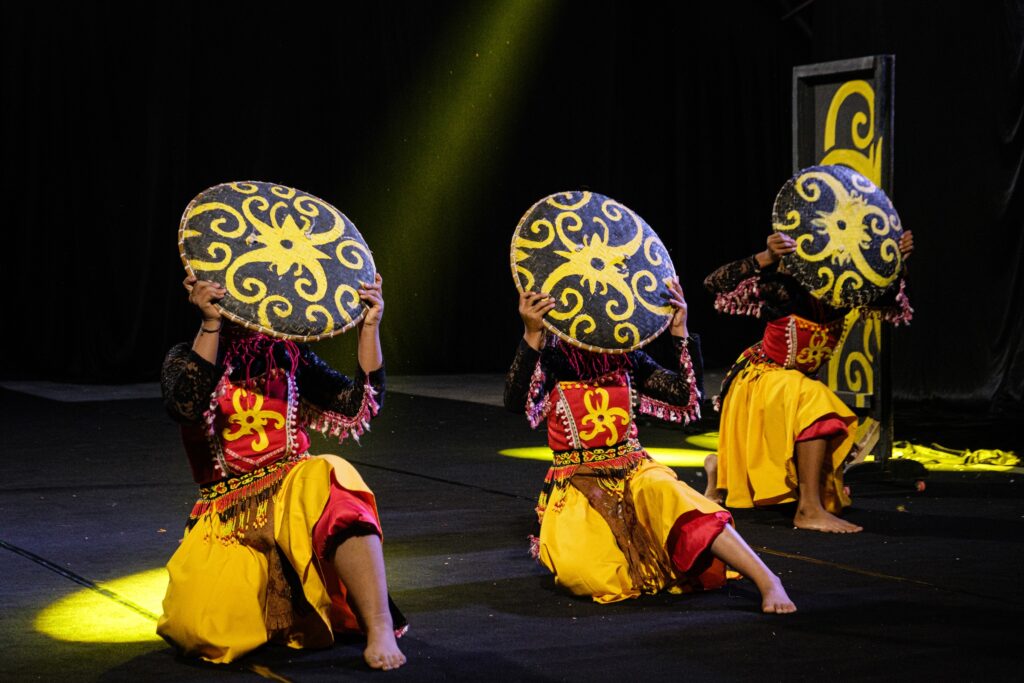
Several days after the Balik workshop, the North Penajam Paser administrative area, which includes Sepaku and Nusantara, hosted an arts festival that featured a wide range of Indonesian cultural performances called AskaryaDinas Komunikasi dan Informatika Penajam Paser Utara – Pagelaran Seni dan Budaya Sang Askarya, 2025. “We did not forget our own ethnic roots. We specifically wanted to highlight the Ronggeng Paser dance because it is a form of resistance against the Japanese colonists. It is about strategy, how to kill the colonizers,” said Nur Diana Amiati, one of the organisers. Sekion, whose father resisted against Dutch colonial authorities in the 1940s, evoked the topic too. He said: “When the oppressor was a foreigner, it was much easier to fight back because they invaded us, like country versus country. But when we are being oppressed by our own government, it is truly hard to fight back.”