Final EmbraceDhaka Tribune – ‘My photography is my protest’, 2014 is one of the most iconic records of industrial disasters. The image, captured by Bangladeshi photographer Taslima Akhter, depicts a man and a woman embracing in the rubble of Rana Plaza. The eight-story building collapsed on April 24, 2013, killing more than 1,100 peopleUnited Kingdom government – The Rana Plaza disaster, 2014 after the owners of five clothing factories it housed had ignored warnings about cracks appearing in the walls. The disaster sparked global outrage over the human cost of affordable fashion; yet its environmental externalities remained comparatively unaddressed.
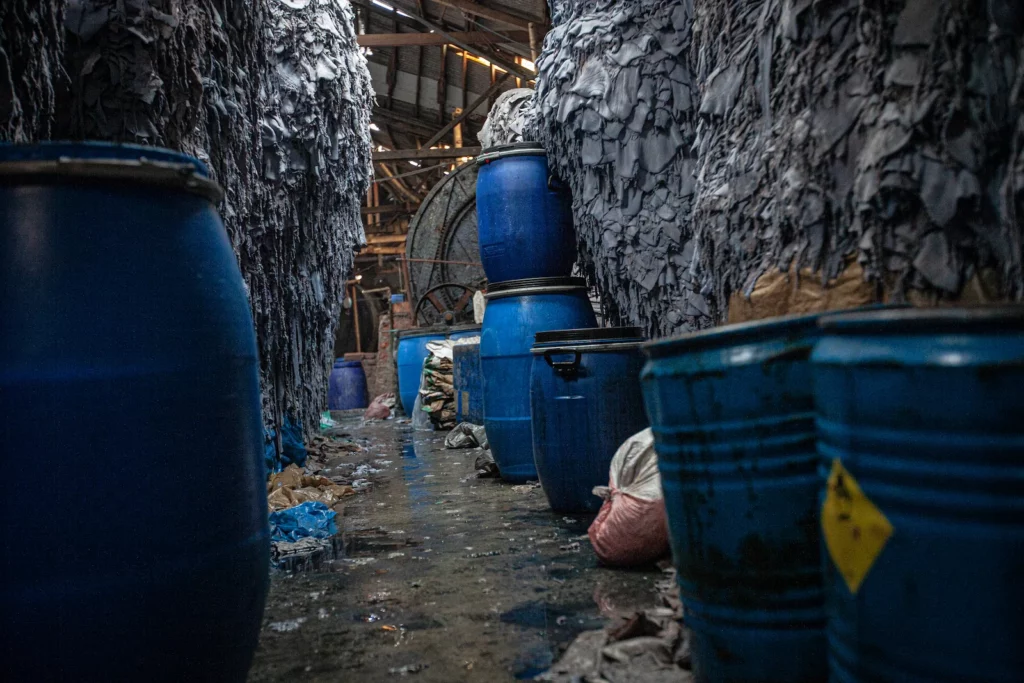
In the following years, tanneries in the Hazaribagh district in Dhaka continued to dump over 21 million litresHuman Rights Watch – The Health Repercussions of Bangladesh’s Hazaribagh Leather, 2012 of wastewater each day into the nearby Buriganga River to avoid bearing the cost of treating the cocktail of chemicalsHeliyon – Metal contamination in soil and vegetables around Savar tannery area, 2023 it contained. It included chromium, cadmiumWorld Health Organization – Cadmium, leadWorld Health Organization – Lead poisoning and sulfatesWater – A New Insight into Sulfate Contamination in Over-Exploited Groundwater Areas, 2025 derived from the use of sulfuric acid. Bangladeshi authorities have long maintained a de facto laissez-faireHuman Rights Watch – The Health Repercussions of Bangladesh’s Hazaribagh Leather, 2012 stance, declining to sanction tanneries. The scale of the environmental pollution ranked Hazaribagh as one of the world’s most pollutedAssociated Press – Report examines grim Bangladesh leather trade, 2017 areas.
Outsourcing pollution
The Hazaribagh cluster of tanneries, first established in the 1950s, has faced pressure to move out of Dhaka since the early 1990s.Ej Atlas – Pollution by export oriented tannery industries, 2017 In 2002, the government of Bangladesh ordered a relocation, but the move was repeatedly postponed. Relocation came in 2017, when the tanneries moved to the Savar Tannery Industrial Estate, 10 kilometers west of Hazaribagh. That year, the government of Bangladesh declared leather and leather goods the ’product of the year,’Ministry of Industries – Leather and Leather Goods Development Policy, 2019 but pledges that the relocation would foster cleaner operations went largely unmet. As of 2025, the centralised wastewater treatment facility, aimed at avoiding toxic effluents, is “poorly maintained and continues to release untreated water” into the Dhaleshwari River.
The continued environmental degradation has preventedTextile Today – Savar leather industrial park likely to come under BEPZA management, 2025 most tanners from securing the most rigorous international environmental and social certification for leather production. Despite compliance with global environmental standards being described as “abysmally low,”United Nations Development Programme – Investing in Bangladesh’s Leather Industry, 2025 the Bangladeshi leather industry has remained one of the nodes in the fashion industry’s global supply chain. This vast global international network has been instrumental in emotionally distancing consumers from the environmental impacts of their purchases. Bangladesh consistently exports over $1 billionTextile Today – Savar leather industrial park likely to come under BEPZA management, 2025 of leather and leather goods annually to supply demandCentre for Policy Dialogue – Leather Industry in Bangladesh, 2024 in consumer markets worldwide, where garment lifespan fell by 36%United Nations Environment Programme – Unsustainable fashion and textiles in focus for International Day of Zero Waste, 2025 during the first 15 years of the 21st century as fast fashion rose to prominence.