More than eight decades ago, Kuwait discoveredKuwait Oil Company – Significant Dates, 2025 oil in commercial quantities at Burgan Field in the south of its capital city. Possessing a vast deposit of the natural resource that would power the era of hyper-globalisation in the following decades, Kuwait became synonymous with its export-oriented fossil fuel industry. As oil revenues and private wealth ballooned, lifestyles that had been tied to the surrounding desert environment for millennia gravitated toward urban mass consumption. The metamorphosis was widely embraced across society.
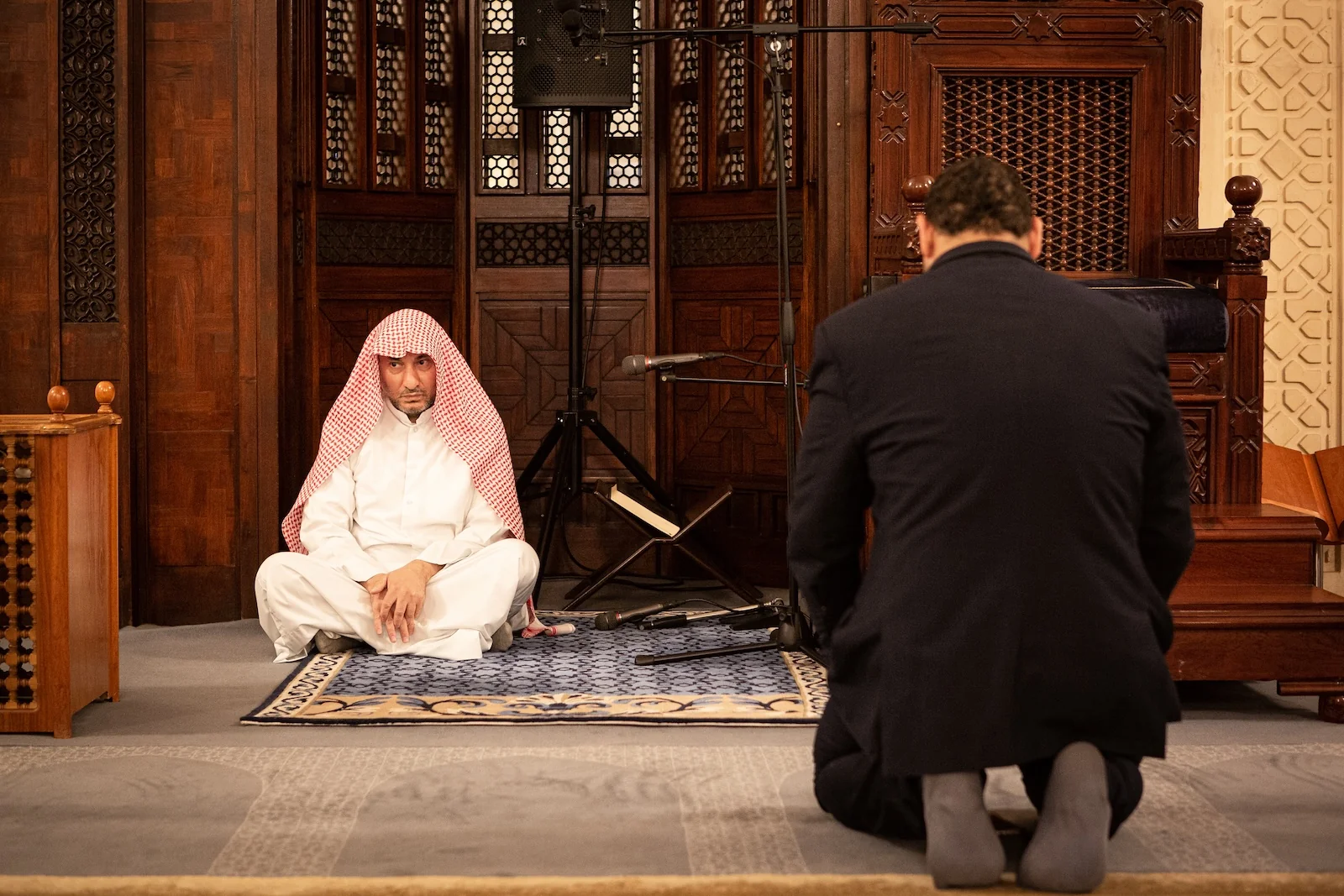
Today, the global economy burns on average 100International Energy Agency – Oil Market Report, 2022 million barrels of oil each day, and within Kuwait’s religious establishment, God is often invoked to justify the moral acceptance of such climate-altering consumption. “Oil is a gift from God to us, and we discovered it, so it is common sense to use it,” claimed Khaled Al Rashid, one of the imams at the Grand Mosque of Kuwait. “Oil is a natural treasure that God has created for us, just like everything else on earth, so we should use it before the end of the world comes, but in a safe way,” added Rashed Saad Alajmi, an Associate Professor at the College of Sharia and Islamic Studies.
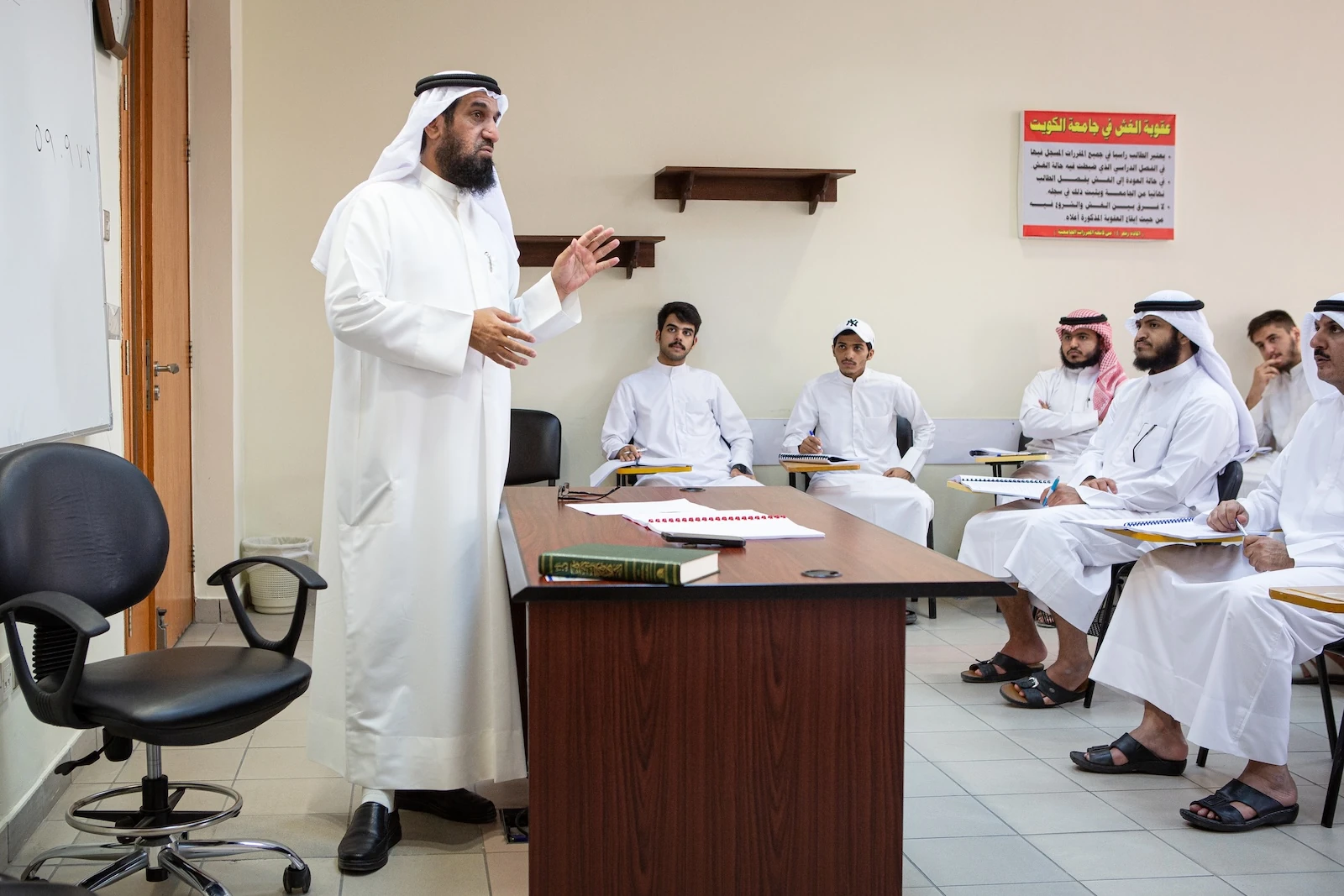
Alajmi also invoked religion to reject calls to reduce meat consumption. “If we celebrate Eid (a religious festival celebrated twice a year by Muslims and marked by the ritual sacrifice of animals), it is because herds reproduce quickly. If many of us were vegetarians, livestock would grow out of control and eventually kill us humans. Let’s say we save all animals, what would happen to the world?” he asked. The ecological footprint of animal-based proteins is several times to more than a dozen timesUnited Nations – Healthy diets for a healthier planet greater than that of plant-based foods, and adopting a vegetarian diet is estimated to reduce the climate impact of food consumption by a quarterWorld Wide Fund for Nature Switzerland – Viande et produits laitiers.
“We survive thanks to oil”
The stance of Kuwait’s faith leaders constitutes a missed opportunity. The prominent social role played by the religious establishment in Muslim countries of the Arabian Peninsula would have positioned imams and religious scholars as influential voices capable of encouraging a collective moral examination of consumerist lifestyles and excessive resource use. Notably, the arid region consumes fresh water at a rate far beyond its ecological capacity.
The limited engagement of faith leaders is noteworthy since Kuwait allows greater latitudeUnited States Department of State – Report on International Religious Freedom, 2023 in religious discourse than neighbouring countries, including letting imams write their own sermons. The Ministry of Awqaf and Islamic Affairs did not respond to a request for an interview. Religious authorities in the United Arab Emirates strictly regulateGulf News – Imams told to stick to standard Friday sermon, 2019 the sermon delivered across mosque, and Saudi Arabia’s Crown Prince Mohammad Bin Salman Al-Saud launched a crackdown in the late 2010s to consolidate state control over religious authority.
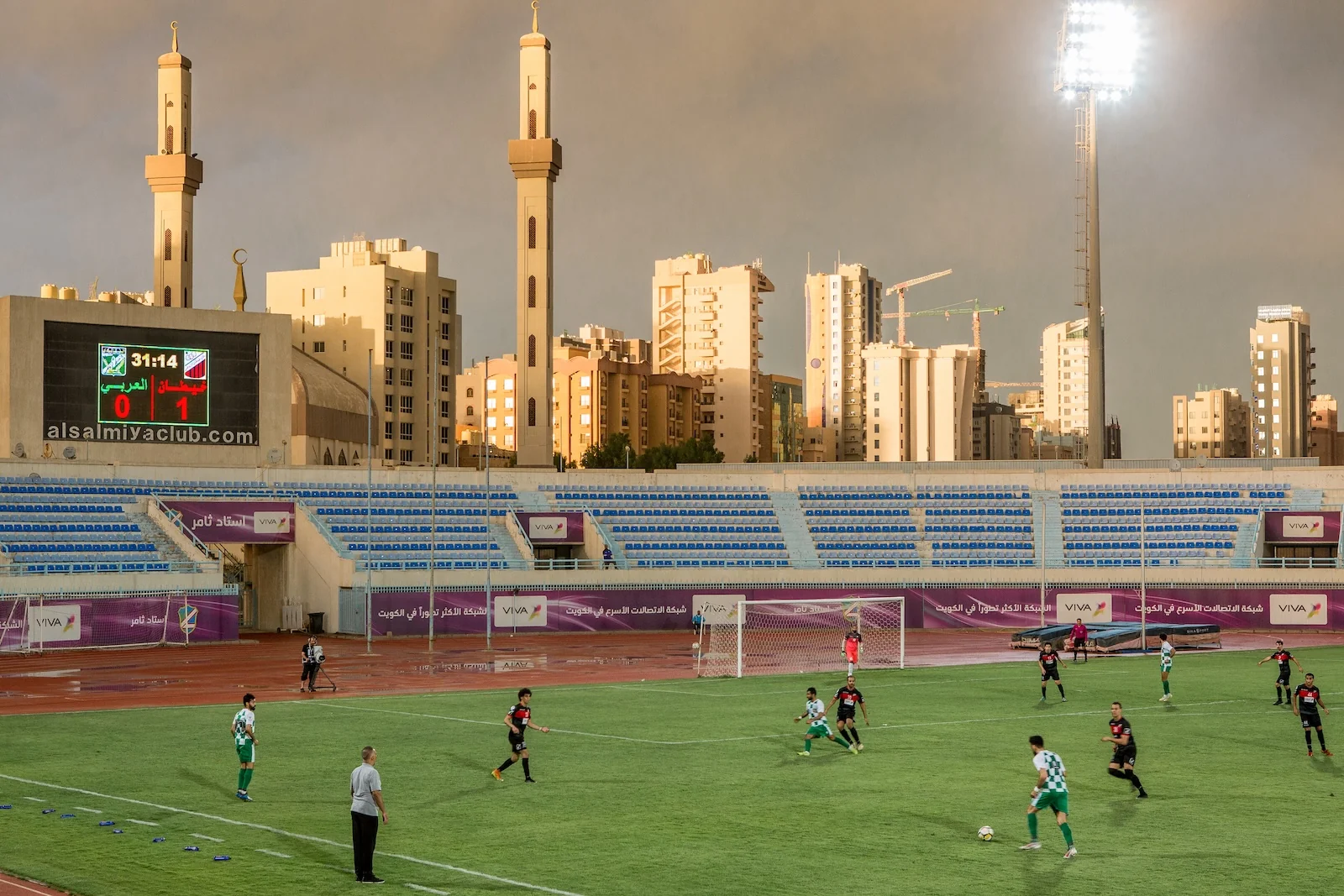
Kuwait appears increasingly isolated amid a growing environmental conversation. An initiativeUmmah for Earth – Green Mosques Initiative equips mosques with solar energy systems in several countries, and 28 religious leaders signed an interfaith statementEmirates News Agency – COP28 Presidency receives ‘Abu Dhabi Interfaith Statement for COP28’ at Global Faith Leaders’ Summit, 2023 on climate change ahead of the hosting of COP28 in the United Arab Emirates. Meanwhile, the head of the Catholic Church emerged as one of the most outspoken religious voices. “It is not possible to conceal the correlation of these global climate phenomena and the accelerated increase in greenhouse gas emissions, particularly since the mid-twentieth century,” Pope Francis wrote in an apostolic exhortationThe Holy See – Laudate Deum of the holy father Francis, 2023 in October 2023. “The necessary transition towards clean energy sources such as wind and solar energy, and the abandonment of fossil fuels, is not progressing at the necessary speed,” he added.
A lack of economic alternatives to oil exports — the cornerstone of Kuwait’s current economic, social, and political structures — has made religious figures complacent with an activity that contributes to ecological breakdown. Oil receipts accounted for 93%Arab News – Kuwait records budget surplus for first time in 9 years, 2023 of government income in the 2022–23 fiscal year. “We survive thanks to oil, it is our only source of revenue,” said Hamad Al-Matar, a lawmaker affiliated with the Muslim Brotherhood, and director of the environmental committee at the Kuwaiti parliament. Though stopping short of scrutinising the fossil fuel industry itself, he condemns the role humans play in disrupting Earth’s ecosystems. He said: “Everything in the world is by God and God’s will, but we have destroyed the climate … Climate change is due to human activities, period.”
Pollution, “wind takes it far away”
About 850 kilometres from Kuwait City, thousandsAmnesty International – Record number of fossil fuel lobbyists at COP undermines critical climate talks, 2023 of fossil fuel hardliners and lobbyists gathered at COP28 in Dubai in December 2023 to influence talks as negotiators debated whether fossil fuels should be phased down or phased out. Talks at the United Nations’ climate conference are largely irrelevant to Alajmi. “Why does burning oil generate CO2? The Quran says we should not question what God does, because he knows what he is doing. That is the way it is; it is up to God to decide, not us humans,” the Islamic scholar asserted.
In a society marked by entrenched support for the fossil fuel industry, including among faith leaders, environmental voices are marginal. “We have not reached a critical mass that cares. I feel next to go crazy, it is frustrating,” sustainability expert Samia Alduaij said, citing limited interest in renewable energy. Some have turned to education to cultivate environmental awareness among younger generations. “Some students go back home and talk to their families and friends, I think that creates at least some conversation,” said Reem Alawadhi, an assistant professor at Kuwait University’s Earth and Environmental Sciences Department.
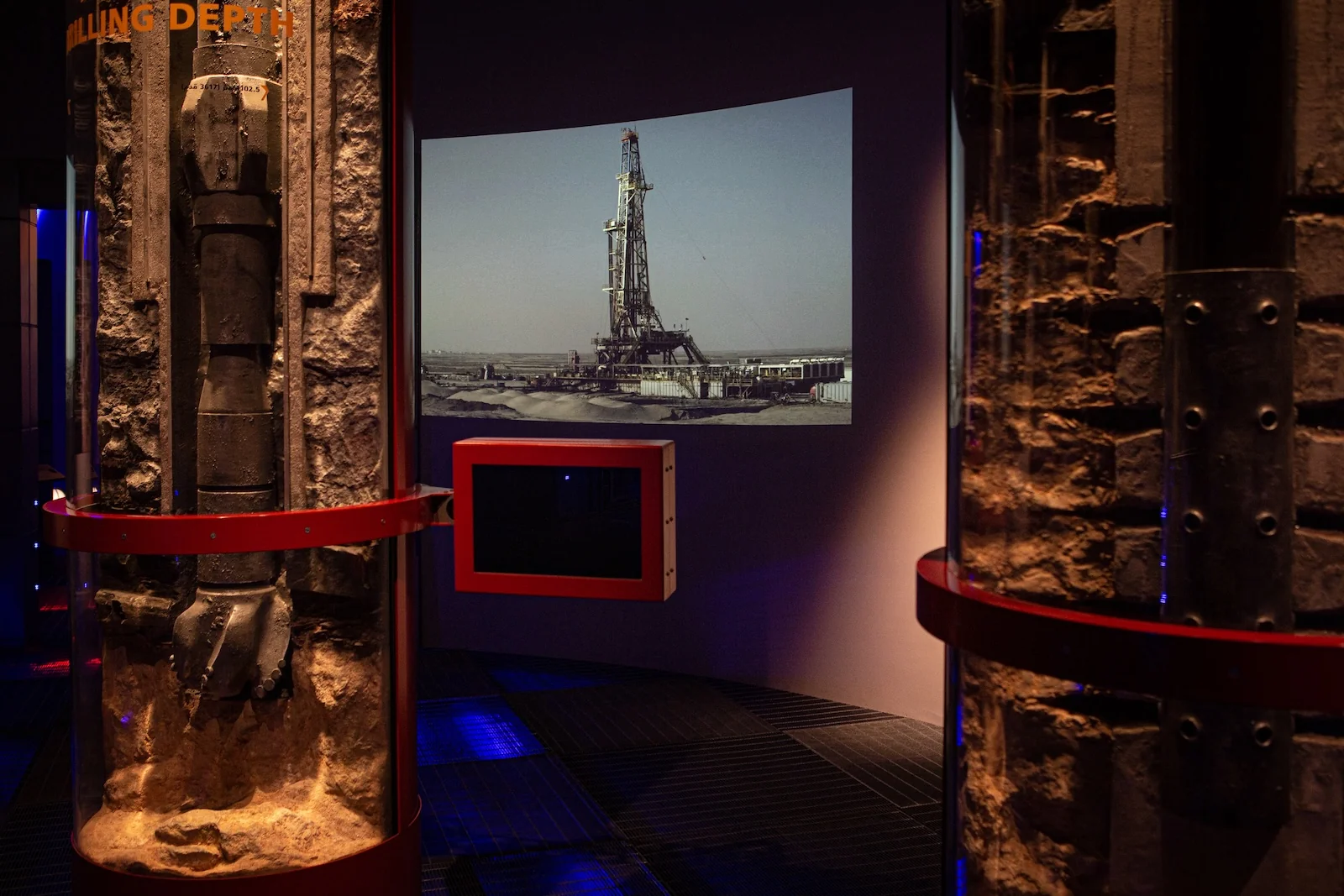
Yet, groups of schoolchildren visiting the permanent exhibition held by Kuwait Oil Company (KOC) to showcase the history of the petroleum sector cheer for oil exports to “continue forever”, according to Rawan Al-Jabir, one of the guides. As Kuwait’s environmental action stalls, temperatures across the region continue to rise, driven in part by the combustion of fossil fuels exported by West Asian petrostates to consumer markets. The United Nations’ body assessing climate change science projects that temperatures in the Arabian Peninsula, where summer heat regularly exceeds 50 degrees CelsiusWorld Meteorological Organisation – WMO verifies 3rd and 4th hottest temperature recorded on Earth, 2019 Celsius, will rise by 2.5°C above 1850–1900 pre-industrial levels by 2100, and 6.3°CIntergovernmental Panel on Climate Change – WGI Interactive Atlas in the business as usual scenario.
“God never creates something for noise, everything has a reason. God knows the big picture, so maybe he planned higher temperatures for some reasons that we do not know until now,” said Shaheen Bunashi, a student at the College of Sharia and Islamic Studies. While sidestepping the issue of oil consumption, Ayman Abou Oussama, a muezzin at the Grand Mosque of Kuwait, instead cautioned: “God created everything in specific quantities and proportions. Disrupting this balance would cause damage greater than anything we can imagine.”
A warming climate is likely to intensify demand for artificial cold, and the consumption of fossil fuels used to generateInternational Energy Agency – Energy Statistics Kuwait, 2025 the electricity that powers air conditioners in Kuwait. “I tell believers to protect the environment and to not pollute, but what is released into the atmosphere is beyond personal will. We pray that the sun will clean it all,” Khaled Al Rashid said. As he sipped Arabic coffee in an air-conditioned room, Abdulrahman Mahmoud, a Saudi imam visiting Kuwait, said: “Allah created everything, the sky, trees, ground and stones, to serve us, humans. As for the pollution, wind takes it far away. Allah controls what he has created, he knows, and will always protect us.”