

“Imagine a place where going to farm in your land can put your life at risk, where cooking your family dinner can cause your house to go up in smoke. This country exists, it is not at war, but yet millions of people are living there with the daily threat of unexploded ordnance,” an audio narration at a museum in the Lao capital said. The United States military dropped about 450The Guardian – The 50-year fight to clear US bombs from Laos, 2023 kilograms of bombs on the Southeast Asian country, every minute, around the clock, for nine years, from 1964 to 1973Center for Air Force History – The War in Northern Laos, 1993. The scale of the offensive made Laos the most heavily bombed country per capita in human historyLegacies of War – Legacies Library, a grim record that still stands today.
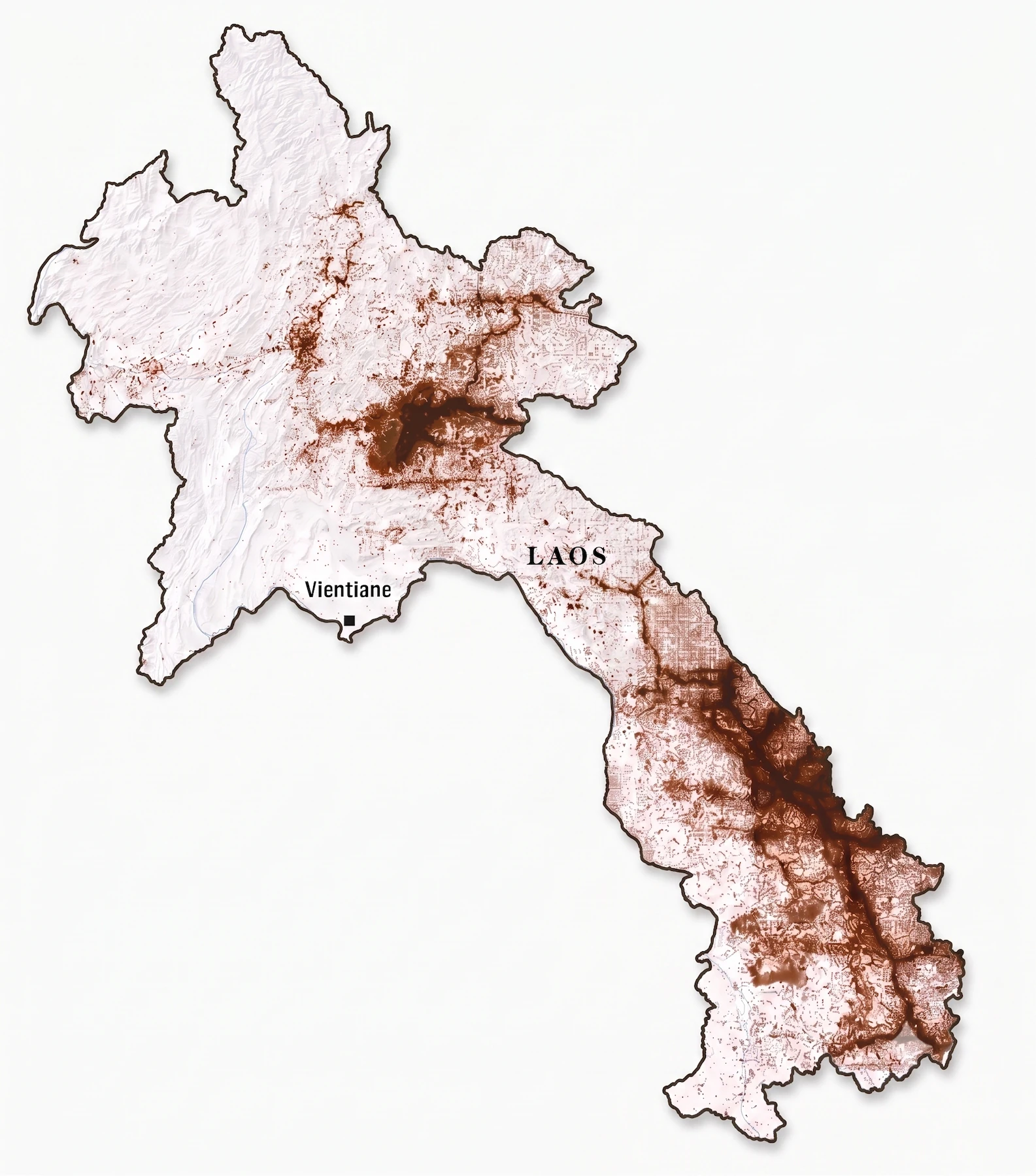
One of the museum’s installations shows submunitions raining over the ground after a cluster munition bursts open in mid-air. The controversial weapon, which has killed or injured 51,000Landmine and Cluster Munition Monitor – Lao PDR, 2025 people in Laos since 1964, was banned by the 2008 Convention on Cluster Munitions, ratified by more than 120United Nations Treaty Collection – Convention on Cluster Munitions, 2026 countries, including Laos. Yet the United States has made no moveLandmine and Cluster Munition Monitor – Cluster Munition Ban Policy, 2024 to join the Convention, and its Department of Defense continues to viewUnited States Congress – Cluster Munitions: Background and Issues for Congress, 2024 cluster munitions as “legitimate weapons with clear military utility”. In Laos, estimates suggest that between 8 and 80United States Congress – Unexploded ordnance in Laos, 2010 million unexploded submunitions remain, with halfLandmine and Cluster Munition Monitor – Lao PDR, 2025 of the provinces still classified as “heavily contaminated”. The impacts on civilian populations of the covertNational Museum of the United States Air Force – Plain of Jars military operationCentral Intelligence Agency – The Effects of the Bombing in Laos Since 1 November 1968, 1969 was “deliberately concealed” by the State Department, congressman Pete McCloskey wroteUnited States Congress – Unexploded ordnance in Laos, 2010.
Unexploded military munitions also made farming hazardous. About halfNational Information Platforms for Nutrition – Agricultural Statistics Yearbook, 2024 of harvested areas in Laos are located in the provinces most heavily bombed by the United States military, and decontamination efforts proved insufficient to reduce the threat of detonations, with less than oneUnited States Congress – Unexploded ordnance in Laos, 2010 percent of affected land cleared as of 2010. The explosive weapons can restrict access to land, reduce crop production and cause food insecurity, the United Nations Development Programme analysedUnited Nations Development Programme – Supporting Effectiveness and Efficiency in the UXO Sector, 2022, adding that poverty rates in Laos “coincide significantly” with ordnance contamination. Agriculture is the main activity in the landlocked country with sevenInternational Labour Organization – Lao People’s Democratic Republic, 2026 out of ten working Lao earning a living from the sector. Apart from rice, Laos’ primaryNational Information Platforms for Nutrition – Agricultural Statistics Yearbook, 2024 crop, agricultural output includes maize, coffee, spices, vegetables and fruits, among others.
Spraying Vietnam’s mangroves
The industrial-scale use of cluster munitions, describedThe New York Times – ‘A Lake of Blood’, 1971 in 1971 by humanitarian worker Fred Branfman as the “most protracted bombing of civilian targets in history”, was often preceded by the spraying of chemical herbicides. The United States carried out at least 226Conflict and Environment Observatory – New data on Agent Orange use during the US’s secret war in Laos, 2024 such aerial spraying missions from 1965 to 1969 in Laos, spreading more than 1.5Office of Air Force History – The Air Force and Herbicides in Southeast Asia 1961-1971, 1982 million litres of herbicides over agricultural lands and forests after military scientific advisors concluded that the destruction of crops could be one of the “most effective means of defeating the enemy”. Washington denied the campaign for years, before publicly acknowledging it in 1982Office of Air Force History – The Air Force and Herbicides in Southeast Asia 1961-1971, 1982.
Military operations in Laos, which was not at war since it had declaredUnited Nations Treaty Collection – Declaration on the Neutrality of Laos, 1962 its neutrality, were part of the broader United States campaign against communism in Southeast Asia, commonly known as the Vietnam War. Beyond Laos, an additional 72 millionUnited States Congress – H.R.3518 — 117th Congress, 2021 litres of chemical herbicides were sprayed between 1962 and 1971 under Operation Ranch Hand over about 20%Office of Air Force History – The Air Force and Herbicides in Southeast Asia 1961-1971, 1982 of South Vietnam’s forests. It destroyed more than a third of all mangroves in the area. The herbicides were sprayed at 20 to 40University of Bristol – Agent Orange, 2000 times the recommended concentration for normal agricultural use, and an estimated 2.1 to 4.8Vietnam Ministry of National Defense – Vietnam War legacy continues to poison humans, livestock million Vietnamese were directly exposed.
“Claims that the herbicides as they were used during the war have rendered the soil “sterile,” permanently or at least for prolonged periods, are without any foundation,” an independent scientific body advising the United States government concludedNational Academy of Sciences – The Effects of Herbicides in South Vietnam, 1974 in 1974. Following the end of the war, the United States burntOffice of Air Force History – The Air Force and Herbicides in Southeast Asia 1961-1971, 1982 unused stocks of military-grade herbicides in the Pacific Ocean.
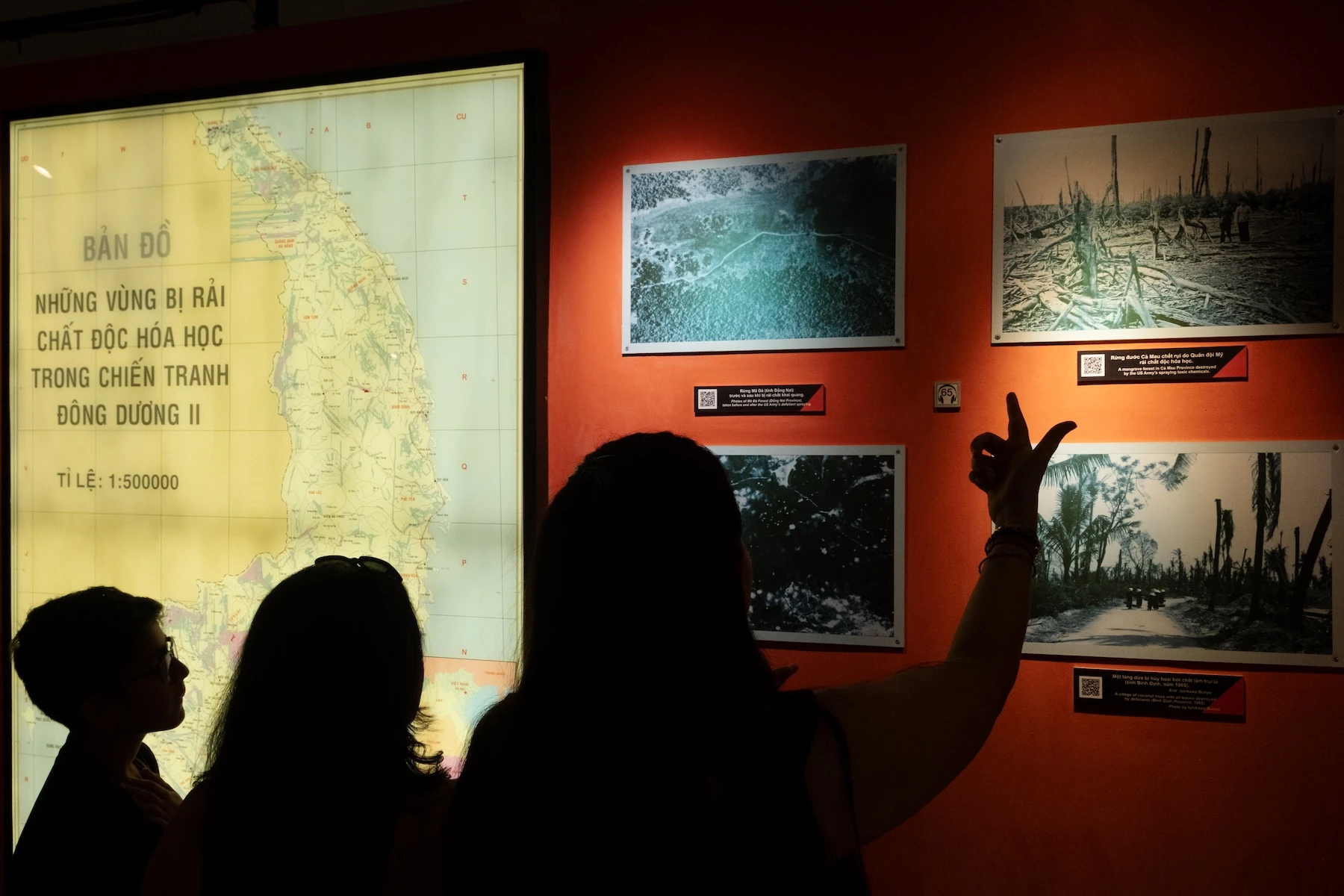
In Southeast Asia, however, the chemical contamination persistedVietnam Ministry of National Defense – Vietnam War legacy continues to poison humans, livestock. Toxic chemical compounds contained in herbicides sprayed, known as dioxinsCenters for Disease Control and Prevention – Chlorinated Dibenzo-p-Dioxins, 2024, are believedAsian Economic Journal – Agent Orange and the Health of Vietnamese People After 30 Years, 2022 to have caused multigenerationalUnited States Congress – H.R.3518 — 117th Congress, 2021 health impacts, and Vietnam recognises severalHanns Seidel Foundation – Country Report Vietnam, 2022 diseases, illnesses, deformities, malformations related to exposure during the war. Agent Orange, the herbicide most frequently used during Operation Ranch Hand, contained tracesU.S. Department of Veterans Affairs – Facts About Herbicides, 2022 of 2,3,7,8-tetrachlorodibenzo-p-dioxin, or TCDD, one of the most toxicThe New York Times – The Victims of Agent Orange the U.S. Has Never Acknowledged, 2021 substances ever created.
The effects extended beyond human health. A 2003 American study on the implications of dioxins in the food supply chain contradicted the 1974 claim, estimating that it takes 25 to 100United States Institute of Medicine – Sources of Dioxins and Dioxin-like Compounds in the Environment, 2003 years for the concentration of TCDD in subsurface soil to naturally decrease by half. As a result, wartime herbicide spraying is likely to have left traces in Vietnam’s soils and food products long after the withdrawal of American troops. In 2021, a proposed legislation in the United States noted: “Today, there are still dozens of environmental hot spotsHatfield Consultants – Agent Orange Reports and Presentations, 2011 that continue to contaminate the food, soil, sediment, livestock, and wildlife with Agent Orange.” Still, the United States engaged in remediation efforts. It completed the clean up of a former air base in Da Nang in 2018, and committed to treat 500,000U.S. Embassy & Consulate in Vietnam – Dioxin Remediation at Bien Hoa Airbase Area, 2021 cubic meters of dioxin contaminated soil by 2029 at Bien Hoa Air Base, the primary Agent Orange storage site during the war.
Chemical industry’s legacy
The aftermath of the herbicide campaign was marked by a lack of corporate accountability. None of the companies involved in producing the chemicals sprayed, including Monsanto and Dow ChemicalFrance 24 – Chemical firms on trial in France over Agent Orange use in Vietnam War, 2021, were held liable for the harm caused to Vietnamese citizens as a result of the military use of their products. In 2009, the United States’ Supreme Court rejected a lawsuit filed in 2004 against 37Embassy of the Socialist Republic of Vietnam in the United States of America – For Vietnamese victims of Agent Orange/dioxin, 2004 chemical manufacturers that supplied herbicides during the war. The Vietnamese Ministry of Foreign Affairs reactedEmbassy of the Socialist Republic of Vietnam in the United States of America – Vietnamese people are indignant at the wrong and unjust decision of the US Supreme Court, 2009 that companies should “promptly take their legal, spiritual and moral responsibilities”. A civil society Tribunal of Conscience held in Paris the same year, which had no legal authority, foundInternational Association of Democratic Lawyers – Judgment of the International people’s tribunal of conscience in support of the Vietnamese victims of Agent Orange, 2009 the companies “guilty of complicity” in the damage inflicted by the United States Army to the environment of Vietnam.
In the following decades, the United States launched several prolongedFederal Depository Library Program – American Conflicts and Wars military interventions that reshaped the language used to describe American warfare, from the Vietnam-era idea of the “endless war”Miller Center – A happy ending to endless War, 2020 to the notion of “forever war”The New York Times – Trump Risks Another American ‘Forever War’, 2026, extending not only conflicts but also the environmental damage they leave behind. In 2026, it launched a campaign of aerial attacks on Iran alongside Israel, firing more than 13,000The Hill – 4 risks facing Trump if he returns to all-out war with Iran, 2026 strike munitions at the West Asian nation in five weeks, a campaign that has emitted millionsThe Guardian – 5m tonnes of CO2 emitted in just 14 days of US war on Iran, analysis finds, 2026 of tonnes of earth-warming gases. Meanwhile, the lethal legacy of Washington’s half-century-old ideologically drivenColumbia Political Review – A Fresh Order of Domino Theory, 2014 war against communism in Southeast Asia still scars parts of Laos and Vietnam.