
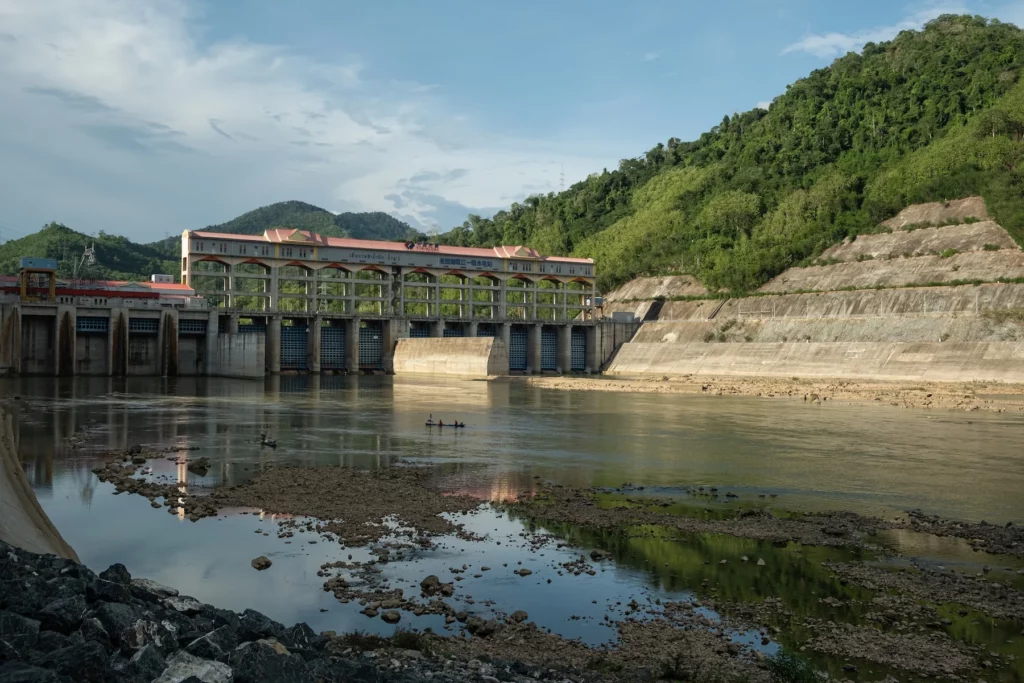
The Nam Ou River, one of the Mekong River’s largestMekong River Commission – Mekong Basin Geography tributaries, has flowed undisturbed for millionsGlobal and Planetary Change – Palynomorph assemblages evidence for river reorganization 8.5 million years ago in Southeast Asia, 2022 of years from its source along the present-day Lao-Chinese border through nearly 500International Finance Corporation – Nam Ou River Basin profile, 2017 kilometres of mountainous northern Laos. Today, the waterway is exploited for electricity generation after the Chinese state-owned company Power Construction Corporation of China (PowerChina) funded and built seven dams along its course between 2012 and 2021. According to PowerChina, the hydropower infrastructure, operated under a 29-year concession and with an annual electricity generation capacity of five billionPower Construction Corporation of China – Laos Nam Ou River Cascade Hydropower Project, 2023 kilowatt-hours, reflects the “strategic alignment and mutual complementarity” between the two countries.
The seven Nam Ou dams are part of an extensive network of over 80Lao News Agency – Laos aims to become electricity source of Southeast Asia, 2023 hydropower facilities distributed across the waterways of Laos, 68Stimson Center – Mekong Infrastructure Tracker Dashboard, 2026 of which have been built in the 21st century alone. With power generation having surged 16-foldEmber – Laos electricity generation, 2026 since 2000, hydropower-generated electricity has become an exportWorld Integrated Trade Solution – Lao PDR Electrical energy exports, 2022 commodity, mainly sold to Thailand. Laos now ranks as the second-largestWorld Integrated Trade Solution – Electrical energy exports by country, 2022 Asian exporter of kilowatt-hours after China, earning the country the nicknameLao News Agency – Toshiba Wins Major Orders for Nam Ou 4 Hydro Power Plant in Laos, 2016 “the battery of Southeast Asia”, with plans to reach 100Nikkei Asia – Thailand challenges Laos dam building spree on Mekong River, 2021 hydropower dams by 2030.

Laos joined the region’s first multilateral cross-border electricity trade in 2022Tenaga Nasional Berhad – Laos-Thailand-Malaysia-Singapore Power Integration Project, 2023 to connect its output to urban and industrial centres across Thailand, Malaysia and Singapore. Analysts at the Singapore-based Yusof Ishak Institute believeYusof Ishak Institute – Accelerating the ASEAN Power Grid 2.0, 2023 that “the enormous hydroelectric potential” of the landlocked country amid “increasing energy demand” across Southeast Asia motivated the agreement. Power consumption in Association of Southeast Asian Nations member states has increased by more than 250%Ember – Laos electricity demand, 2025 since 2000, with data centre infrastructure that serves global and regional digital activity now among the fastest-expanding drivers of demandASEAN Climate Change and Energy Project – The Rise of Data Centres, Artificial Intelligence, and ASEAN’s Decarbonisation Goal, 2025. Lao electricity also flows northwards, with a new transmission line to China under constructionState-owned Assets Supervision and Administration Commission of the State Council – China-Laos 500-kV Interconnection Project Switched On, 2026.
Barriers to migratory fish
More than half a century after Laos inaugurated its first hydropower dam near the capital, Vientiane, the Nam Ngum 1, the dam-building frenzy has sliced its river ecosystem, altering the flow of sediment that naturally moves downstream through the Mekong basin. Sediment levels have plummeted, despite the 1995 Mekong AgreementMekong River Commission – Agreement on the cooperation for the sustainable development of the Mekong river basin, 1995, signed by Laos, Cambodia, Thailand and Vietnam, pledging to protect the “ecological balance” of the transboundary river system. The Mekong River Commission, an intergovernmental organisation, concluded in 2018 that the volume of sediment reaching the Mekong Delta region in Vietnam could drop by 97%Mekong River Commission – Mekong Sediment from the Mekong River Commission Study, 2018 by 2040 compared to 2007 levels without mitigation efforts to pass them through dams.
Sediments play a vitalEnvironment European Commission – Common Implementation Strategy for the Water Framework directive, 2000 role in aquatic ecosystems, including by supporting biodiversity and soil fertility. A reduction in sediment concentrations downstream of Laos’ network of dams increasesMekong River Commission – Preliminary Design Guidance for Proposed Mainstream Dams in the Lower Mekong River Basin, 2023 the risk of riverbank erosion and landslides, heightens the Mekong Delta’s vulnerability to sea level rise, and affects agriculture by depriving farmlands of nutrients that nourish the soil. Yet, a 2017 studyOxfam – Economic Evaluation of Hydropower Projects in the Lower Mekong Basin, 2017 concluded that hydropower plans in the region “seem to have ignored or underestimated the economic costs of environmental and social impacts”.
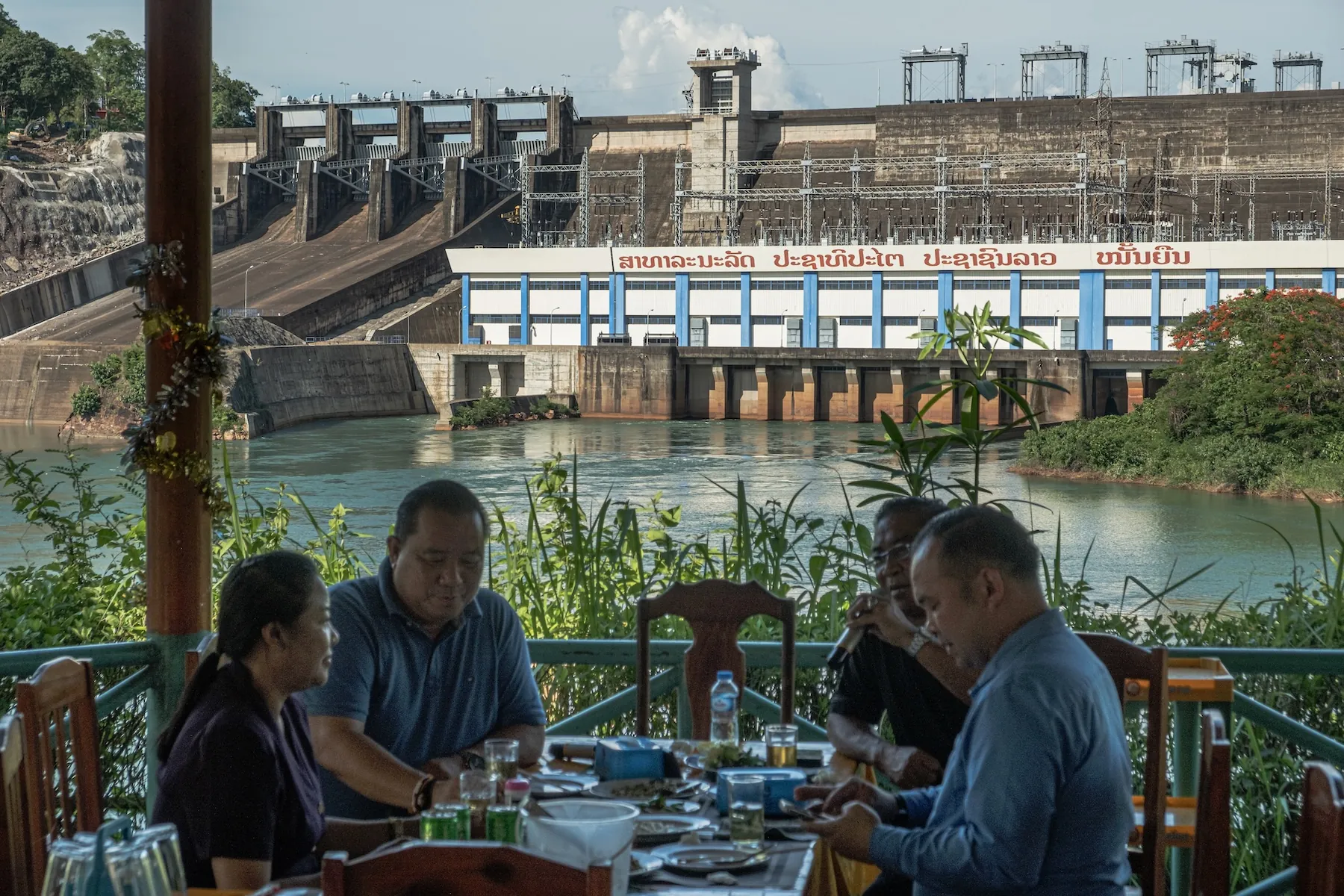
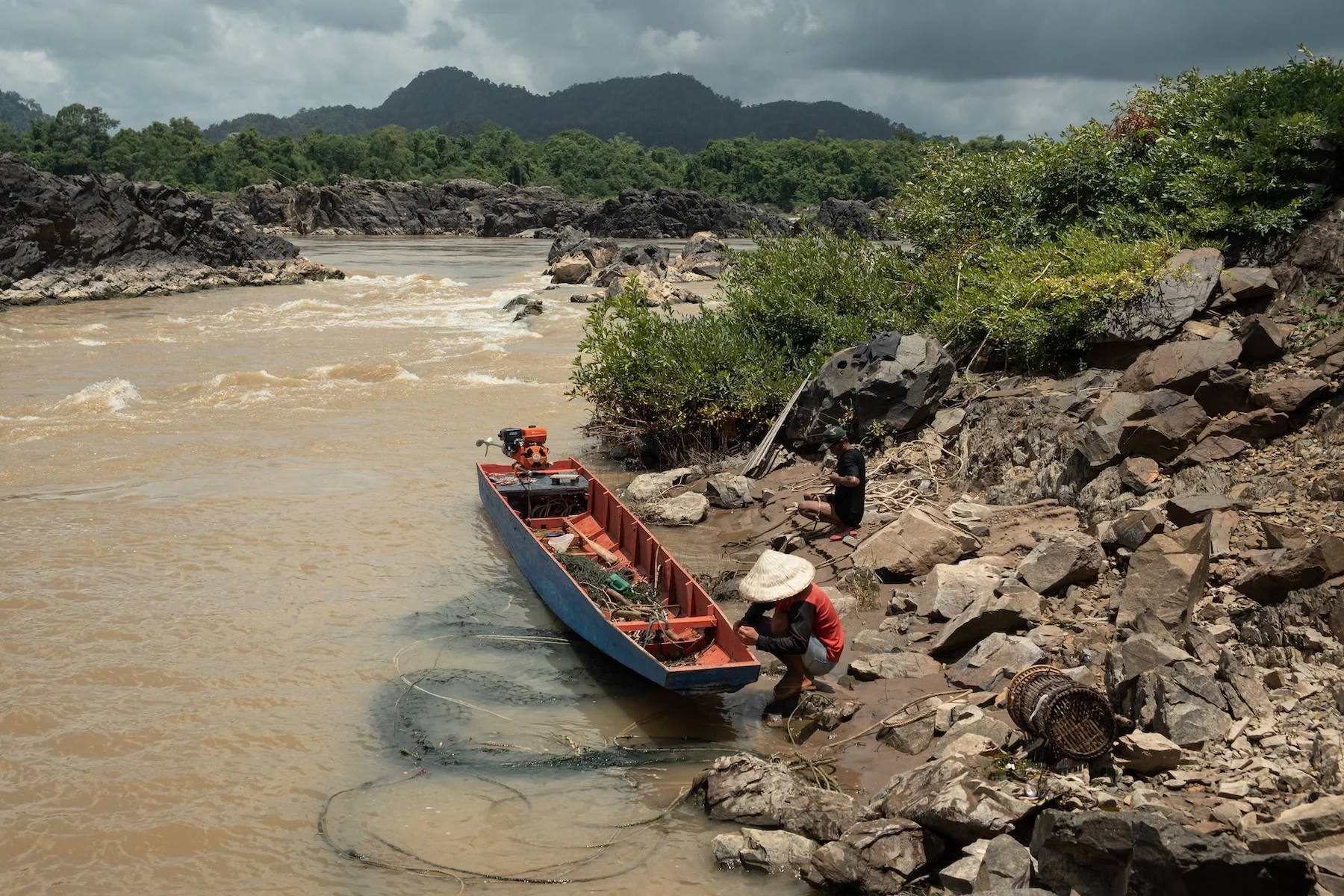
In the Nam Ou River, the slicing of the habitat into fragmented sections has affected aquatic life as hydropower facilities now stand in the way of 48 migratoryInternational Finance Corporation – Nam Ou River Basin profile, 2017 fish species that used to move upstream and downstream throughout the year to breed. The river and its tributaries are home to 139International Finance Corporation – Fishes of the Nam Ou River Basin, 2017 fish species, including the endangered Mekong stingrayIUCN Red List – Mekong Stingray, 2021 and the Jullien’s golden carpIUCN Red List – Jullien's Golden Carp, 2019. Dams have “a significant impact on fish by preventing migration and completion of life cycles,” the Mekong River Commission notedMekong River Commission – Guidelines to Prioritizing Fish Passage Barriers, 2023.
Several dams in Laos are equipped with specialised fish passage devices, but evidence of their effectivenessRadio Free Asia – Why research on Xayaburi dam in Laos remains opaque, 2025 remains limited, while adult and juvenile fish attempting to pass through dam infrastructures are at riskMekong River Commission – Preliminary Design Guidance for Proposed Mainstream Dams in the Lower Mekong River Basin, 2023 of injury or mortality. According to a 2017 assessmentMekong River Commission – Mitigation of the impacts of dams on fisheries, 2017 by the Mekong River Commission, fish populationsWorld Wildlife Fund – Giant Fish of the Mekong, 2010 “will usually change dramatically” over the long term in areas where a large dam has been built, even when fish passage measures are in place. A year later, the commission acknowledgedMekong River Commission – Study on the Sustainable Management and Development of the Mekong River Basin including Impacts of Mainstream Hydropower Projects, 2018 that fisheries in Laos were “likely to experience a substantial decline” because of dam-induced declines in fish populations.
In southern Laos, where the Mekong River flows out of the country through a riverine archipelago, a Malaysian company operates Laos’ final hydropower facility, generating electricity that is exportedMega First Corporation Berhad – Hydropower to Cambodia, where power consumption has surged nearly 50-foldEmber – Cambodia electricity demand, 2025 since 2000. The area was previously home to the lastWorld Wildlife Fund – The Don Sahong dam and the Mekong dolphin, 2014 population of freshwater Irrawaddy dolphins in Laos. Threats to the endangeredIUCN Red List of Threatened Species – Irrawaddy Dolphin, 2017 cetaceans predatedWorld Wildlife Fund – Time is running out for saving the transboundary dolphins of the Mekong, 2021 the launch of the dam in 2020 as the number of dolphins in Si Phan Don had fallen from 17Mongabay – Death of last river dolphin in Laos rings alarm bells for Mekong population, 2022 in 1993 to just three in 2018. The dam, however, added the final pressure, reportedlyMongabay – Death of last river dolphin in Laos rings alarm bells for Mekong population, 2022 displacing small-scale fishers further into the dolphins’ habitat. The last individual died in 2022, wounded by a fishing net.
Embracing dirtier electricity
While detrimental environmental impacts call into question the perception of hydropower as a source of green energy, the absence of earth-warming gas emissions during operation remains one of its main advantages. Hydropower generation is, however, highly vulnerable to changingIntergovernmental Panel on Climate Change – Scenario-based Projections and Near-term Information precipitation patterns. In the Nam Ou River Basin, changes in precipitation are largely uncertain, ranging from -27% to +41%Hydrology and Earth System Sciences – Impact of climate change on sediment yield in the Mekong River basin: a case study of the Nam Ou basin, 2013 under 3°C of warming. Across Laos, precipitation is projected to increaseClimate Change Knowledge Portal – Lao PDR in the 21st century, yet greater variability in its distribution across the year is also expected to raise the frequency of droughtsWorld Bank Group – Climate risk country profile Laos, 2021 affecting hydropower operations.
In its quest to increase electricity output and as hydrological uncertainty grows, Laos has built alternative capacities since the mid-2010s to ensure uninterrupted production and exports. Non-existent before 2015, power plants burning coal, the dirtiest fossil fuel, accounted for nearly a quarterEmber – Laos electricity generation, 2025 of its electricity output by the mid-2020s. Another coal-fired power plant, expected to start operations in southern Laos in 2028, will operate for three decades and burn an estimated 10 to 11Lao News Agency – Foundation Stone Laid for Sekong Coal-Fired Power Plant Project, 2025 million tonnes of coal annually to export electricity to Cambodia. Besides coal, Laos is also turning to solar energy. In 2026, a Chinese state-owned energy company launchedCGTN – China-built largest solar project in Southeast Asia goes online, 2026 in northern Laos the largest single-site solar farm in Southeast Asia.