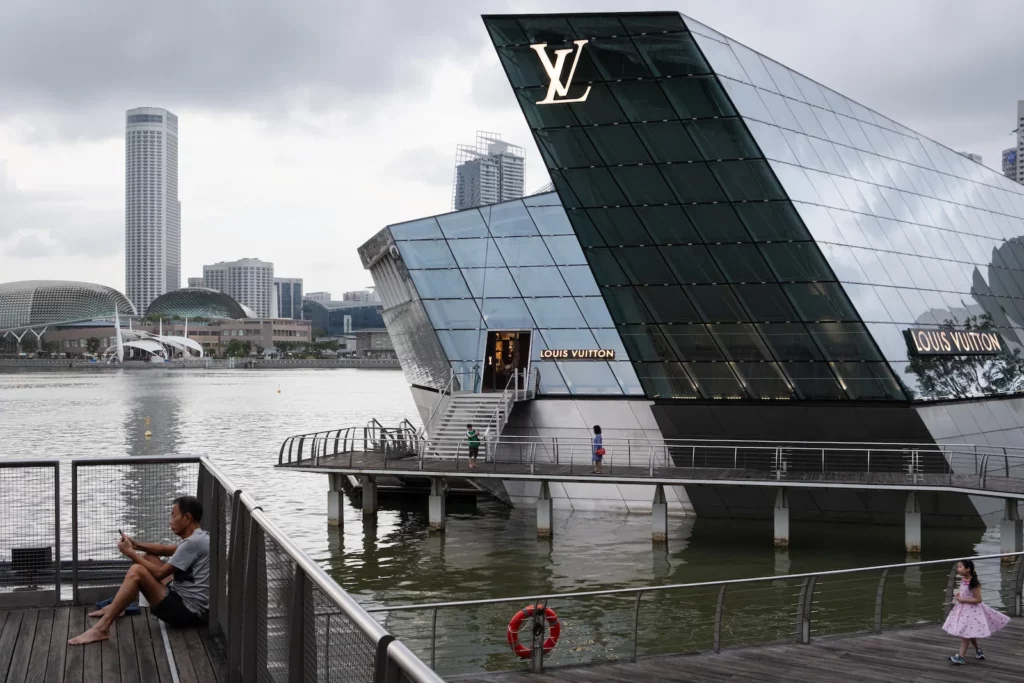
Fifteen years after its 2011Marina Bay Sands – Louis Vuitton Island Maison to open at Marina Bay Sands, 2011 inauguration, the Louis Vuitton Island Maison in Singapore, made of glass and steel,TCG construction – Where design and construction come together to tailor the future of luxury, 2011 remains one of the most iconic luxury retail sites in Asia. The brand anchors the fashion and leather goods division of Paris-headquartered LVMH, the world’s leading luxury goods conglomerate. Singapore, home to an estimated 245,000Henley & Partners – Private Wealth Migration Report, 2024 millionaires and sevenLouis Vuitton, 2026 Louis Vuitton stores, is Southeast Asia’s largestThe Straits Times – Luxury spending in Singapore defies global slump, 2025 luxury retail economy. The island’s commercial appetite for fashion, however, predates LVMH by centuries. Its location at the confluence of Asian trade routes produced a cosmopolitan fashion scene that blended styles from the Malay-Indonesian world with Chinese, Indian, Arab and Western influences.
The girl in the pink dress, on the left, is part of the generation that luxury brands have identified as their future core consumer base for fashion, perfumes, cosmetics, watches and jewellery. Asia has emerged as the world’s largest market for personal luxury goods, on the back of rising household living standards and population expansion in recent decades. Asia’s rise as a growth driver for the sector has prompted Western retailers to expand their regional presence. The continent accounted for nearly four in tenKPMG – The market of luxury goods, 2024 of all such goods sold globally in the early 2020s, nearly half of which in China. Yet, Western dominance of the sector is increasingly contested by Asian luxury houses targeting the same consumer base.
Luxury on foreign sand
Beyond its architectural profile, Louis Vuitton Island Maison has become one of the physical markers of the outsized environmental footprint of affluent consumers. The wealthiest 10% of people in the world are responsible for about 66%Nature Climate Change – High-income groups disproportionately contribute to climate extremes worldwide, 2025 of the increase in global average temperatures in the three decades leading to 2020. The large gap stems from a preference among this demographic for resource-intensive lifestyles, including high-end spending.
Beneath the language of heritage and artisanship, the luxury industry relies heavily on high-grade virgin materials. The jewellery sector absorbs about one in fiveNatural Resources Canada – Diamond facts, 2024 diamonds extracted annually and has historically consumed more than halfWorld Gold Council – Historical demand and supply, 2026 of global gold production. The industry’s material intensity is compounded by an endless flow of limited-edition collections to stimulate consumer demand, while destroying unsold inventory to defend its scarcity pricing. Burberry burned nearly £29 millionThe Straits Times – Burberry burns S$51 million in unsold luxury products to prevent counterfeiting, 2018 worth of unsold clothes, accessories and perfume in the late 2010s.
The area the Louis Vuitton store is located at, Marina Bay, was also built with extracted natural materials. The artificial land, completed in 1994,Singapore Urban Redevelopment Authority – The Marina Bay Story was reclaimed from the sea with earth excavatedTemasek – Hidden Facts You Didn’t Know About Singapore’s Marina Bay District, 2019 from hills in eastern Singapore, and sand importedSingapore Institute of Landscape Architects – Our Forged Identity, 2022 from neighbouring countries. Sand mining, the largest extractive industry in the world, impacts the environment it draws from, damaging riverWorld Wide Fund for Nature – Impacts of sand mining on ecosystem structure, process & biodiversity in rivers, 2022 ecosystems, accelerating coastal erosion, and causing a decline in fish populations. Yet none of that damage is visible from Marina Bay. Singapore’s luxury economy and the ecological damage generated along its supply chain unfold in different geographies.