
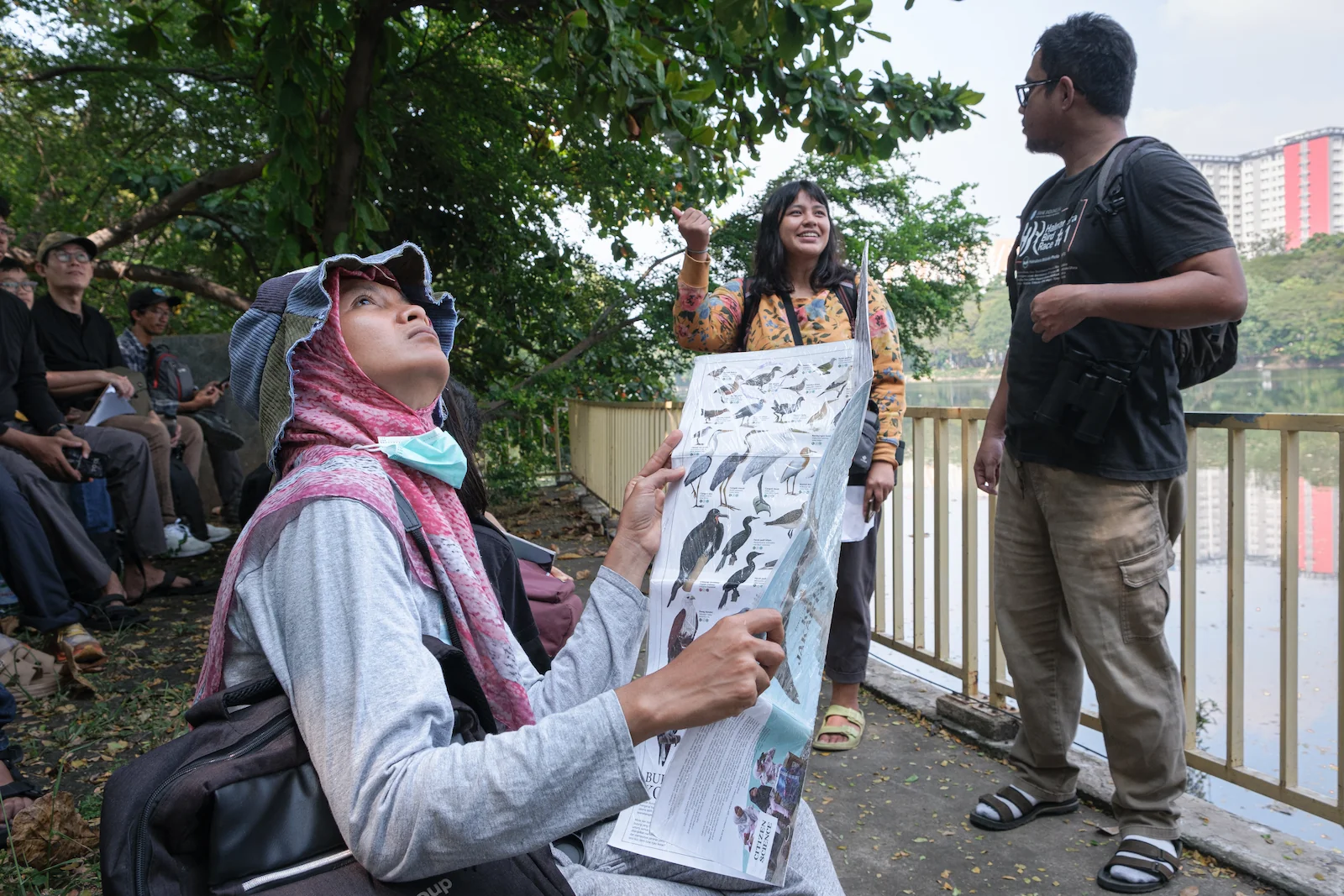
Before Jakarta awakens, one of the Indonesian capital’s last remaining parks hosts an unusual gathering. This Saturday, a group of about 30 people, equipped with binoculars, observed birds at dawn in Kemayoran City Forest. “I enjoy the focus on urban birds; they are less explored than mountain or forest birds,” said Muhammad Wildan Al Gifari, an Indonesian birdwatcher.
The eclectic group joined the latest in a series of a regular monthly event that a local birdwatching community has held consistently for the past two decades, hoping to draw attention to urban bird populations. “Bird watching took off in the 2010s, thanks to photographers, not biologists. They share their pictures online and it creates conversations with others,” said Ady Kristanto, who launched the Jakarta Birdwatcher’s Society in 2005.
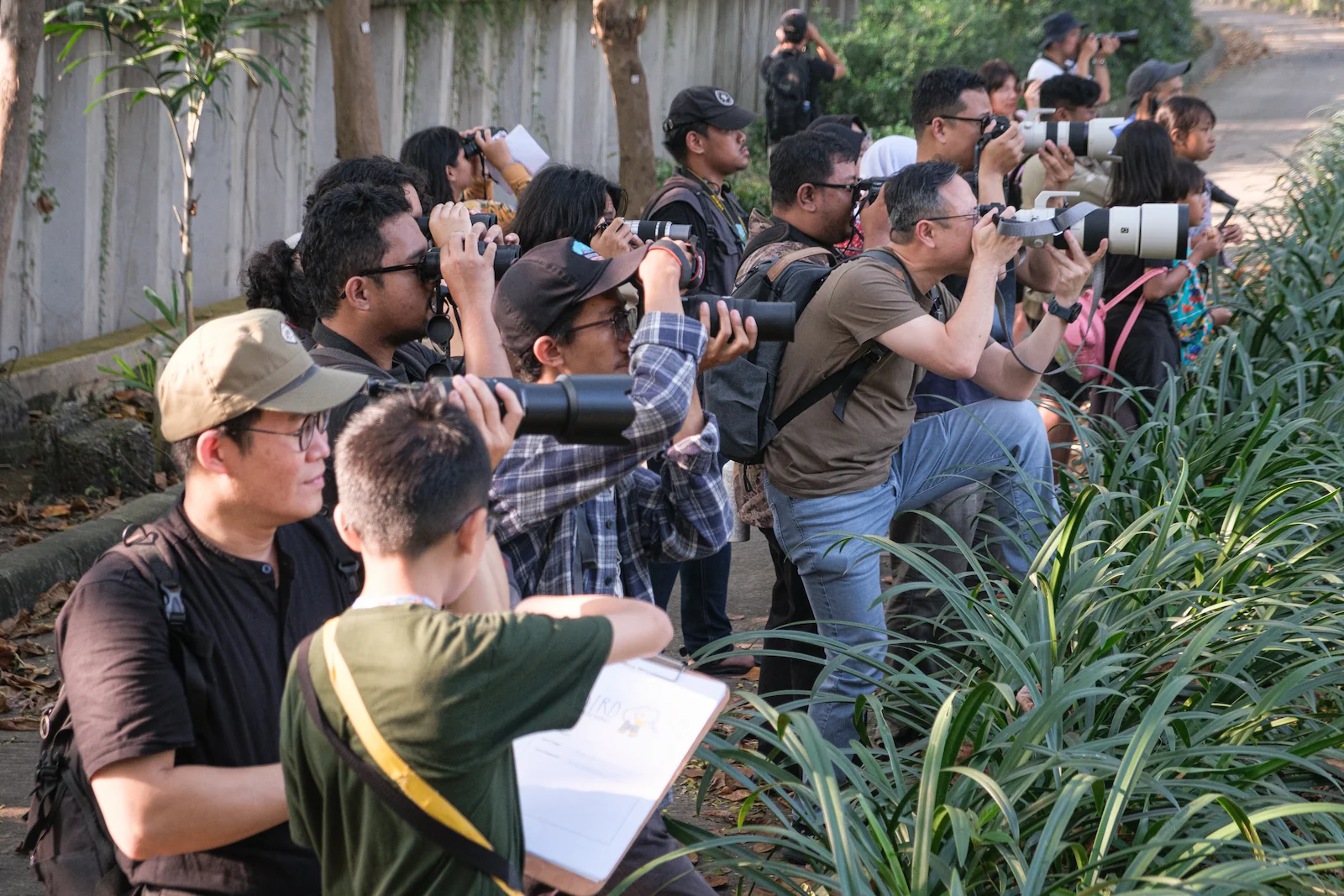
“We educate people that birds are part of us, that they are some of Jakarta’s people too,” he added. In fact, beyond playing a vital role in regulating insect populations and dispersing plant seeds, birds also contribute to human well-being. Several scientific studiesThe Lancet – Positive relationship between bird diversity and human mental health, 2024 have identified a correlation between the avian diversity of an area and the mental health of its human residents.
It is an environmental luxury Jakarta has gradually lost over the decades as human presence now exerts near complete control over the urban area in which the city is located. The area, home to over 35Urban area research firm Demographia – World Urban Areas, 20th Edition, 2025 million people, saw at least 75The Jakarta Post, 2025 million daily trips traverse its maze of buildings and congested roads as of 2023, most often using fossil fuel-powered vehicles.
Raiding the fringes
Despite Kristanto’s efforts, Jakartan birdwatchers have been inexorably pushed by urbanisation to the city’s ever-receding fringes. Ahmad Yasin Chumaedi, a birdwatcher, walks with binoculars in hand around Taman Wisata Alam Angke. The mangrove conservation area, spanning about 100BKSDA Jakarta hectares, is one of the last remnants of a vast mangrove forest that covered northern Jakarta until the 1990s, before real estate projects mushroomed. “There are still birds in Jakarta, but only in small pockets as urbanisation has caused the loss of many habitats,” Chumaedi said.
Data from the ornithological app eBird confirms that nearly 90%eBird, 2025 of bird sightings in Jakarta occur in just ten green spaces. And diversity is under pressure. The recording of 210eBird, 2025 different bird species in 2025 in Jakarta via eBird suggests minimal species loss compared with the 230 speciesArdea, Journal of the Dutch Ornithological Society – De avifauna van Batavia en omstreken, 1937 recorded by Dutch naturalist Andries Hoogerwerf in 1937, despite his note that the list was “undoubtedly not entirely complete”. Al Gifari, the birdwatcher, believes that several bird species have “adapted, finding a way to live in this urban environment”.
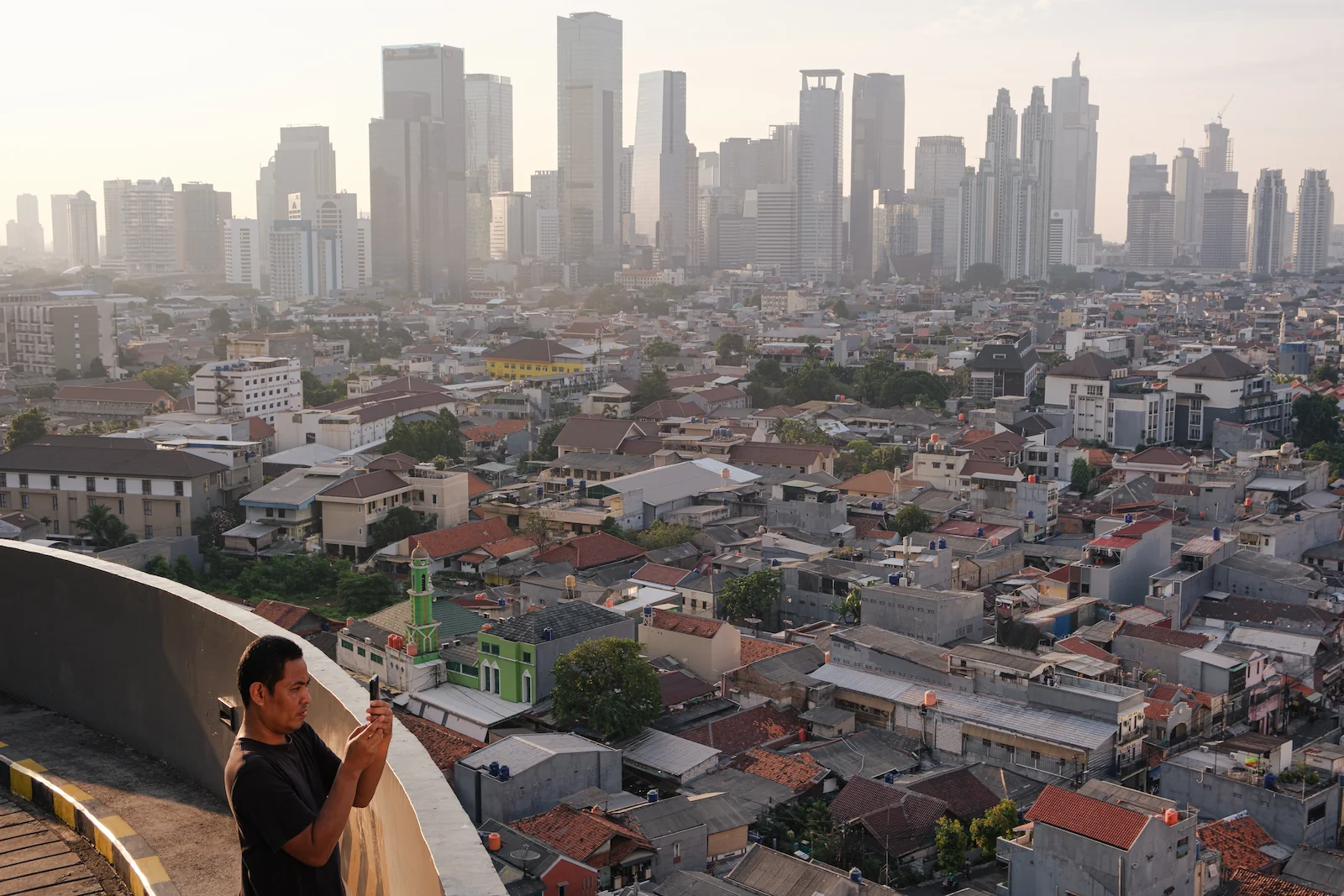
But the data obscures a more nuanced biological reality. More than three-quarters of species recorded in the Jakarta urban areas have a preference for “avoiding urban environments”, according to a study published in 2020IOP Publishing – Synurbic avian species in Greater Jakarta Area, 2020 by Indonesian researchers. Losing bird diversity would disrupt the vast network of bird species that function as biological connectors between different natural ecosystems.
During the first two decades of the 21st century, Jakarta expanded horizontally, building into its outskirts almost five timesScienceDirect – Impact of Urban built-up volume on Urban environment, 2024 faster than the city was densifying, due to a social preference for individual houses. Highways, built with asphalt derived from fossil fuels, have been one of the key enablers of conversion of far-flung wetlands and farmlands into housing.
The raid against Jakarta’s fringes was a repeat of the colonial era when, as Andries Hoogerwerf wrote in 1937, the Dutch East Indies authorities had “encroached on a large part” of what six decades earlier had been forests, swamps, and wilderness to establish fish farming, fruit, rice, and rubber cultivation.
Suffocated by the consumer society
As property developers set their sights on the last remaining natural spaces in Jakarta’s urban area, whether some green spaces have been kept in place by local authorities to shape public perception prompts scrutiny. “Parks like this are Disneylands that have been built to create a hallucination effect and make us forget what is happening deep in the forests of Sumatra and Kalimantan where oil palm plantations are everywhere,” said Andrio Wibowo, a birdwatcher.
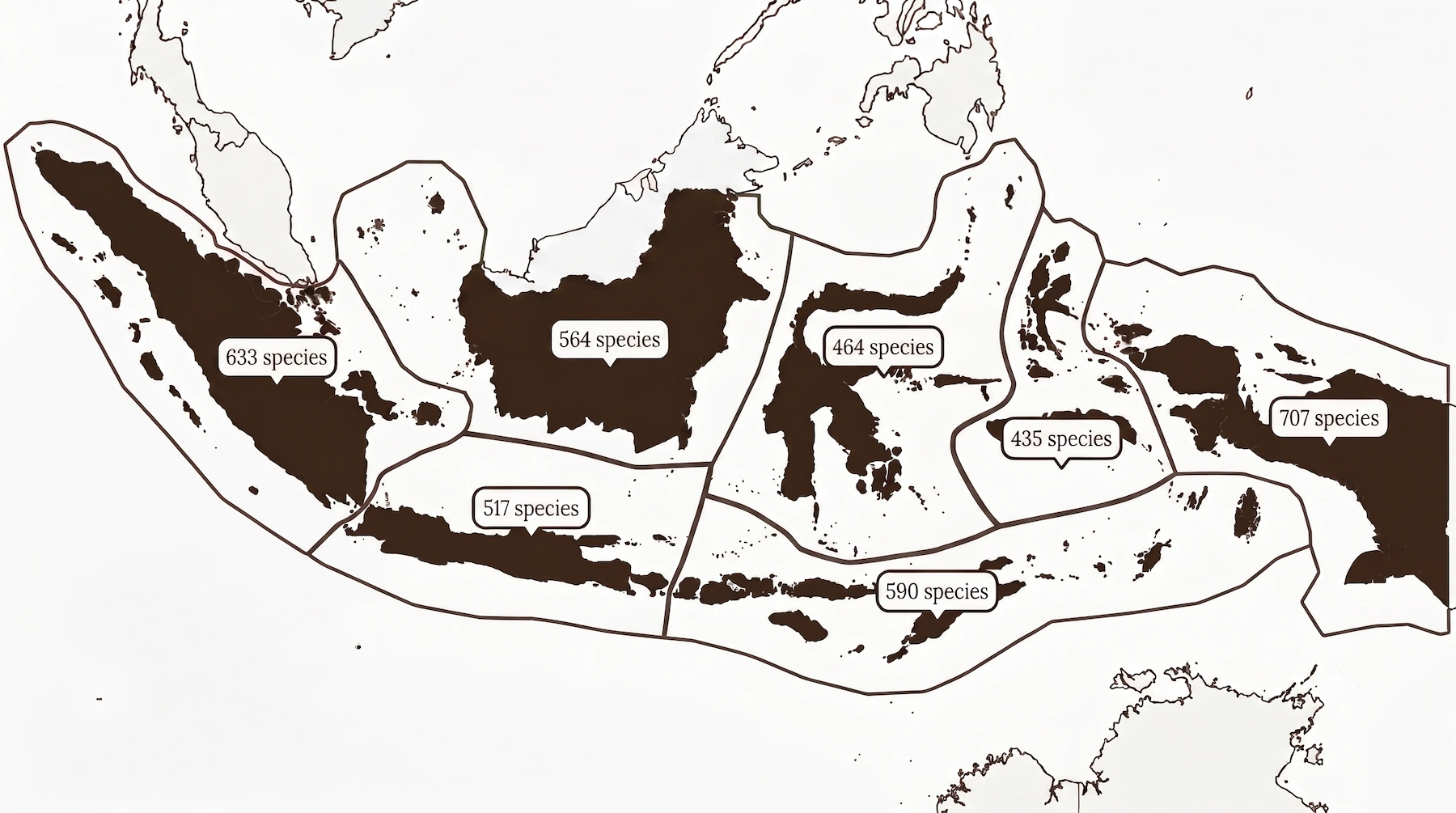
In its pursuit to rapid economic growth, Indonesia has been waging a war against its tropical ecosystems, which are home to more than 540Burung Indonesia – The State of Indonesia’s Birds 2025 species of birds found nowhere else on Earth. The total area of primary forest in Indonesia shrank by more than two-thirdsRoughly 145 million hectares in 1950: WRI Indonesia – The state of the forestAbout 48 million hectares in 2020: PNAS – Land in limbo: Nearly one third of Indonesia’s cleared old-growth forests left idle between 1950 and 2020 as bulldozers of the agricultural, agroforestry and mining industries razed it.
In Jakarta, the last mangroves are also suffocated by waste generated by the consumer society and carried by water streams. “Rivers collect garbage all along, and fill the mangroves with trash,” regretted Topik Hidayat, Mangrove Officer at Yayasan Konservasi Alam Nusantara (YKAN). The Indonesian environmental non-governmental organisation carried out a programYKAN, 2024 to improve water flows in the mangrove area between 2018 and 2023.
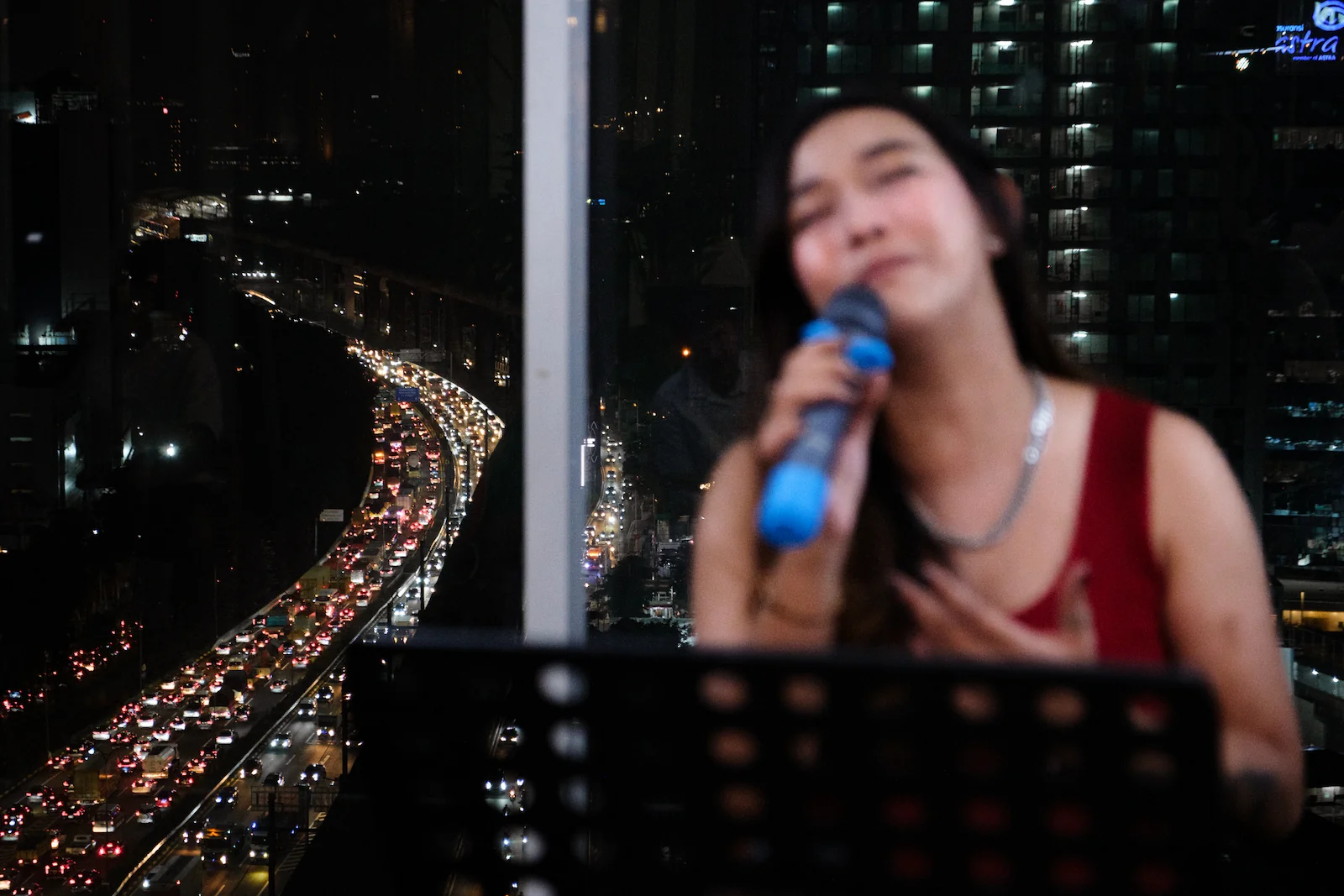
But the effort came too late. “In the past, there used to be many shorebirds in North Jakarta, but mangroves that used to be a feeding ground for migratory shorebirds have been cut to build houses. As habitats disappear, they have moved to another area, and nowadays I go to Tangerang to see them,” said Iwan Febrianto, a shorebirds expert for about two decades.
Tangerang, along with Depok and Cikarang, form a toxic ring around Jakarta, where every breath of air is health-threatening. The concentration of PM2.5 fine particles measured in 2024 in those three cities was more than ten timesIQAir, 2024 higher than the thresholds recommended by the World Health Organization. Instead, some enthusiasts relocate their birdwatching further afield, to the slopes of Mount Gede and Mount Salak in the south of Jakarta. A fig leaf, according to Wibowo. “Travelling to the mountains cannot substitute what we have lost here, because mountain birds are different. What is lost here is lost forever,” he said.
The aviary, an “unstoppable trend”
Birdwatchers, who have long served as firsthand witnesses of the impact of urbanisation on bird populations, also grapple with changes in the typology of bird species in Jakarta. “A noticeable phenomenon is the large number of species introduced in Jakarta after they have escaped from the cages of birdkeepers,” Chumaedi said from the mangrove conservation area in northern Jakarta.
“Several weeks ago, we found leafbirds endemic to Sumatra! It is not possible that these species arrived here naturally, they must have been released from cages,” said Achmad Ridha Junaid, Biodiversity Research Officer at Burung Indonesia, a bird conservation organisation. Such introduced species could harm populations of native birds, he fears. In 2025, eBird members observed 18 escapee specieseBird, 2025 in Jakarta.
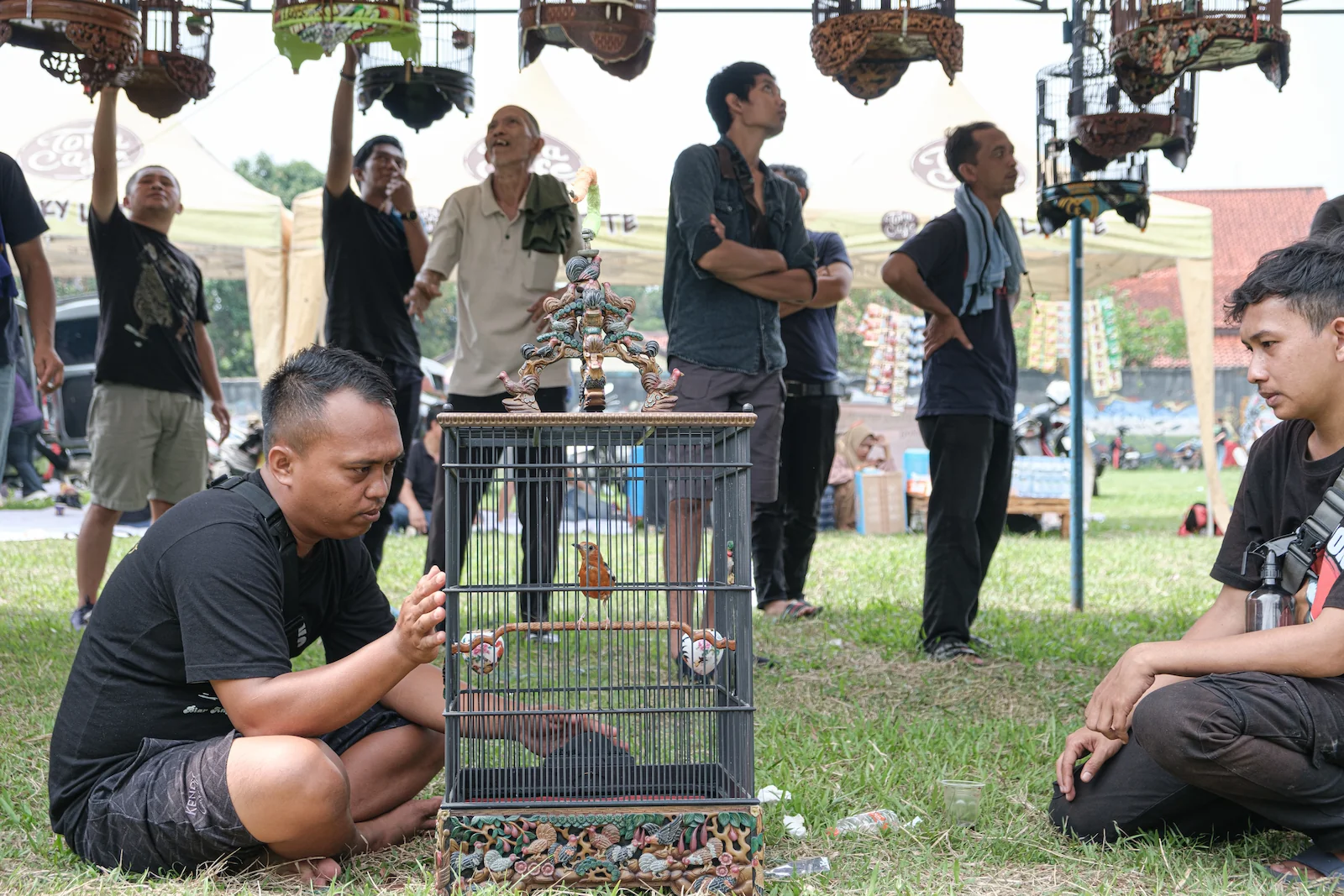
The keeping of songbirds in Java, the island where Jakarta is located, is a centuries-old cultural practice that defines, among other elements, men’s social status. It is estimated that about one-thirdScience Direct – Spatio-temporal dynamics of consumer demand driving the Asian Songbird Crisis, 2019 of households keep caged birds, including former president Joko Widodo, who joined in 2018 one of over 1,000The New York Times, 2020 songbird competitions held each year in Indonesia. He describedCabinet Secretariat of the Republic of Indonesia (Setkab), 2018 it as a “positive” cultural event.
“Today, there are about 1200 birds participating!” rejoiced Dens Zaelani, one of the organisers of the Walikota Cup Bogor 2025, a songbird competition in Bogor, a city 50 kilometers south of Jakarta, and supported by the city’s Mayor. “Half of them were born in captivity, the others have been captured in the wild. There are species native to different islands, including Java, Sumatra, Sulawesi and Kalimantan,” Zaelani explained as participants whistle and gesticulate to ‘support’ their birds who compete for prizes of up to 15 million Indonesian rupiah ($900).
The latest “unstoppable trend” among caged bird enthusiasts is the aviary and the keeping of large bird colonies, according to Nanang Kartiwa, founder of Kicau Plus, a birdkeeping specialised YouTube channel launched in 2017. “People are rushing into it as they fear of missing out. But I am in a dilemma to make aviary content because it expands the capture to many more species than the historical songbirds, and in larger volumes too,” he said. While precise figures are unavailable, it is estimated that over 20The New York Times, 2020 million birds are captured each year in Indonesia.
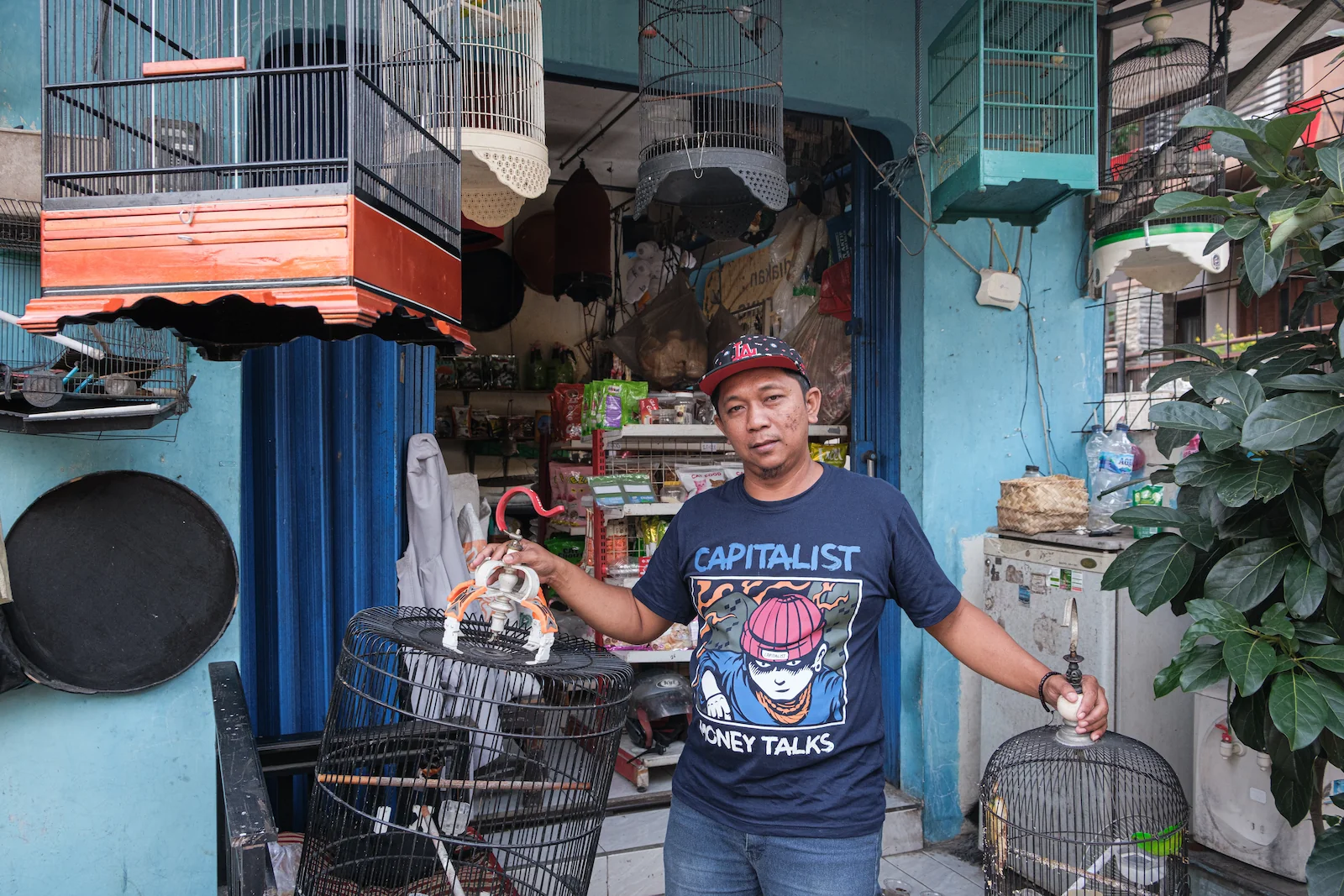
The bird keeping crave has reached new heights in recent years, fuelled by record deals. A bird from the white-rumped Shama species, nicknamed ‘Murai batu Superman’, sold for a record one billionRojobrono Channel – Man Behind Sucessfully Bird Murai Superman Sold Out 1 Billion IDR, 2021 Indonesian rupiah ($60,300) in 2021, an amount equivalent to nearly three decadesBPS – Average of Net Wage/Salary, 2025 of wages of an Indonesian earning the country’s average wage.
A July 2018 attempt to expand the 1999 list of protected bird species by 125Burung Indonesia – The Influence of Updated List of Protected Species on Bird Conservation, 2018 was met with nationwide demonstrations, promptingBNR Media, 2025 a government reversal within two months. At the heart of the backlash was the fact that protected birds cannot be caught, owned or traded according to Indonesian lawsTRAFFIC Bulletin – birD singing competitions fly online to avoiD Covid-19, 2020.
In the face of the cash-rich caged bird industry, nature enthusiasts bet on public interest. “We encourage the development of the birdwatching scene to shift public attention from cages to wild birds,” said Ivanna Febrissa, Conservation Engagement Officer at Burung Indonesia. Others believe that a shift requires making the case for the economic benefits of conservation. “Birds, like other animals, have value in terms of ecological functions. If people knew about this economic value, they would think again,” Jakarta Birdwatcher’s Society’s Kristanto said.
“When birds vanish, the nation is in trouble”
Indonesian textbooks mention biodiversitySoutheast Asian Regional Centre for Tropical Biology – Final report, 2023, but “It never goes in-depth. For example, how the loss of insect-eating bird populations impact agriculture, causing a rise in pesticide use,” lamented Ragil Satriyo Gumilang, Senior Biodiversity and Policy Officer at Wetlands International Indonesia, a non-governmental organisation. “I knew nothing about environmental protection. At school, they never taught me about it,” confirmed Hammas Zia Urrohman Anshari, a former poacher. For about five years, he captured hundreds of wild birds, including barn owls, a characteristic heart-shaped face night bird. “I was like the bird dealer of my area,” he said.
Anshari, who also co-founded Komunitas Pelicat Burung SidoarjoKomunitas Pelicat Burung Sidoarjo, a 25,000 members private Facebook group for bird hunters, encountered the practice of observing birds in the wild first during his university years. When approached by the campus’ ornithology club, Anshari met the invitation with skepticism: “What are they doing? Such a weird activity! If you want to watch those birds, why not just catch them?” Over time, however, he underwent a shift in perspective, and traded his traps for binoculars.
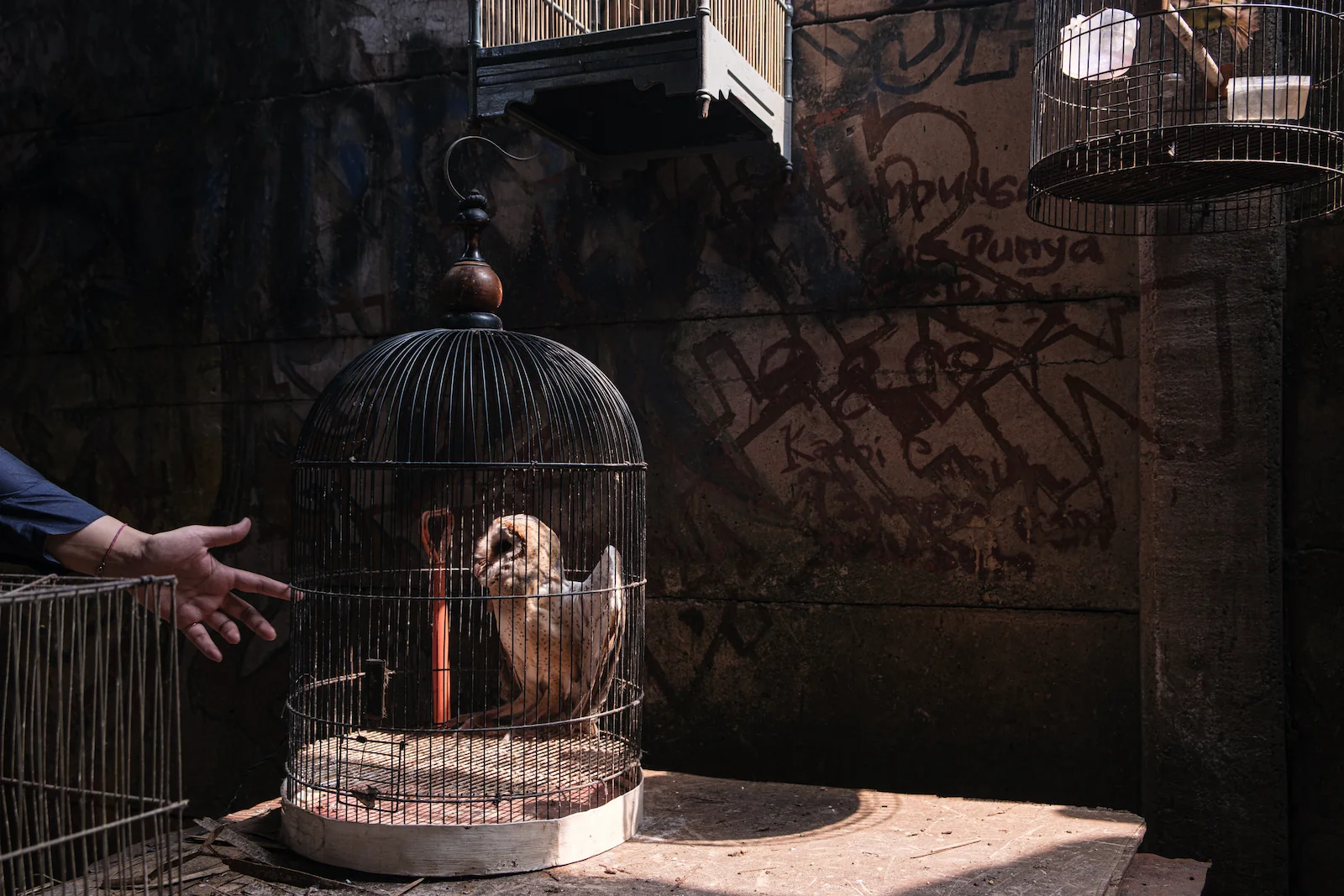
But in the absence of an environmental focus in government-controlled educational curricula, the bird trade continues to decimate bird populations in their native habitats, while species escaping cages in Jakarta threaten the endemic fauna. “At the time, you could no longer hear birds singing in my village, it was total silence, my friends and I captured them all. I was shocked, and I felt guilty. When I visit home nowadays, I buy a bird and release it. That is not much, just a little gesture to make up for the environmental impact I caused,” admitted Anshari, after he led an awareness day for children in Dadap, a slum in northwest Jakarta, alongside other birdwatchers.
Sadly, Anshari’s regrets are a drop in an ocean of systemic harm industrial activities routinely inflict on Indonesia’s natural ecosystems. The country is home to the highest numberBirdLife – Threatened birds occur around the world, with some countries being particularly important, 2023 of threatened bird species on Earth. “When birds vanish, the nation is in trouble, doomsday is ahead,” birdwatcher Wibowo said. He added: “It is not only birdwatchers that are pushed away, but also our collective right to health and environment.”