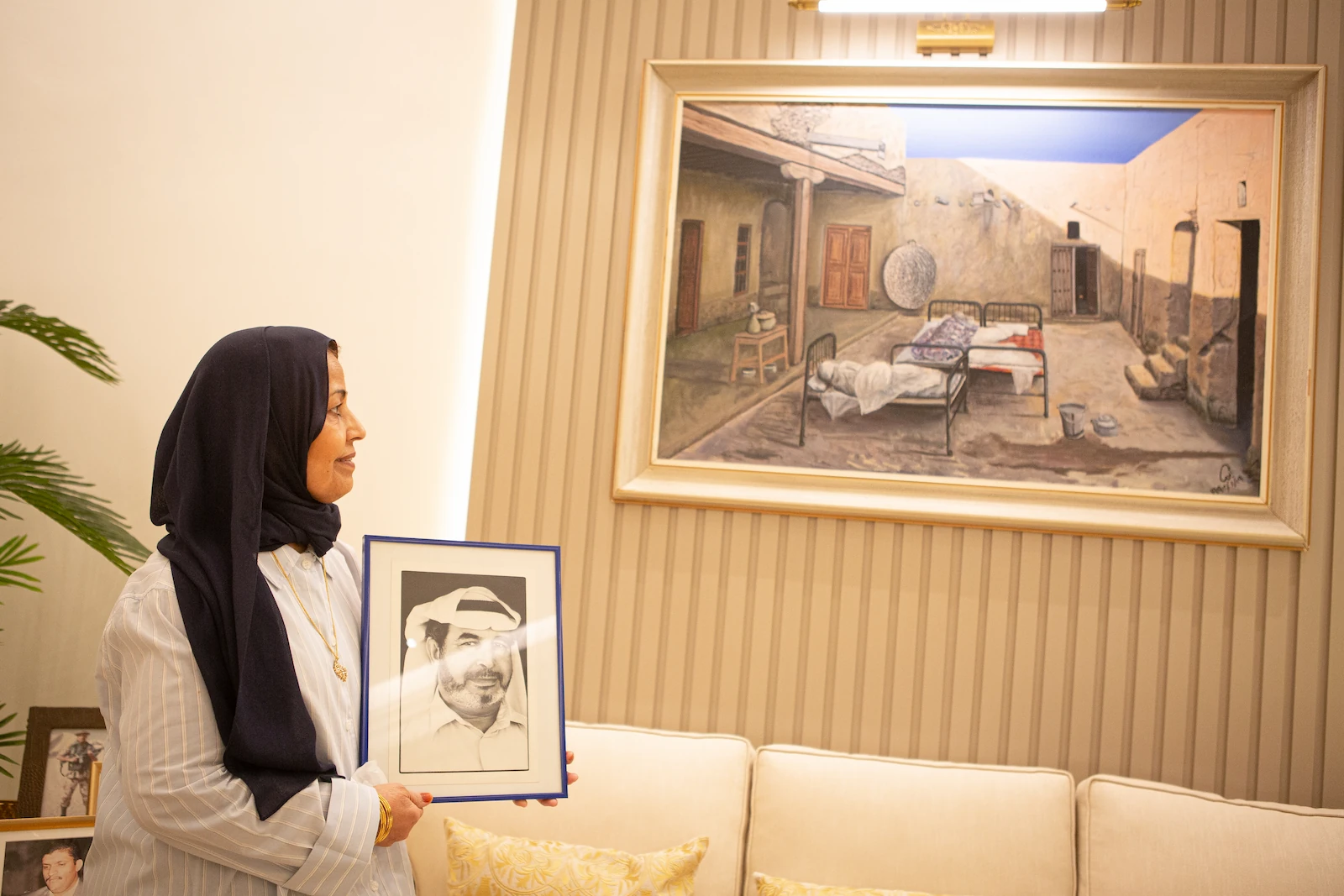
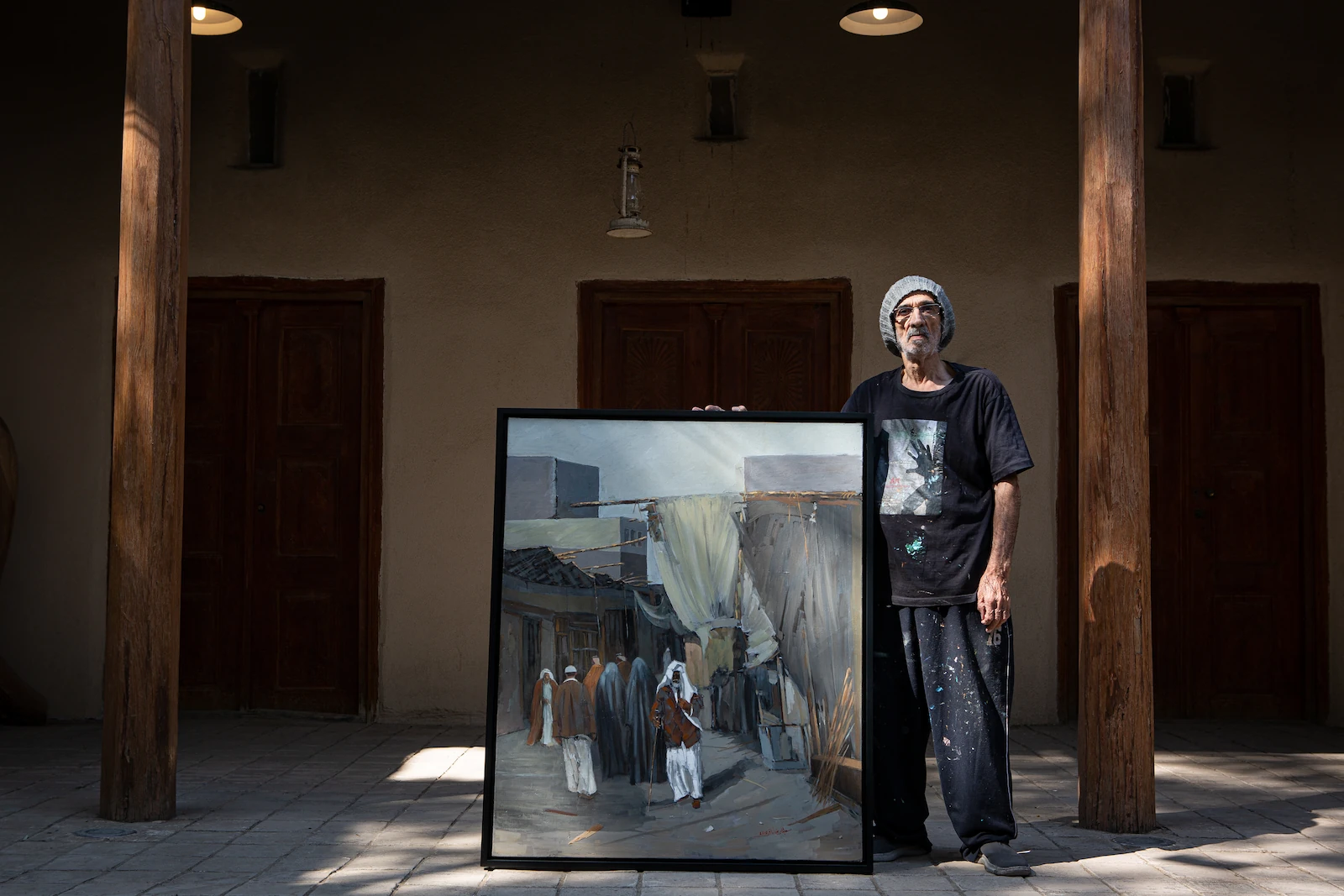
At the heart of the Kuwaiti capital, a traditional house built in the late 1940sKuwait Times – Bait Al-Othman Museum reflects Kuwait’s past, present and future, 2024 hosts the Bait Al Othman Museum. The heritage institution showcases Kuwait’s history and culture to educate current generations about the life of their forefathers, and the hardships they faced. One of the exhibitions is dedicated to the legacy of Ayoub Hussein Al-Ayoub, a painter born in 1932Kuwait News Agency – NCCAL mourns demise of painter Ayoub Hussein Al Ayoub, 2013. He authored nearly 800 paintings depicting the pre-oil era until his death in 2013, leaving behind a rare artistic account of social dynamics that shaped daily life prior to the arrival of black gold.
“My father’s paintings have forged a bridge between the past and younger generations,” said Taghreed Al-Ayoub, one of his daughters. “His life mission was to urge Kuwaitis to show their children and grandchildren what life was like before oil, and never to forget it,” she added. Looking at one of Al-Ayoub’s paintings at the museum, Abdallah Al-Massaeed, 22, pauses to reflect. “It is interesting to see how people back then lived without air conditioning or running water. I cannot imagine myself living the scenes depicted in these paintings,” he said.
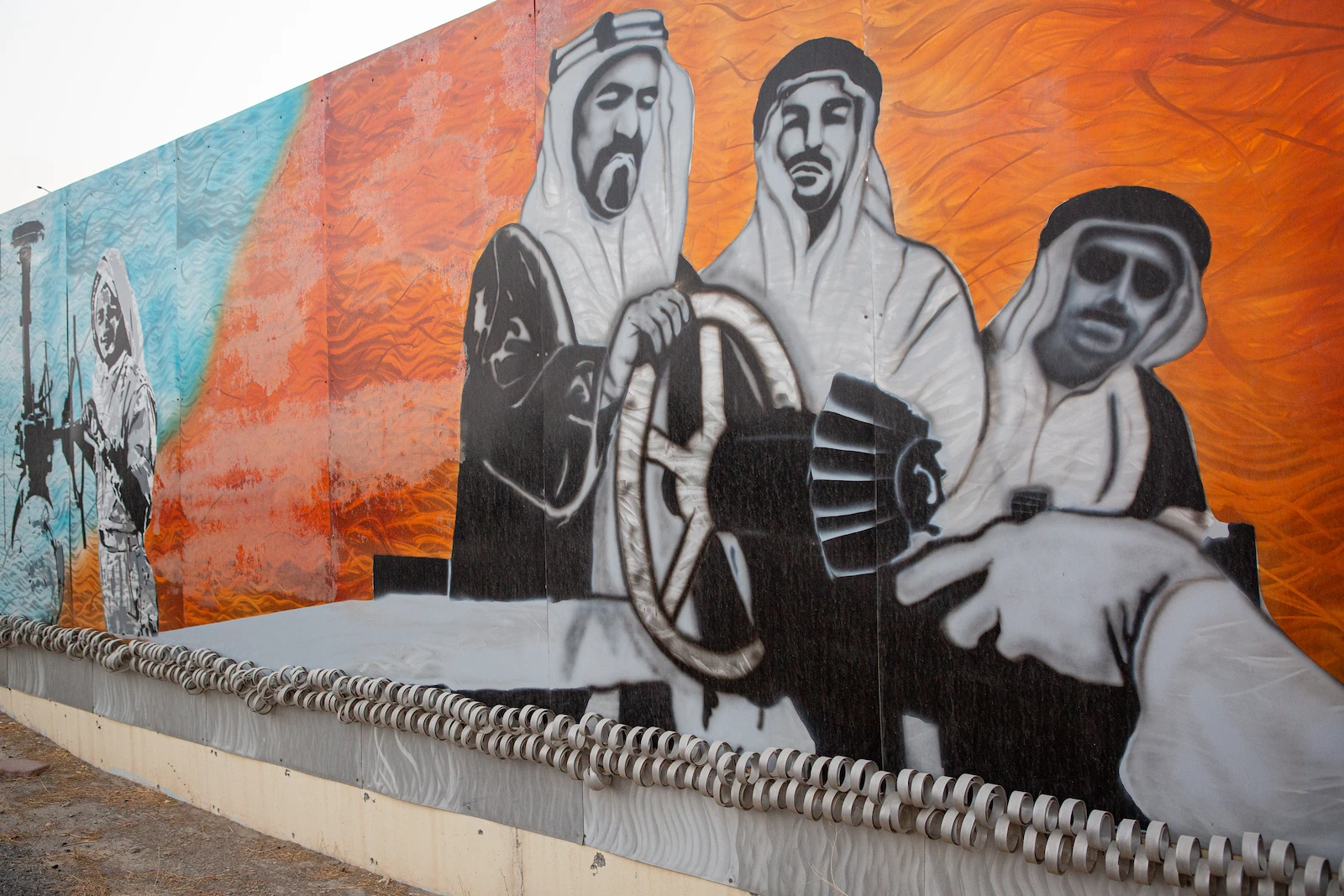
The divide between him and the era Al-Ayoub painted extends beyond generational distance. The two men belong to different Kuwaits. The discovery of crude oil in commercial quantities in 1938Kuwait Oil Company – Significant Dates, 2025 at Burgan Field in the south of Kuwait City opened a transformative era that profoundly redefined economic, social, and political structures. As it found itself sitting on top of one of the world’s largest deposits of the natural resource that has powered the era of hyper-globalisation, the Arab shore of the Persian Gulf saw oil revenues flow ballooning.
The region subsequently dismantled its existing urban fabric, shaped by centuries of adaptation to the local climate, to build car-centric, energy-intensive cities inspired by Western architectural norms and the United States’ 1950s suburban dreamLos Angeles Times – Urban Realities of the ‘80s Intruding Upon Idyllic Retreats That Flourished in ‘50s, ‘60s, 1986. In parallel, a petrodollar-fuelled mass-consumption culture took root across those newly built air-conditioned urban centres. This transformation inspired a generation of artists, who today constitute some of the last living links to the pre-oil era. “Our generation is like a drop of ink in a lake; we are slowly fading away. The big question is whether this ink will have left its mark on the water in some way. At least, our paintings will outlive our memories,” said Abdul Redha Baqer, a painter born in 1948.
Nature-bound to consumerism
Those visual records developed alongside a tradition of oral transmission that served for millennia as the primary medium for passing down social and cultural knowledge in Arabian Peninsula societies. “When I was a child, my grandmother used to take the whole family out into the desert to show us the different plants and instil a connection to the natural environment … At home, she taught us to switch off the lights and the TV when we left the room, because she grew up in a tent at a time of scarcity and appreciated the value of things. I was lucky enough to have that, but I think that is what young people lack today,” recalled Reem Alawadhi, assistant professor in Earth and Environmental Sciences at Kuwait University.
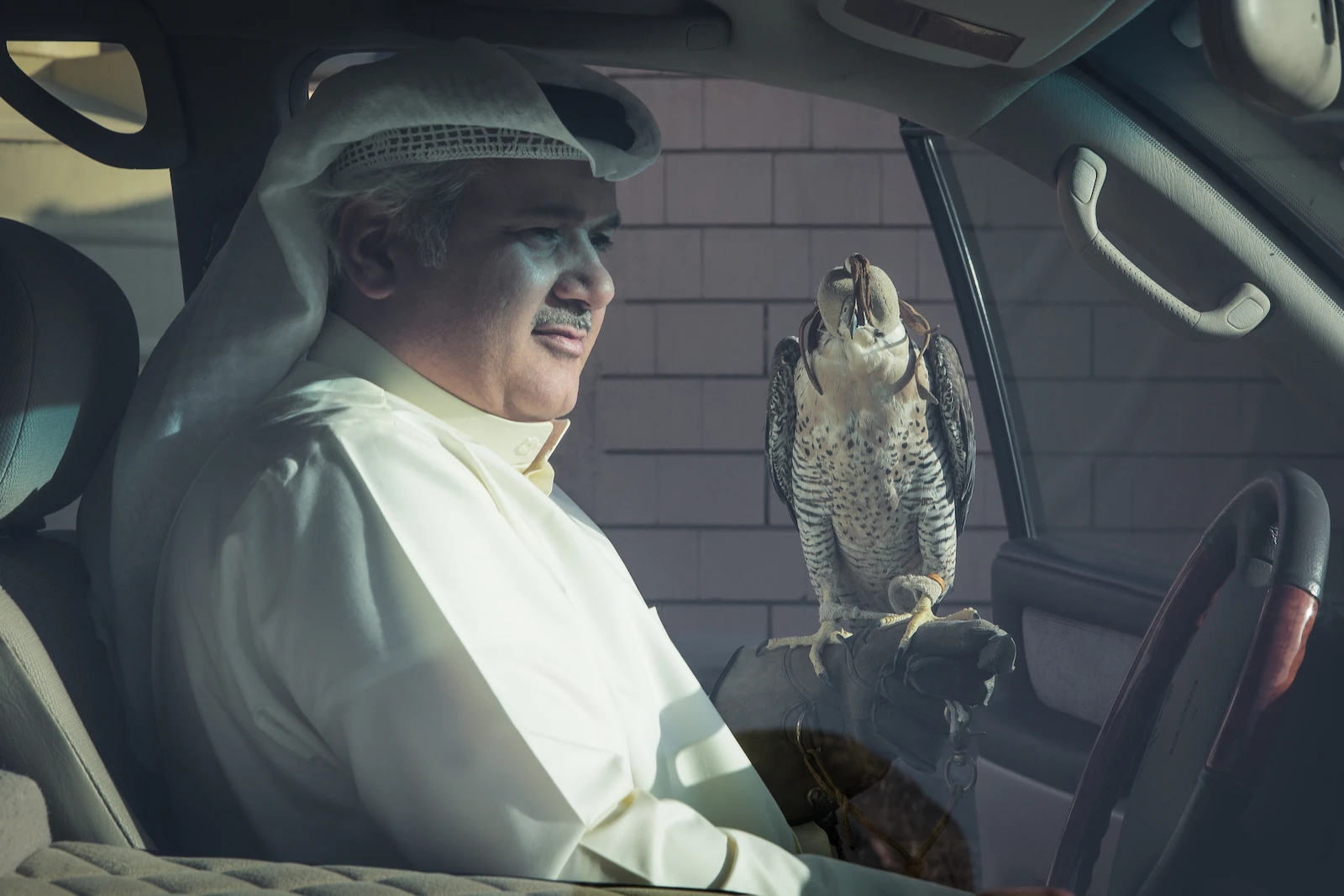
Tribes in the Arabian Peninsula historically maintained lifestyles deeply tied to the hyper-arid environment they inhabited, through practices including nomadism, fishing, falconry, camel herding, and the transmission of ecological knowledge across generations. Desert gatherings no longer resemble those of previous generations either, according to Alawadhi. “It used to be just a mat and time spent in nature, but I feel like it has been distorted. Today, people take their luxury items with them to the campsite, like TVs, sofas, portable kitchens and toilets. This is not camping, this is transferring your home into the desert,” she said, frustrated.
The metamorphosis of lifestyles that occurred over the course of the second half of the 20th century has driven emissions of Earth-warming gases sharply upward. Since its first oil export in 1946Kuwait Oil Company – Significant Dates, 2025, Kuwait’s annual emissions of carbon dioxide (CO2) have increased roughly 50Our World in Data – Kuwait CO₂ and Greenhouse Gas Emissions, 2025 times. HalfInternational Energy Agency – Kuwait, 2023 of those emissions are attributed to electricity and heat production, largely a consequence of governmental energy subsidies that indirectly encouraged disinhibited power consumption.
Electricity prices for Kuwaiti households have remained unchanged since 1966 at $0.007Baker Institute for Public Policy – Distortionary Effects of Kuwait's Cheap Electricity and the Case for a Just Reform, 2025 per kilowatt-hour, the sixth cheapest in the world. This decades-long price freeze has had distortionary effects, enabling the construction of a built environment shaped around low-cost energy, while fossil-fuel-fired plants account for 99%International Energy Agency – Kuwait, 2023 of Kuwait’s power generation fleet.
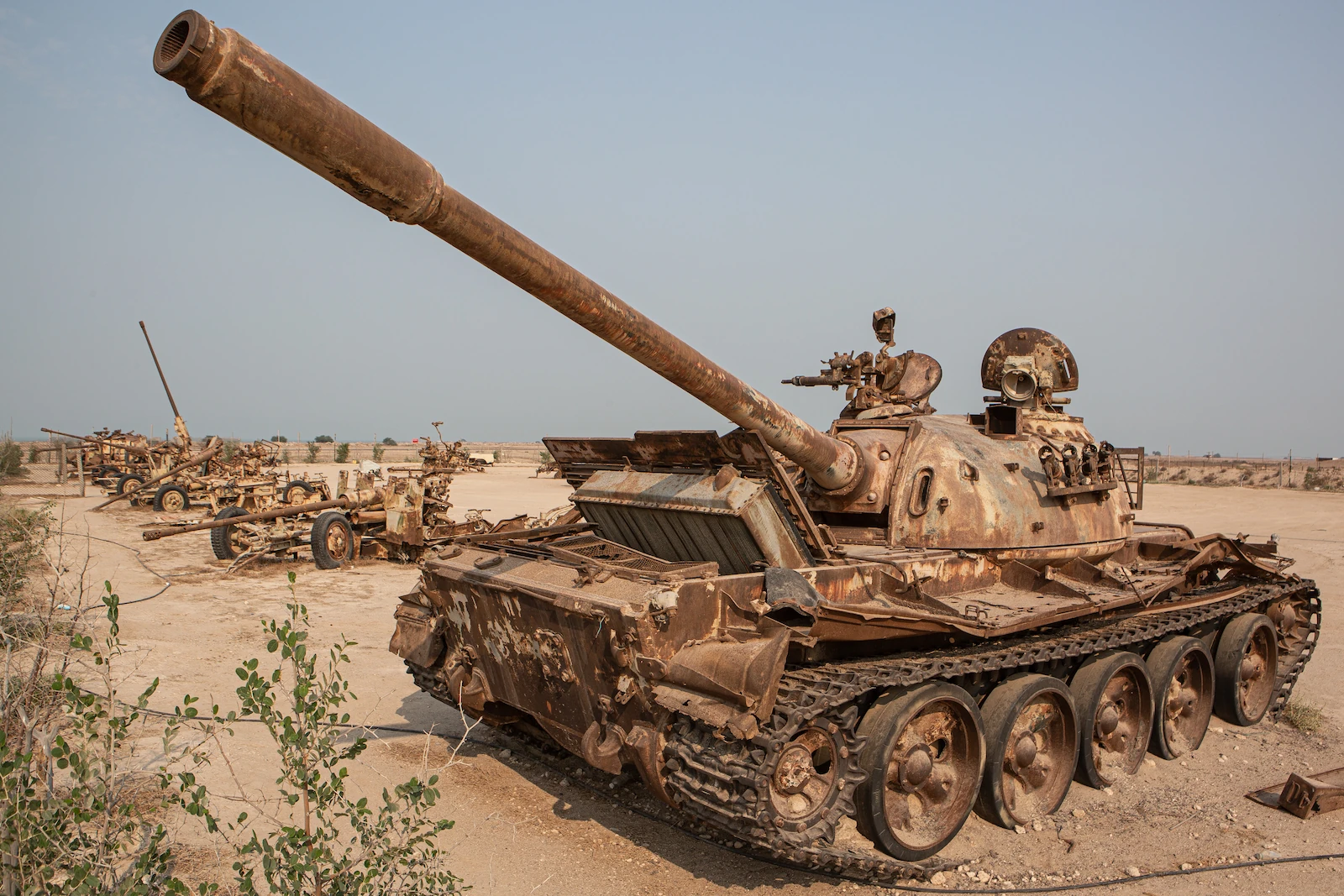
Empowered West Asian cities have punched above their weight. In the six decades following Kuwait’s independence in 1961Permanent Mission of the State of Kuwait to the United Nations and the Consulate General in Geneva – Kuwait’s history, the emirate’s population surged more than 12-foldUnited Nations Data Portal – Kuwait Total population by sex, 2026, far beyond economic activity and demographic levels that local ecological systems can sustain. Today, the Kuwaiti population’s footprint exceeds 18 timesGlobal Footprint Network – Ecological Deficit/Reserve, 2025 the capacity of lands and oceans to provide food and biomaterials, accommodate urban infrastructure, and absorb CO2. Yet the resulting ecological deficit remains largely invisible since consumption-driven lifestyles are fuelled by imports.
As the last Kuwaitis who have witnessed the pre-oil era are now in their eighties and older, nature-bound lifestyles are fading from living memory in the Arabian Peninsula. Rural scenes and frugal lifestyles shown in Al-Ayoub’s paintings, characterised by an adaptation to local environmental conditions, including in dietary habits, are now largely unfamiliar to urbanised youth. “It prompts us to think about our luxury-driven way of life,” said Al Massaeed at the museum.
Excessive nostalgia?
Kuwaiti artists depicting the pre-oil era, however, have refrained from depicting the domestic and global environmental costs of oil exports, instead embracing the benefits. “Without oil, none of the changes we have seen would have taken place, including in the art scene. It was the influx of money that enabled the Kuwaiti art movement to take shape,” said Abdulrasoul Salman, President of Kuwait Arts Association. The country was home to the Arabian Peninsula’s most vibrantJournal of Arabian Studies – Creating Arabian Peninsula Museums, 2026 arts scene in the second half of the 20th century, before the Iraqi invasion of 1990-1991 abruptly brought that momentum to a halt.
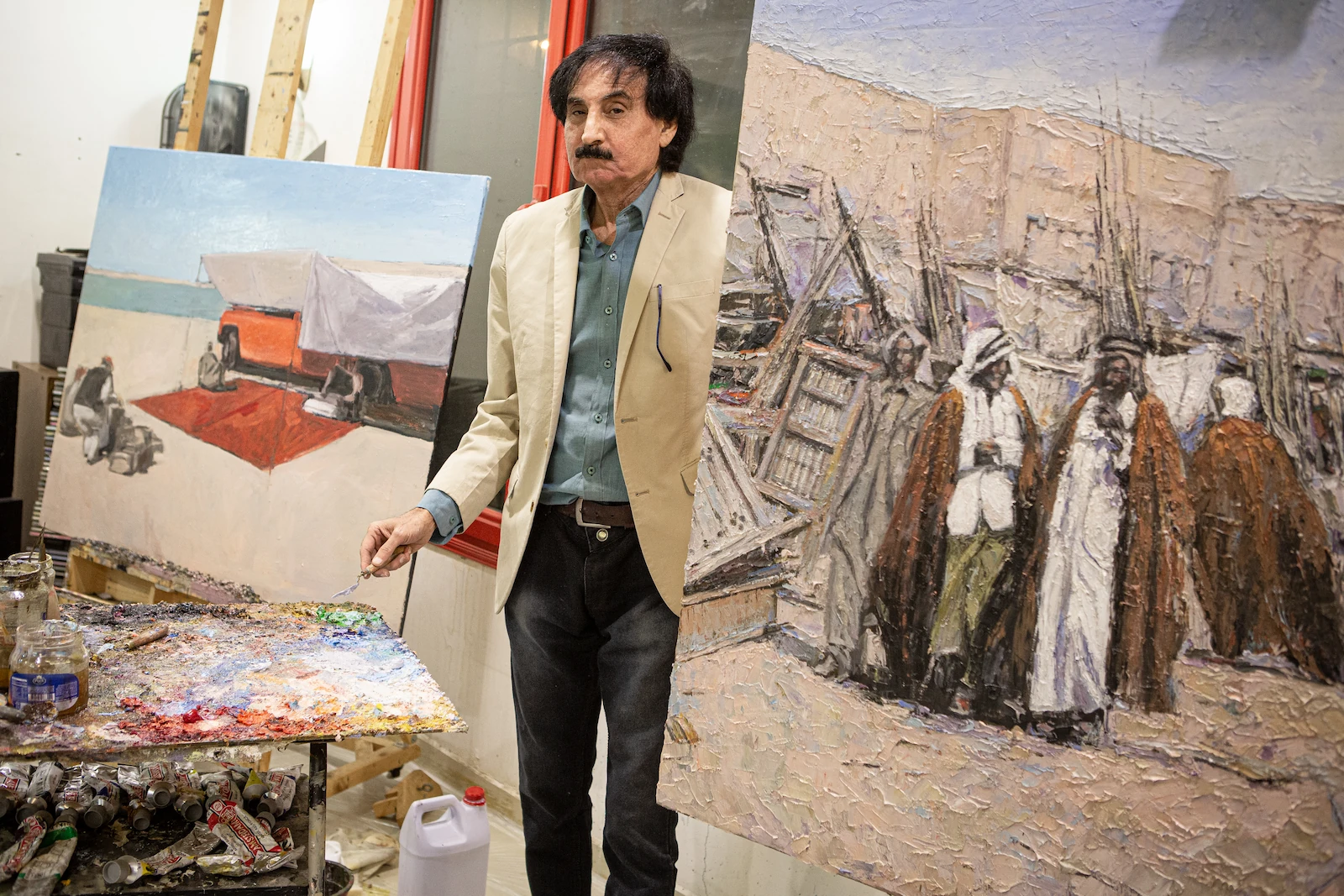
Her father “never criticized oil,” noted Taghreed Al-Ayoub, adding: “He simply regretted that modernity came at the expense of our traditions and human relations.” A few weeks before his death in early December 2023Arab Times – Renowned Kuwaiti Artist Abdulaziz Muhammad Arti passes away, 2023, Kuwaiti artist Abdulaziz Arti sat in his studio with a palette knife in hand and reflected on the enduring appeal of pre-oil imagery. “People prefer paintings of the old Kuwait; they sell better. There are black-and-white photographs of that era, of course, but a colourful painting gives people a chance to experience the scene better,” he said.
Some argue that the nostalgic framing often associated with this artistic transmission of historical memory risks idealising the pre-oil era. “Sometimes there is over romanticisation in art, a sense of nostalgia, and a tendency to always glorify the past. Some paintings are known for reconstructing Kuwait’s past through positive recollections. But we had dark spots too, like slavery and social taboos,” said Bader Al-Saif, assistant professor of history at Kuwait University, adding: “I do not think it is their job to retell history alone.”
Legitimate debates over historical accuracy do not alter the environmental realities associated with the transition to oil-era lifestyles. Today, the Arabian Peninsula is the world’s largest crude oil exporting region, making it a majorNASA – The Causes of Climate Change enabler of global climate change through the combustion in Asian consumer markets of the 11.5 millionOrganization of the Petroleum Exporting Countries – Annual Statistical Bulletin, 2022 barrels it exports daily. Kuwait’s own weather record reflects the warming its exports accelerate. Average outdoor temperatures in the months of June, July and August have risen by 1.9°CWorld Bank Climate Change Knowledge Portal – Kuwait historical climate, 2020 between the period 1931-1960 and 1991-2020.
Quest for a hybrid identity
A new generation of Kuwaiti artists emerged in the 2010s, following in the footsteps of their 20th-century peers. Their artistic focus, however, turned toward explorations of hybrid identity, mirroring broader questions facing contemporary Kuwait. Changes to the social and economic fabric in recent decades have drawn younger Kuwaitis into globalised lifestyles. Street artists, increasingly popular among younger urban Kuwaitis, have sought to blend the global influences of the art form with elements of traditional Kuwaiti cultural identity.
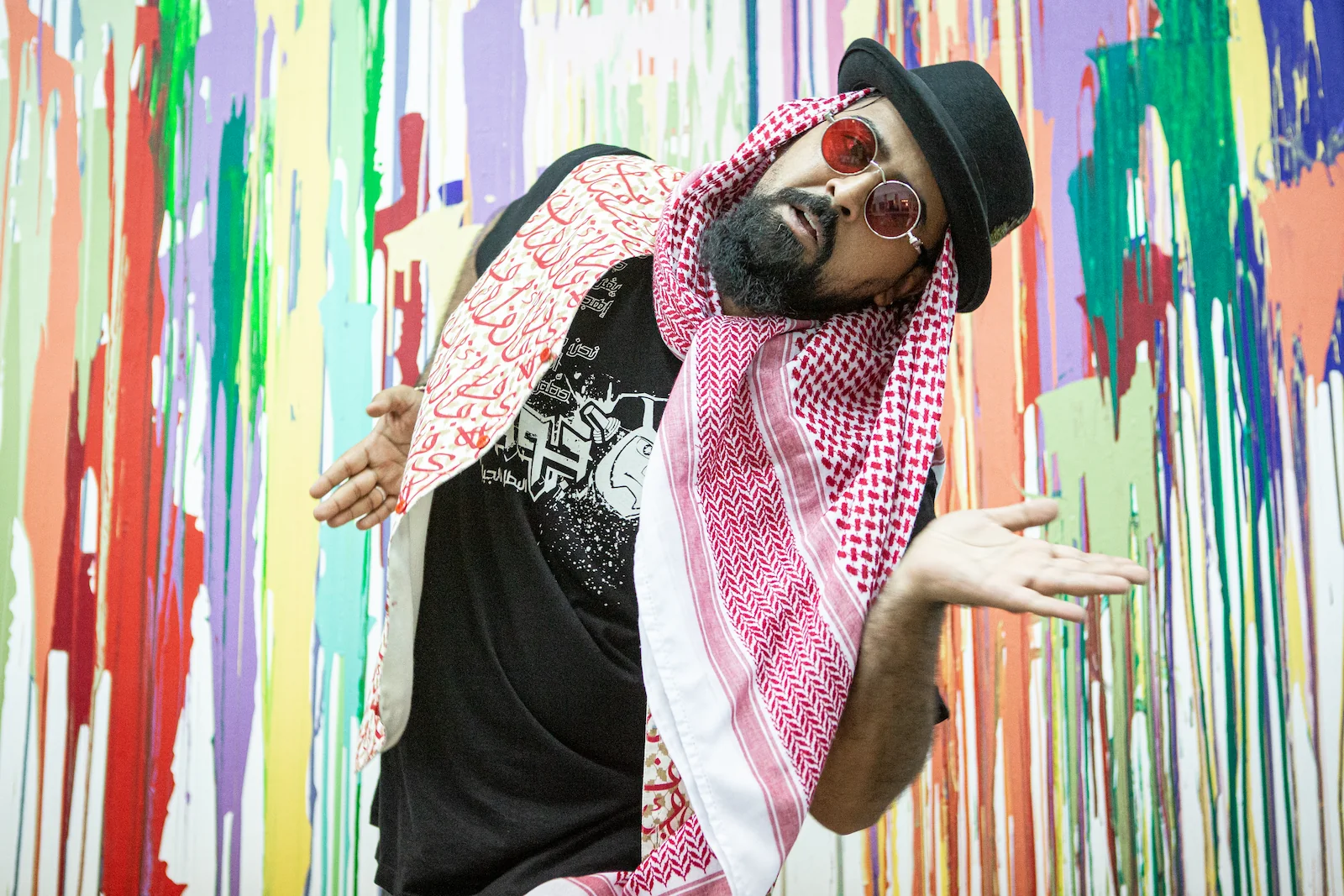
Inspired by American performer Michael Jackson and Western styles, Kuwaiti dancer Mohammed Al-Eidani specialises in “popping”, a form of street dance. He occasionally performs wearing the Arabian Peninsula’s traditional male headdress, to remind audiences of his Arab roots. “In Kuwait, we have two traditional dance styles: The desert style, which involves standing and moving slowly, and the seaside style, a little bit influenced by India and Africa. It is interesting to build on those cultures that live inside me and fuse them with popping … When you wear traditional clothes and do this dance, that is weird, but you get a nice feeling,” he said.
In the same vein, musician Khalid Almansour has mixed Western sounds with Kuwaiti traditional percussive beats to create music often described as “Arabic fusion”. “You would have to listen to it a couple of times to figure out what kind of music this is! It sounds poppy, but it is not common. Kuwaiti music is very percussive, upbeat, and swingy in nature,” he explained.
Taghreed Al-Ayoub recalled her father saying: “Even if life changes, you do not change at core.” Oil pumped from Kuwait’s subsurface reserves eventually contradicted the painter’s belief. Flows of petrodollars first undermined the centrality of nature-bound lifestyles to millennia-old Arabian societies, then contributed to the erosion of inherited social structures and identities. Painter Abdul Redha Baqer concluded, sighing: “Money has spoiled our people.”