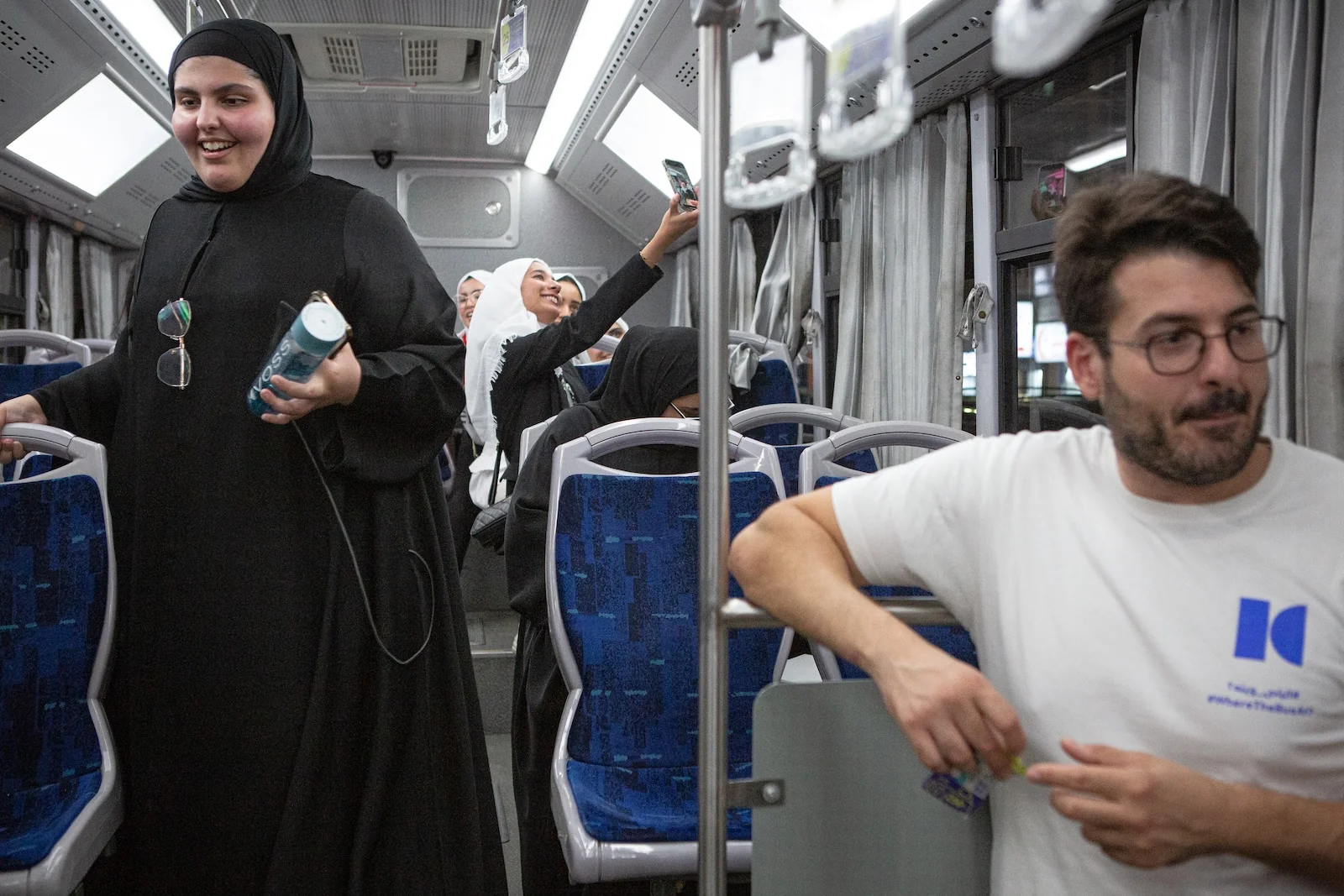
As night falls over the Kuwaiti capital, a group of about 10 students gather for a weekend event in October 2023 introducing them to the city’s bus network. “It was my first time taking a bus in Kuwait. Until today, I was afraid of buses. In my mind it was scary, the lighting was dim, there was no air conditioning, it was not clean,” said Raghad AlEnezi, 23.
Her apprehension stemmed from the fact that “not many Kuwaitis, or women in general” commute by bus in the emirate, she said. She added that she feels comfortable using buses while travelling abroad, reassured by the presence of “people of all ages, men, women, adults, children.” Bus use remains uncommon among Kuwaitis, influenced by the prevailing social stereotype that buses are for “the others”, low-income foreign workers who are not eligibleKuwait General Directorate of Traffic – Ministerial decree no. 270/2020, 2020 for a driving licence.
The awareness event was led by Jassim Al-Awadhi, a Kuwaiti activist who founded Kuwait Commute in 2018Kuwait Times – Initiative urges public, private sectors to develop mass transportation in Kuwait, 2022, an initiative that promotes public transportation use in the oil-exporting West Asian country. “Officials would always tell me that Kuwaitis do not use public transportation. So I did a survey and found that 78%Kuwait Times – Ineffective transportation system ‘a roadblock on path to development’, 2024 of respondents, three-quarters of whom were Kuwaitis, already used public transportation abroad. That means the public transport culture is already here!” Al-Awadhi said. The survey found that nearly two-thirds of respondents would be willing to use public transportation for commuting, “if it is improved”.
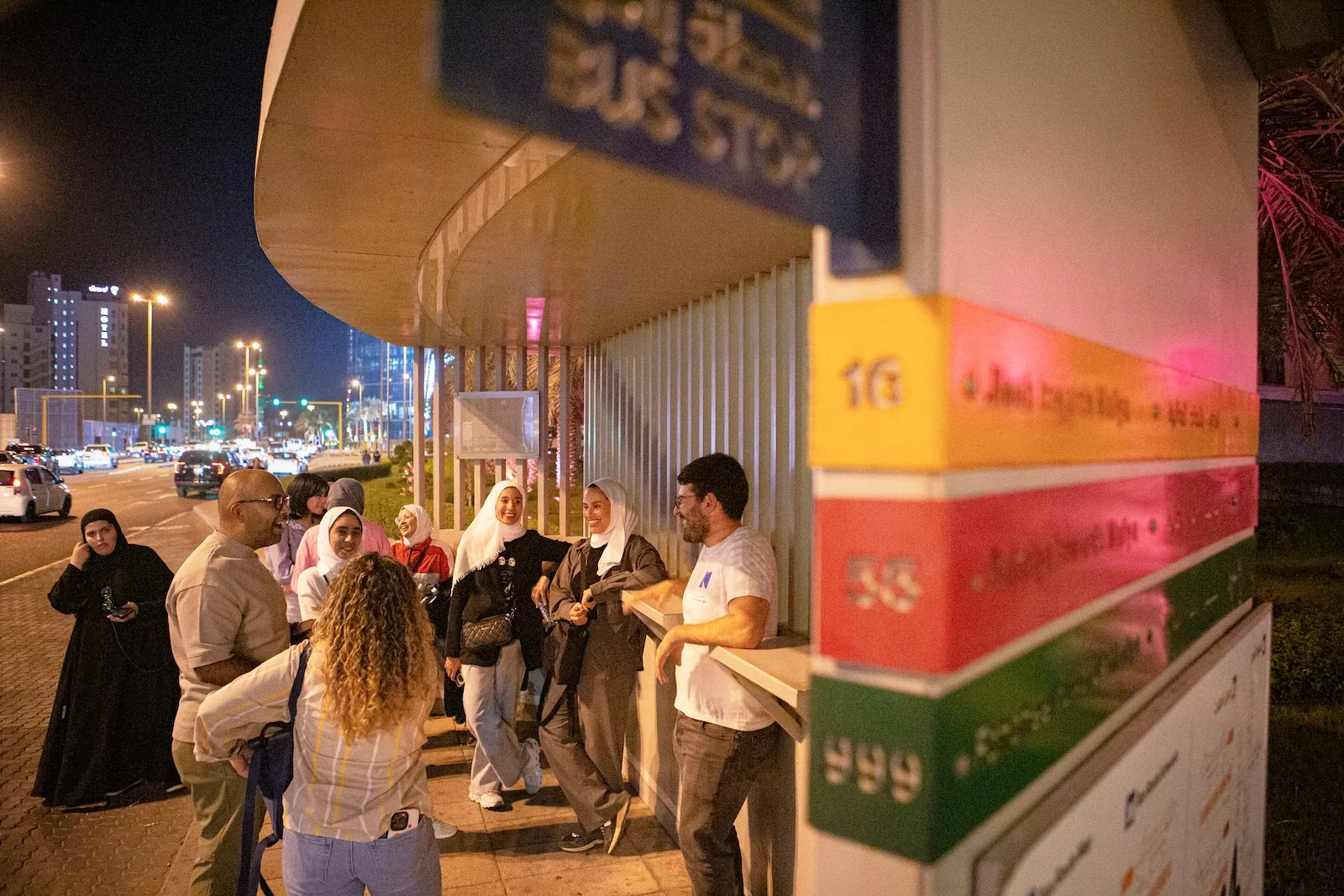
The city’s bus network, which dates back to the establishment of Kuwait’s first bus company a year after the country’s 1961Permanent Mission of the State of Kuwait to the United Nations Office and the Consulate General in Geneva – Kuwait’s History independence, has long suffered from unreliable service and poor first and last-mile connectivity. “People will not walk under the sun, and wait at an uncomfortable stop, for a bus that might or might not come,” Al-Awadhi said. Kuwait ranks among the hottest places on Earth in summer, when heat regularly exceeds 50 degrees Celsius, severely discouraging walking. Temperatures reached a life-threatening 54°CWorld Meteorological Organisation – WMO verifies 3rd and 4th hottest temperature recorded on Earth, 2019 in northwestern Kuwait in 2016. AlEnezi pointed to the same obstacle. “I live in a residential area, and no bus will take me point-to-point to Kuwait City. I have to walk or drive my car to the nearest bus stop.”
Car-centric cities
The contemporary urban form of Arabian Peninsula cities is the physical legacy of the radical transformation of their urban fabric that occurred in the second half of the 20th century. Oil discoveries “undermined, with unparalleled suddenness, the roots of an ecosystem which reflected a perfect adaptation to an environment many generations old,” wrote Mohamed Riad, then professor of Geography at Qatar University, in a 1981Qatar University – Some aspects of petro-urbanism in the Arab Gulf States, 1981 study on petro-urbanism.
“In 1952CIDOB – An exploration of the forces that shape Kuwait City, 2018, when Kuwait’s first Master Plan was announced, a decision was made that the country was going to be planned with a focus on roads. Today, we are living with the consequences of a decision that was maybe something amazing at the time,” said Sharifa Al-Shalfan, an architect and a member of Kuwait’s Municipal Council. Seven decades later, the blueprint holds. The number of private cars registered in Kuwait surged by nearly halfStatista – Number of private cars in use in Kuwait, 2022 in just nine years, bringing car ownership to 445Kuwait Times – Kuwait Commute's initiative promotes awareness on public transport system, 2023 vehicles per 1,000 people at the turn of the 2020s, even as the country recorded the world’s highest rateThe Lancet – Global, national, and urban burdens of paediatric asthma incidence attributable to ambient NO2 pollution, 2019 of childhood asthma linked to traffic pollution.
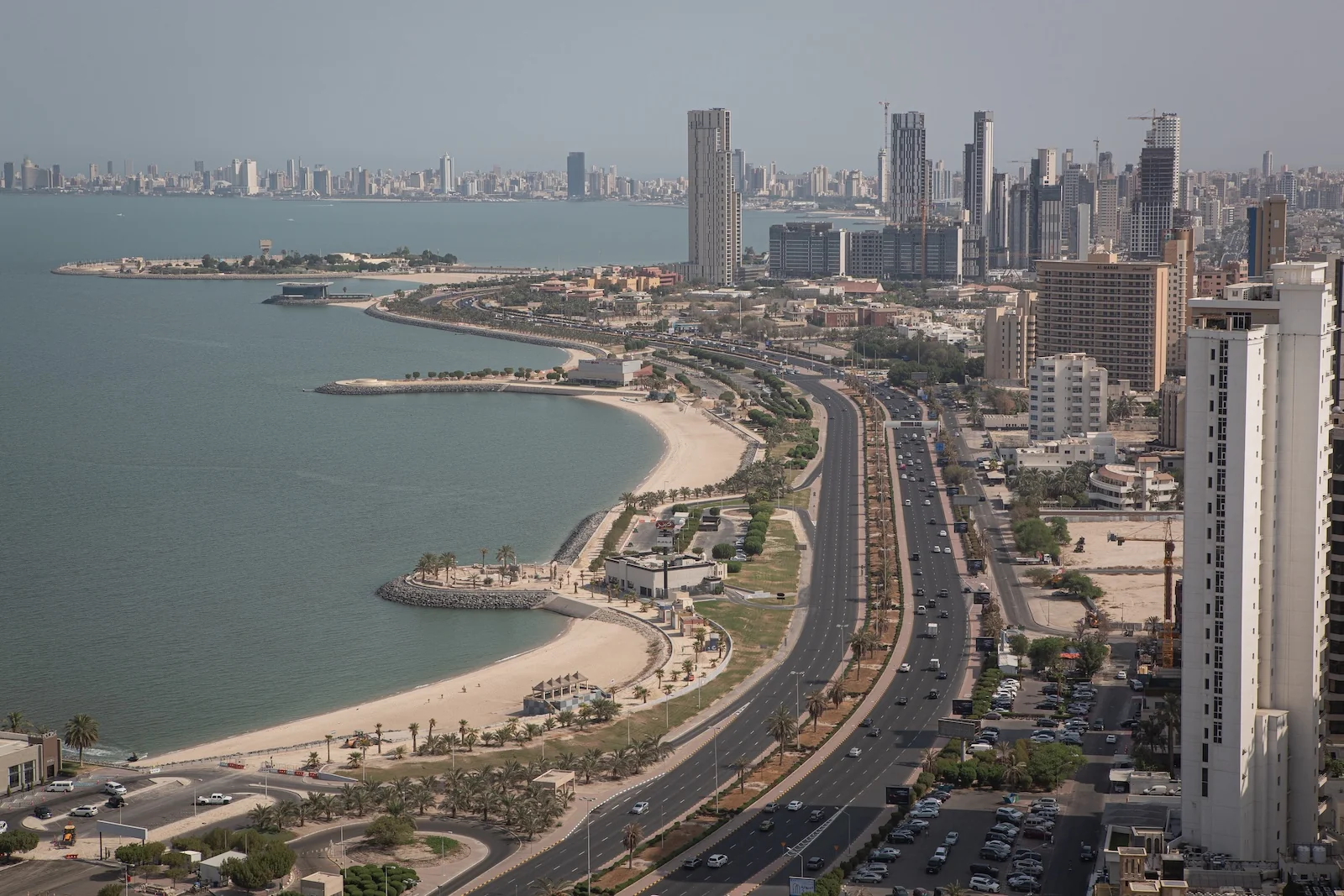
Today, urban centres in the the Arabian Peninsula, from Kuwait City to Doha, Abu Dhabi and Muscat, share an urban model characterised by low density and car dependence drawn from the United States’ 1950s suburban dreamLos Angeles Times – Urban Realities of the ‘80s Intruding Upon Idyllic Retreats That Flourished in ‘50s, ‘60s, 1986. In the Saudi Arabian capital, Riyadh, population density is three times below the United Nations Human Settlements Programme sustainable neighbourhood planning recommendation of 15,000United Nations Human Settlements Programme – A new strategy of sustainable neighbourhood planning, 2015 people per square kilometre. Urban sprawl has eroded population density across other cities, lowering it below the thresholds typically associated with viable mass transit networks. In Mecca, Islam’s holiest city, it halvedUnited Nations Human Settlements Programme – Saudi Cities Report, 2019 between 1983 and 2010.
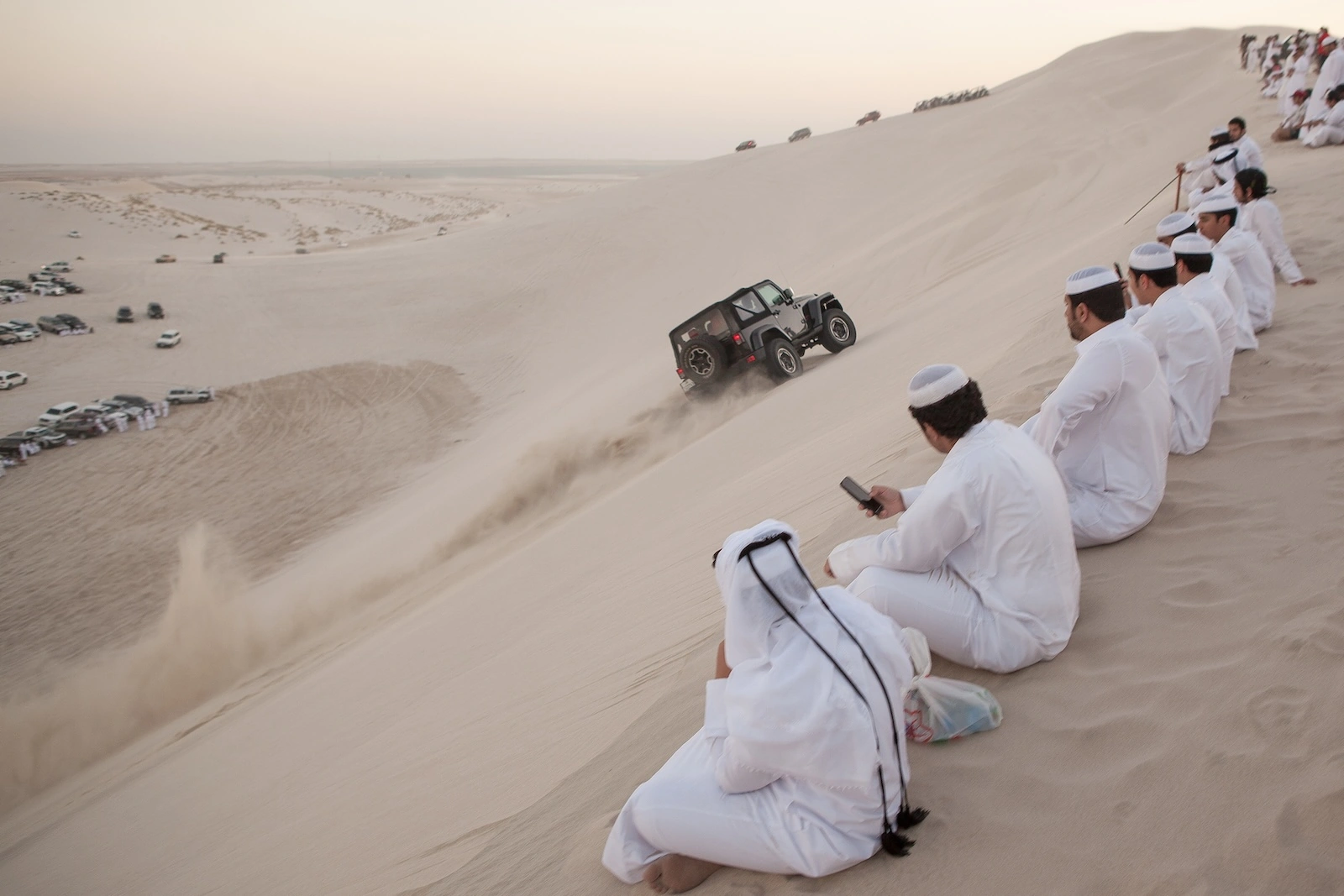
Gulf societies’ love affair with cars has also complicated recent attempts to persuade people to use public transportation. In Qatar, where ownership of 4×4 vehicles is estimated at 60%Academia – A Baseline Survey of the Citizens and Residents of Qatar, 2017 among Qatari men, cars have evolved beyond a means of transport into a marker of identity and social standing. Every weekend in winter, hundreds of men gather in the country’s southeastern corner to practise dune bashing. This form of off-roading has become a popular pastime in recent decades, turning the desert into a space of energy-intensive recreation.
“I come here every Friday with a group of friends. It is our weekend outing, like going to the cinema but more exciting and free. We do not bring our wives with us, however, because they are always afraid we might fall off the dune,” said Faisal Al-Balushi, a Qatari soldier watching petrol-powered cars roaring across the sand dunes at Khor Al-Adaid. “Their 4×4 is part of their identity and their masculinity,” observed Ahoud, a Qatari female student. In this context, attempts to put the genie of car culture back into the bottle extend beyond transport policy, confronting consumption habits that have made the automobile a lifestyle symbol.
“What if we got rid of streets?”
The retrofitting of cities shaped over decades around networks of asphalted highways, roads and low-density neighbourhoods is a complex and costly undertaking. The task is further complicated by the fact that the wealth of some of the region’s most influential families is closely tied up with car-based mobility through stakes in car dealerships and construction companies. Yet, some cities have introduced alternative mobility options, while encouraging the deployment of autonomous vehicles to leverage the existing car-centred infrastructure.
In 2009, Dubai launched the region’s first metro network, built along its main artery, the Sheikh Zayed Road. A decade later, the Dubai Metro was carrying more than 200Dubai Protocol Department – Dubai Metro marks 15 years of transforming urban mass transit, carrying 2.4 billion riders, 2024 million passengers annually, demonstrating that public transportation can function at scale in the desert region, even during summer. Dubai’s experience inspired the expansion of rail-based urban public transport in the Arabian Peninsula, with Doha opening its metro in 2019DB Engineering & Consulting – Doha Metro and Riyadh following in 2024Strategy& – Effective metro system investment. Dubai plans to add a third metro line in the late 2020sBloomberg – Dubai Will Build $5 Billion Metro Line as Expats Flock to City, 2023. Still, car dependency has persisted, with around 3,5 millionKhaleej Times – Dubai roads see 3.5 million vehicles during the day as 10% increase in registered cars, 2024 vehicles on its roads during daytime hours.
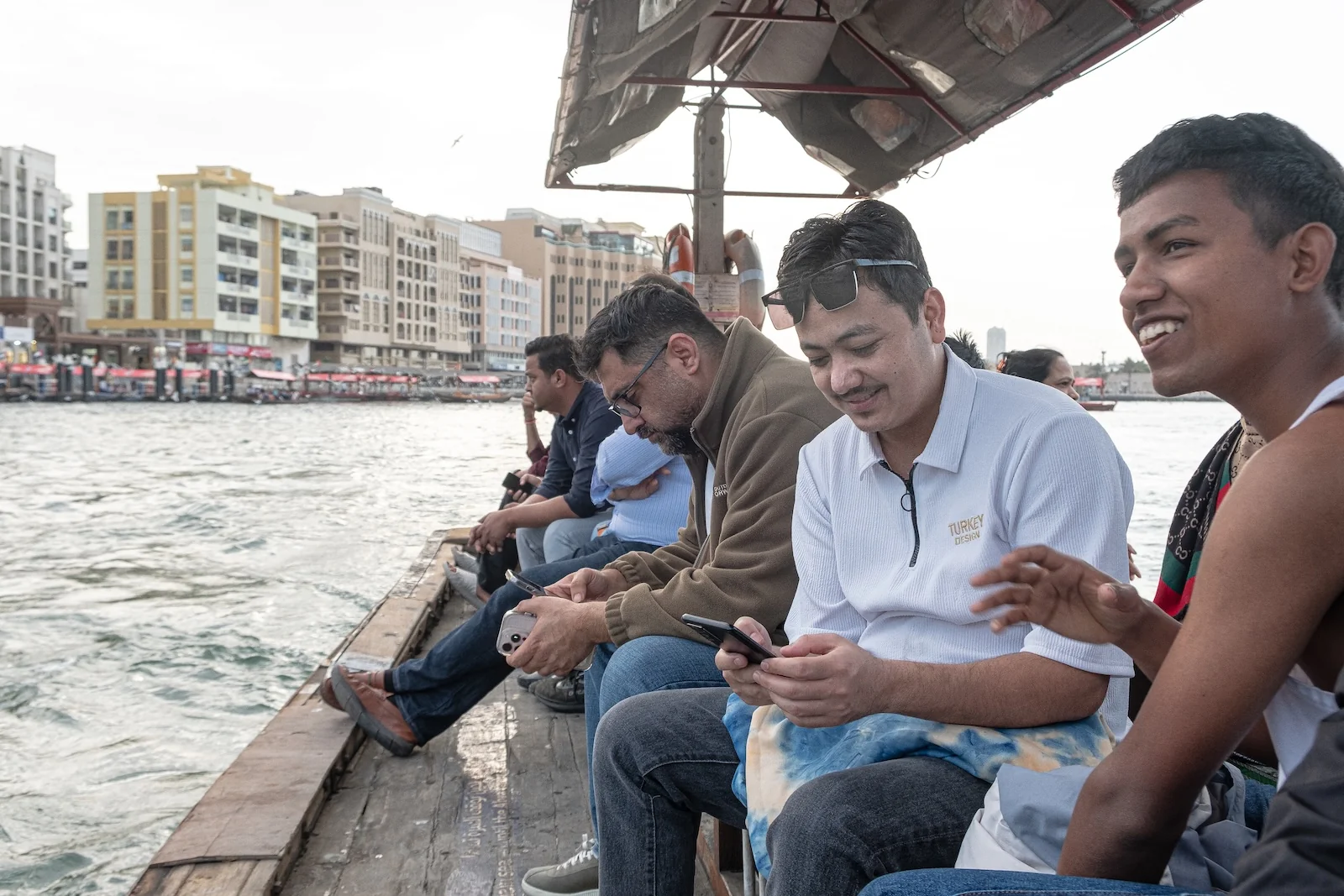
Besides the expansion of public transport networks, urban planners promote the development of air-conditioned multimodal nodes in the West Asian region, enabling seamless transfers between transport modes, such as rail, bus and dedicated micromobility lanes. E-scooters have gained popularity among foreign workers in recent years to bridge the first and last-mile gap. In addition, they suggest increasing population density around those nodes, drawing inspiration from the transit-oriented densification strategyQatar University – The Urban Morphology of Mshereib, 2023 implemented around Doha’s central metro interchange.
In Saudi Arabia, Crown Prince Mohammad Bin Salman Al-Saud envisioned a more radical transformation and pledgedNeom – HRH Prince Mohammed bin Salman announces THE LINE at NEOM, 2021 to “transform the concept of a conventional city into that of a futuristic one” as he launched The Line. A promotional videoAl Arabiya – Saudi Crown Prince announces ‘The Line’ city project at NEOM, 2021 asked: “What if we removed cars? What if we got rid of streets? What if we innovated in a public space? What if we built around nature instead of over it?” The car-free linear town, planned along a 170-kilometre strip of land, is billed as a series of neighbourhoods connected by a transit network. Persistent doubts have surrounded the technical and financial feasibility of the Crown Prince’s projects.
Kuwaiti policymakers, on the contrary, have taken a more conventional approach with a focus on improving the existing urban fabric. According to Al-Shalfan, the country’s latest Master Plan, approvedKuwait Times – Cabinet approves 2040 Kuwait master plan with four regions, 2023 in 2023, includes upgrading public transport, launching a bus rapid transit system, feeder buses, and making it easier to get around the city on foot. The strategy also seeks to revive a metro project that has been under discussion since the 2000sMEED – Advisers line up for Kuwait metro scheme, 2009 but never materialised.
“The plan is wonderful, but execution is a huge challenge,” the Municipal Council member said. Political deadlock has been a recurring feature of Kuwaiti politics, driven by tensions between the elected parliament, dominated by Islamist and populist voices, and the government, appointed by the hereditaryUnited States Department of State – Kuwait, 2017 ruling family. To date, motorised urban mobility in Kuwait, whether by car or bus, continues to rely entirelyInternational Energy Agency – Kuwait Efficiency & demand, 2023 on fossil fuels.
Give the oil industry a pass
Efforts to encourage public transportation use among Kuwaitis reflect a broader civil society push to raise environmental awareness through education. “We must ensure that our activism resonates with the local audience. Kuwaitis want solutions, not alarmists,” Al-Awadhi said. To cultivate environmental curiosity among school-age children, Kuwaiti scientist Bassam Shuhaibar has been running workshops in dozens of schools for nearly a decade. “It is not going to do anything to drill into children’s minds the maxim “oil is bad, environment is good”. What does work, however, is helping them develop their own thinking,” he said.
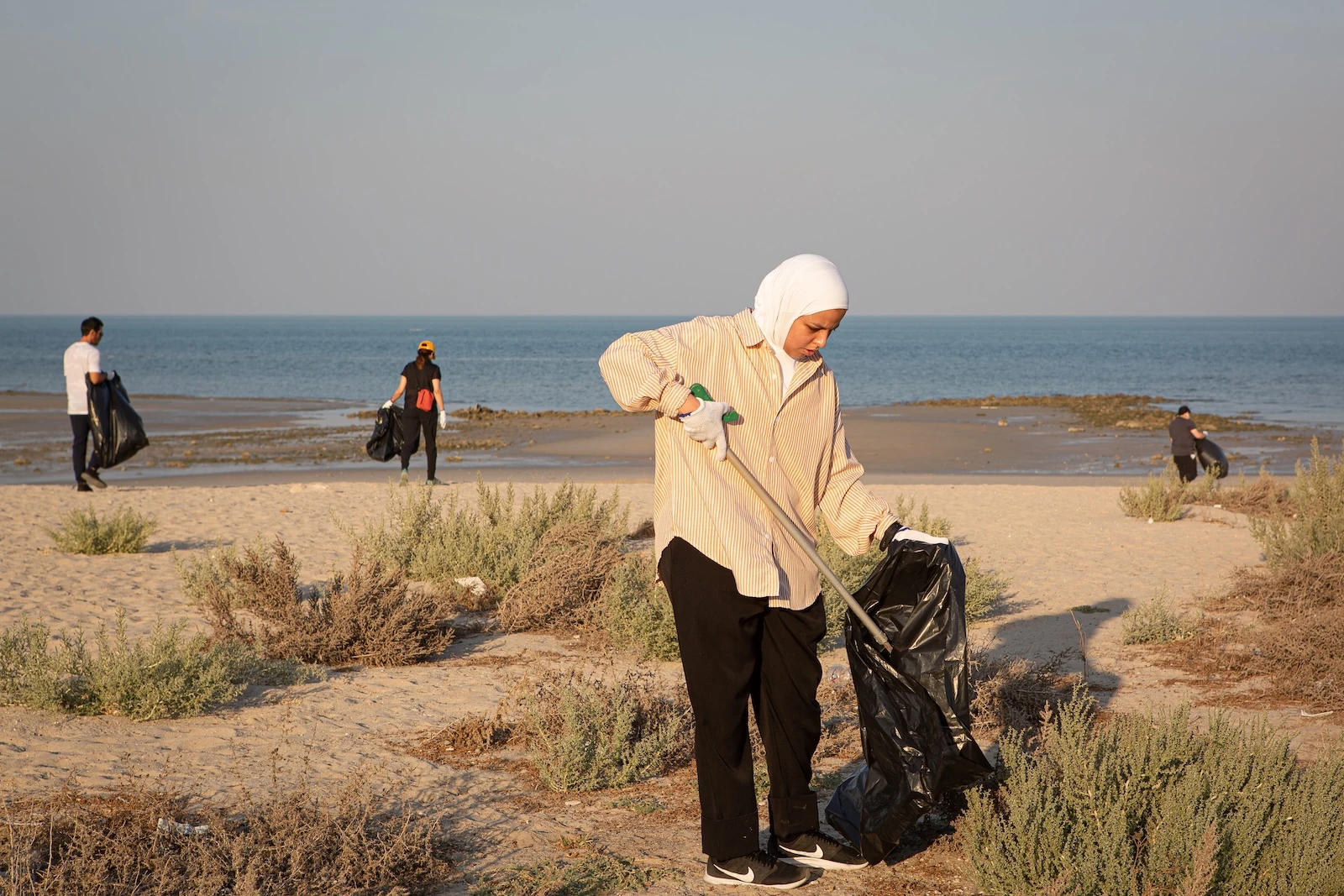
At Al-Bidea beach on a Saturday afternoon, a group of about thirty people removed waste and plastics that have washed ashore on the coast for the third time this year. “It is frustrating to have to come again and again, but we have to. Step by step we will rid people of their bad habits. Change does not happen overnight,” said Abdulrahman Ali, a member of the volunteer group Trash Hero KuwaitTrash Hero Kuwait – Our story. For Hamad Al-Matar, director of the environmental committee at the Kuwaiti parliament, change requires political intervention. “The government should make it a very top priority to protect our sea, land, and air from pollution,” he said.
Yet, environmental efforts have concentrated on the symptoms of fossil fuel consumption rather than challenging its source. The fossil fuel industry, a major enabler of climate change through combustion of its products in consumer markets, has sustained the Kuwaiti economy for decades, with oil revenues accounting for 93%Arab News – Kuwait records budget surplus for first time in 9 years, 2023 of government income in the 2022–23 fiscal year. At a permanent exhibition held by Kuwait Oil Company (KOC), visitors, including school groups, are introduced to the history of the petroleum sector. Rawan Al-Jabir, a guide, said: “Kuwaiti kids who come here to visit said they want oil exports to continue forever. Their only question is will it ever finish, and if we can have more oil?”